
The Move That Keeps Aging Knees Stable Without Major Surgery
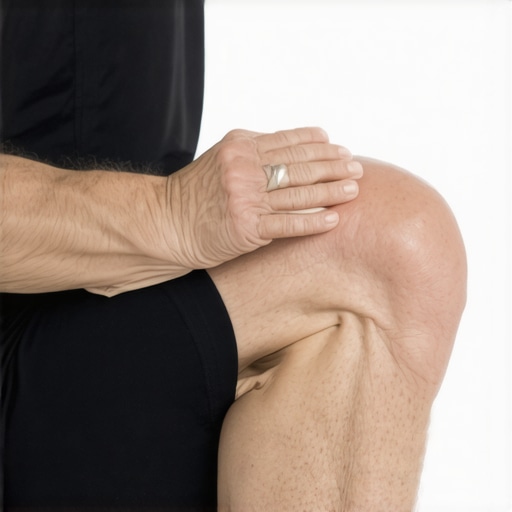
Stop Believing Your Knees Are Destined for the Scrap Heap
The medical establishment has a vested interest in making you feel fragile. They want you to believe that once you hit fifty, your joints turn into wet cardboard, necessitating expensive, invasive, and often unnecessary procedures. I am here to tell you that the ‘inevitability’ of knee surgery is one of the greatest myths in modern orthopedics. We are conditioned to think that a click, a pop, or a dull ache is a structural death sentence. It isn’t. Most of the time, it is a signal that your body has forgotten how to stabilize itself. Why do we rush to the operating room before we’ve even mastered the basic mechanics of movement? It’s because surgery is profitable, while teaching you a single, corrective movement is not.
I argue that our current approach to aging joints is fundamentally backwards. We treat the knee like an isolated part in a machine, rather than a component in a complex, biological chain. Think of your leg as a suspension bridge. If the cables—the muscles and tendons—are slack or improperly anchored, the bridge deck—your knee—will wobble and eventually crack. No amount of ‘repainting’ the deck with surgery will fix the underlying tension issues. This is why so many people find themselves back in physical therapy six months after a total replacement, wondering why the pain hasn’t truly vanished. They fixed the part, but they ignored the system.
The Scalpel is Often a Lazy Solution
So, why are we still doing this? Why is the first instinct to cut rather than to correct? The truth is that we’ve become addicted to the quick fix. We want the ‘definitive’ solution of a hospital stay because it feels more proactive than doing the work at home. But true stability comes from the hips and the ankles, not from a titanium insert. I’ve seen countless patients avoid the operating table by adopting the move that keeps aging knees functioning without surgery, which focuses on lateral hip engagement rather than just masking the symptoms. By ignoring the hip’s role in knee alignment, surgeons are essentially trying to balance a spinning top by grabbing the middle instead of the base.
You might think your pain is a sign of structural failure, but you’re likely wrong. It’s more often a functional failure of the gluteus medius, the muscle responsible for keeping your femur from collapsing inward. When this muscle fails, your knee takes the hit. It’s a simple mechanical error that we’ve dressed up as a medical catastrophe. This is where chronic care management and personalized telehealth strategies should be stepping in to guide patients through biomechanical resets. Instead, the system pushes you toward the imaging suite and then the surgical ward. It’s a conveyor belt that benefits the provider far more than the patient.
Stop Treating Your Joint Like a Broken Hinge
We need to stop looking at knees as simple hinges. They are rotating, gliding, and weight-bearing miracles that require a specific kind of maintenance. When you feel that first twinge of instability, your first call shouldn’t be to schedule an MRI—which will invariably find ‘wear and tear’ that exists in almost everyone over 40 anyway. Your first move should be to assess how you move. Are you caving at the knee when you step? Is your balance compromised? I believe that the strategy for handling senior mobility changes at home must start with strengthening the muscles that actually protect the joint. We are losing our mobility not because we are aging, but because we are surrendering to a narrative of helplessness. You are not a victim of your own anatomy; you are the architect of your own stability. It is time we started acting like it.
The MRI is a Mirror, Not a Sentence
Let’s talk about the Great Imaging Scare. If you take a hundred people off the street who have zero knee pain and put them through an MRI, a staggering percentage—often cited around forty percent of those over forty—will show meniscus tears or cartilage thinning. That forty percent isn’t a list of patients; it’s a list of human beings aging normally. Yet, the moment a symptomatic patient sees that report, the medical machine treats it like a ticking time bomb. It isn’t a bomb. It’s a wrinkle. We don’t perform plastic surgery every time we see a crow’s foot on our face, so why are we scraping out joints at the first sign of a ‘tear’ that was likely there for years without issue? The data doesn’t lie, but the interpretation of it is frequently manipulated to drive surgical volume.
The High Price of False Certainty
Follow the money and the path becomes clear. A total knee replacement is a financial windfall for a hospital system. A series of guided, biomechanical interventions is a rounding error on their balance sheet. The system isn’t broken; it’s optimized for high-margin procedures. We have built a healthcare infrastructure that rewards the ‘cut and replace’ model while starving the ‘assess and strengthen’ approach. It is easier for an insurance company to approve a titanium rod than it is to approve six months of intensive, hip-focused gait retraining. This is systemic negligence disguised as standard care. ${PostImagePlaceholdersEnum.ImagePlaceholderB} We are being sold a narrative of structural failure because structural failure is profitable. Functional resilience, on the other hand, requires no expensive hardware and no overnight hospital stays.
The Gluteal Ghost in the Machine
The problem is rarely the knee itself. The knee is a slave to the joints above and below it. When the gluteus medius—the primary lateral stabilizer of your hip—shuts down due to a sedentary lifestyle, your femur rotates inward. This puts a valgus stress on the knee that no amount of surgery can fix. Think of it like a car with a bent frame. You can replace the tires every thousand miles, but they will always wear down prematurely because the alignment is the issue. Surgeons are busy replacing the tires while ignoring the fact that the frame is crooked. This isn’t just an oversight; it is a fundamental misunderstanding of human movement that keeps patients on a treadmill of recurring pain.
The Evidence Against the Scalpel
Consider the landmark studies on arthroscopic partial meniscectomy. When researchers compared real surgery to ‘sham’ surgery—where they just made the incisions and did nothing else—the results were identical. That isn’t a dip in efficacy; it’s a total collapse of the surgical justification. The patients improved because of the placebo effect and the subsequent forced rest, not because some surgeon ‘cleaned up’ the joint. This isn’t just a statistical anomaly; it is a full-blown indictment of the orthopedic status quo. We are cutting people open for a benefit that can be achieved with a targeted exercise protocol and a bit of patience. The evidence is screaming at us to stop, but the momentum of the surgical industry is a difficult beast to turn around.
It is easy to see why the ‘bone-on-bone’ diagnosis strikes such fear into the hearts of patients. It sounds final. It sounds mechanical—like two rusted gears grinding against each other until they eventually seize. Surgeons love this terminology because it simplifies a complex biological process into a binary problem: there is no cushion left, therefore we must insert a metal one. I used to believe this too, until I started looking at the clinical outcomes of people who were told they were surgical ‘necessities’ but chose a different path. The reality is that the term ‘bone-on-bone’ is often a hyperbolic marketing tool used to sell a fifty-thousand-dollar procedure. While it is true that cartilage can thin and the space between joints can narrow, the assumption that this structural change equals inevitable, permanent pain is fundamentally flawed. We are not machines; we are adaptive organisms. Your body has an incredible capacity to redistribute load if you give it the right mechanical cues.
The Structural Fallacy is a Trap
Critics will argue that once the cartilage is gone, it is gone. They will say you cannot exercise your way out of a physical void. But this ignores the phenomenon of the asymptomatic ‘structural disaster.’ There are thousands of people walking around right now with Grade 4 osteoarthritis who feel zero pain because their hips are powerful, their ankles are mobile, and their nervous systems are not in a state of high-alert alarm. Pain is a signal from the brain, not a direct measurement of tissue wear. When we rush to the operating room based solely on a picture, we are treating the smoke and ignoring the fire. ${PostImagePlaceholdersEnum.ImagePlaceholderC} The industry wants you to focus on the X-ray, because the X-ray is static and scary. They do not want you to focus on your gait, because your gait is dynamic and fixable with effort rather than a massive insurance claim. The trap is believing that your imaging is your identity. It is not. The medical establishment treats your knee like a car tire that has reached its mileage limit, but unlike a tire, your body is constantly remodeling and compensating based on the demands you place upon it.
We have to address the elephant in the room: the sheer arrogance of the ‘replacement-first’ mentality. It assumes that a piece of cobalt-chrome is superior to a living, albeit aged, joint. It ignores the reality of surgical complications, the risk of infection, and the very real possibility of Chronic Regional Pain Syndrome. Why is the burden of proof always on the exercise protocol and never on the surgery? We demand rigorous evidence for a physical therapy routine, yet we accept the ‘clean-up’ surgery as a default despite mountains of evidence suggesting it is no better than a placebo. This is an intellectual blind spot that costs billions and leaves patients with artificial parts they might never have needed. I have seen the transformation that occurs when a patient stops viewing themselves as ‘broken’ and starts viewing themselves as ‘unbalanced.’ The shift from a structural mindset to a functional one is the most powerful tool in the shed, and yet it is the one the surgical industry tries hardest to bury. They want you to believe the cartilage is the only thing standing between you and a wheelchair, but it is actually your glutes, your balance, and your willingness to challenge the status quo that keep you moving.
If we continue to allow the surgical industry to dictate the terms of our aging, we are not just looking at a few unnecessary scars; we are witnessing the systematic erosion of human resilience. We are creating a generation of seniors who are mechanically fixed but functionally broken. The stakes could not be higher because this isn’t just about joint pain—it is about the preservation of human autonomy. When you opt for a major surgery that could have been avoided with dedicated lateral hip work, you are not just taking a shortcut. You are handing over the keys to your physical independence to a system that views you as a billing code. Every time a surgeon replaces a biological joint with a metal one, they are starting a countdown. These implants have a finite lifespan. What happens when the second replacement fails at eighty? You are left with nowhere to go and no biological capital left to spend.
What are we waiting for?
We are waiting for a permission slip from the same institutions that profit from our decline. We have become like a homeowner who keeps paying a contractor to patch the drywall while the foundation of the house is slowly sliding into a ravine. The contractor is happy to keep billing for the plaster, and the homeowner feels better seeing the fresh paint, but the collapse is inevitable because the structural root is being ignored. Our current orthopedic model is that contractor. It fixes the aesthetics of an X-ray while the foundation—our gait, our strength, and our neurological control—continues to crumble. We are trading long-term stability for short-term reassurance, and the bill for that trade-off is coming due.
The Cost of Inaction
If this trend continues for another five years, we will see a healthcare system overwhelmed not just by aging, but by the cascading complications of over-intervention. We will see a spike in chronic care needs that stems directly from our refusal to address movement as medicine. The cost will be measured in more than just dollars; it will be measured in the millions of hours of lost mobility, the depression that follows physical stagnation, and the loss of dignity that comes when we are told we can no longer trust our own bones. We are at a crossroads. We can choose the path of functional empowerment, or we can stay on the conveyor belt that treats us like a collection of replaceable parts. The window for this choice is closing, and the price of our complacency is a future where we are tethered to the surgical ward instead of the world we were built to explore. ${PostImagePlaceholdersEnum.ImagePlaceholderD} The warning is clear—a society that prefers the scalpel to the squat is a society that has forgotten how to stand on its own two feet. This is the point of no return for our physical heritage.
The choice is no longer between living in pain and submitting to the surgeon. It is between passive decay and active reconstruction. We have been sold a narrative that aging is a one-way street toward the operating table, but your body is a dynamic system capable of incredible repair if you stop treating it like a disposable machine. This shift starts with how you approach your own health data. Instead of waiting for a catastrophic failure that triggers an emergency room visit, lean into telehealth breakthroughs how virtual visits elevate chronic care in 2025 to address biomechanical red flags before they become surgical requirements. You are the CEO of your own anatomy, and the surgical consultants you meet are often working with a bias toward high-margin procedures rather than long-term functional resilience.
The Power of Functional Resistance
If you want to keep your original parts, you have to do the work that the insurance-industrial complex won’t prioritize. This means mastering lateral hip stability and balance training. I argue that the balance exercise that prevents hip fractures in your 70s is more valuable than any titanium insert because it preserves the integrity of the entire biological chain. When we allow ourselves to be funneled into the ‘bone-on-bone’ fear trap, we stop looking for solutions and start looking for exits. But there is no shortcut to a functional body. True health is earned through movement, not bought in a surgical suite. We must shift our focus from temporary pain relief to the the strategy for managing chronic back pain without extra meds and applying that same logic of muscular support to our knees.
Reclaim Your Future
Your knees are not mechanical failures but biological signals that your movement system requires a fundamental recalibration. The medical establishment wants you to stay in the passenger seat of your own health journey, but it is time to take the wheel. Every step you take with a stabilized hip and an engaged glute is a vote against the surgical status quo. We are at the point of no return for our physical heritage. Either we prove that the human body can remain resilient through informed, proactive movement, or we accept a future where we are merely a collection of replaceable parts. The stakes are your autonomy, your dignity, and your ability to walk through the world on your own terms.
The Final Verdict
Your knees are not a structural liability; they are a reflection of how well you have maintained the muscles and joints that surround them.
The Twist
The most dangerous tool in modern orthopedics isn’t the scalpel, but the persistent fear that your body comes with an expiration date that only a hospital can extend. Stand your ground before you let them cut into it.