
Why Your Blood Glucose Meter Might Give Wrong Readings
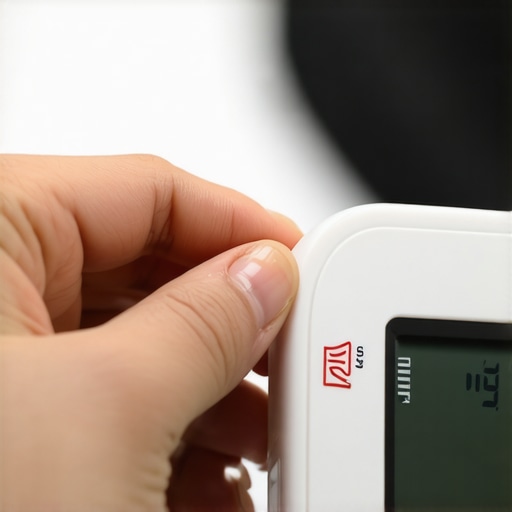
Your Glucose Meter is Not the Oracle You Think It Is
Stop treating your blood glucose meter like it’s a divine messenger of scientific truth. It isn’t. It is a consumer-grade gadget with a tolerance for error that would make a laboratory chemist wince. You check your finger, see a 115, and breathe a sigh of relief. Ten minutes later, you check again and it’s a 129. You panic. Why? Because you’ve been sold the fantasy of digital perfection. I argue that this obsession with ‘the number’ is actually blinding you to the variables that make that number worthless. Navigating your diabetes with a poorly handled meter is like trying to sail a ship with a compass sitting next to a massive magnet. Everything looks fine on the dial, but you’re heading straight for the rocks. We need to stop looking at the screen and start looking at the process.
Your Hygiene is the Real Problem
Let’s be blunt: most of the time, the machine isn’t the liar; you are. Did you wash your hands? I don’t mean a quick splash of water. I mean a real scrub. If you’ve even touched a piece of fruit or a piece of bread, the microscopic residue on your skin is enough to send your reading into the stratosphere. I have seen cases where a ‘spike’ was nothing more than residual orange juice on a thumb. As I mentioned when discussing why your home glucose monitor might be lying to you, the margin of error is wider than the marketing suggests, and user error accounts for the lion’s share of that gap. You think you’re being diligent, but you’re actually being reckless with bad data. If you want the real truth, you need to understand how to get your lab results explained without the long wait, because a finger prick is just a snapshot, often a blurry one taken through a dirty lens.
The Environment is Sabotaging Your Results
Your test strips are fragile. They are chemically sensitive slips of paper that react to the world around them. If you leave the cap off the vial, or if you store them in a humid bathroom, the chemistry degrades. You are then sticking a compromised sensor into your blood and expecting it to tell you the truth. It won’t. It will give you a guess. And another thing: your blood itself is a shifting target. Are you dehydrated? If your blood is ‘thick’ from lack of water, the concentration of glucose appears higher. This is one reason the fasting rule that most people get wrong before blood work is so critical for accuracy. You cannot expect a $20 device to compensate for your failure to drink a glass of water. Is the room too cold? Is it too hot? Extreme temperatures affect the enzymatic reaction on the strip. You’re not just measuring your blood; you’re measuring the temperature of your kitchen and the humidity of your house.
Stop Treating Every Single Digit as Gospel
The FDA allows for a 15% margin of error. Think about that. If your actual blood sugar is 100, the meter can legally show you 85 or 115 and still be considered ‘accurate.’ That is a massive swing. If you are basing your entire mood or your next dose of medication on a single digit swing, you are playing a dangerous game. Instead of obsessing over one moment in time, look for the patterns. I’ve argued before that the morning routine that fixes your fasting glucose spikes is about long-term behavior, not a single data point. We also have to acknowledge that why high normal blood glucose is actually an early warning sign is a conversation for a clinic, not a living room. Your meter is a tool for trends, not a replacement for a laboratory. Stop being a slave to the screen and start being a student of the science.
The ISO Standard is a Permission to Lie
The core of this delusion isn’t found in a broken sensor, but in the fine print of international regulations. Let’s talk about ISO 15197:2013. This is the ‘gold standard’ for your home meter. It dictates that for blood glucose concentrations at or above 100 mg/dL, the device only needs to be within 15% of the actual laboratory value—and it only has to meet this low bar 95% of the time. Think about that math. If your blood is actually 200 mg/dL, your meter is legally allowed to scream 230 or whisper 170. That 60-point spread isn’t a minor discrepancy; it is a canyon. We have conditioned patients to chase single-digit ‘wins’ when the very tools they use are calibrated for ‘ballpark’ estimates. The problem isn’t the technology; it’s the marketing that frames a blunt instrument as a surgical scalpel. We are trying to measure microns with a yardstick, and we wonder why we feel like we are failing.
The Invisible Gap Between Blood and Cell
The industry has convinced you that the drop of blood on your finger is a live feed of your metabolic health. It isn’t. It’s a delayed broadcast. There is a physiological lag between what is happening in your arteries and what is happening in your capillaries and interstitial fluid. When your sugar is moving fast—after a meal or during exercise—the number on that screen is a ghost of where you were fifteen minutes ago. You react to the number you see now, but your body is already somewhere else. This is the root cause of the ‘rollercoaster’ effect. You see a high, you over-correct with insulin or panic-driven exercise, and by the time the meter catches up, you’ve already overshot the mark. The machine is a mirror, but it’s a carnival mirror that stretches and distorts the reality of your internal chemistry. You aren’t managing your diabetes; you’re managing a delayed signal. ${PostImagePlaceholdersEnum.ImagePlaceholderB}
The Profit in Your Anxiety
Why aren’t these devices better? Because they don’t have to be. The business model of diabetes management isn’t built on the precision of the hardware; it’s built on the volume of the disposables. The meter is often free or cheap because the real money is in the strips. The manufacturers benefit from a culture of constant, neurotic testing. If you test ten times a day because you don’t trust the first three readings, the company wins. They have no financial incentive to provide you with a laboratory-grade device that only requires one confident check. They want you in a state of perpetual data-mining. This creates a feedback loop of anxiety where the user blames their own body for ‘erratic’ numbers that are, in fact, just the natural variance of a cheap enzymatic reaction. The hematocrit effect—the ratio of red blood cells to plasma—can also swing your results by another 10% depending on if you’re slightly dehydrated or even just stressed. You are looking at a chemical guess and calling it a diagnosis. It’s time to realize that your meter is a compass that only points North mostly, and only if the weather is nice.
The Fallacy of the Single Point
We’ve been taught that data is objective. It isn’t. Data is only as good as the context it lives in. When you see a 140, you don’t see the margin of error, the strip degradation, or the fact that you just walked up a flight of stairs. You just see ‘High.’ This reductionist view of health is dangerous. It ignores the trend in favor of the snapshot. A single blood glucose reading is a lonely, unreliable witness. To build a case for your health, you need a dozen witnesses all pointing in the same direction over weeks and months. Relying on a single finger prick to decide your mood for the afternoon is a form of scientific self-sabotage. The system is rigged to keep you looking at the screen instead of your lifestyle, because screens sell strips and lifestyle costs nothing.
Your Glucose Meter is Not the Oracle You Think It Is
Stop treating your blood glucose meter like it’s a divine messenger of scientific truth. It isn’t. It is a consumer-grade gadget with a tolerance for error that would make a laboratory chemist wince. You check your finger, see a 115, and breathe a sigh of relief. Ten minutes later, you check again and it’s a 129. You panic. Why? Because you’ve been sold the fantasy of digital perfection. I argue that this obsession with ‘the number’ is actually blinding you to the variables that make that number worthless. Navigating your diabetes with a poorly handled meter is like trying to sail a ship with a compass sitting next to a massive magnet. Everything looks fine on the dial, but you’re heading straight for the rocks. We need to stop looking at the screen and start looking at the process.
Your Hygiene is the Real Problem
Let’s be blunt: most of the time, the machine isn’t the liar; you are. Did you wash your hands? I don’t mean a quick splash of water. I mean a real scrub. If you’ve even touched a piece of fruit or a piece of bread, the microscopic residue on your skin is enough to send your reading into the stratosphere. I have seen cases where a ‘spike’ was nothing more than residual orange juice on a thumb. As I mentioned when discussing why your home glucose monitor might be lying to you, the margin of error is wider than the marketing suggests, and user error accounts for the lion’s share of that gap. You think you’re being diligent, but you’re actually being reckless with bad data. If you want the real truth, you need to understand how to get your lab results explained without the long wait, because a finger prick is just a snapshot, often a blurry one taken through a dirty lens.
The Environment is Sabotaging Your Results
Your test strips are fragile. They are chemically sensitive slips of paper that react to the world around them. If you leave the cap off the vial, or if you store them in a humid bathroom, the chemistry degrades. You are then sticking a compromised sensor into your blood and expecting it to tell you the truth. It won’t. It will give you a guess. And another thing: your blood itself is a shifting target. Are you dehydrated? If your blood is ‘thick’ from lack of water, the concentration of glucose appears higher. This is one reason the fasting rule that most people get wrong before blood work is so critical for accuracy. You cannot expect a $20 device to compensate for your failure to drink a glass of water. Is the room too cold? Is it too hot? Extreme temperatures affect the enzymatic reaction on the strip. You’re not just measuring your blood; you’re measuring the temperature of your kitchen and the humidity of your house.
Stop Treating Every Single Digit as Gospel
The FDA allows for a 15% margin of error. Think about that. If your actual blood sugar is 100, the meter can legally show you 85 or 115 and still be considered ‘accurate.’ That is a massive swing. If you are basing your entire mood or your next dose of medication on a single digit swing, you are playing a dangerous game. Instead of obsessing over one moment in time, look for the patterns. I’ve argued before that the morning routine that fixes your fasting glucose spikes is about long-term behavior, not a single data point. We also have to acknowledge that why high normal blood glucose is actually an early warning sign is a conversation for a clinic, not a living room. Your meter is a tool for trends, not a replacement for a laboratory. Stop being a slave to the screen and start being a student of the science.
The ISO Standard is a Permission to Lie
The core of this delusion isn’t found in a broken sensor, but in the fine print of international regulations. Let’s talk about ISO 15197:2013. This is the ‘gold standard’ for your home meter. It dictates that for blood glucose concentrations at or above 100 mg/dL, the device only needs to be within 15% of the actual laboratory value—and it only has to meet this low bar 95% of the time. Think about that math. If your blood is actually 200 mg/dL, your meter is legally allowed to scream 230 or whisper 170. That 60-point spread isn’t a minor discrepancy; it is a canyon. We have conditioned patients to chase single-digit ‘wins’ when the very tools they use are calibrated for ‘ballpark’ estimates. The problem isn’t the technology; it’s the marketing that frames a blunt instrument as a surgical scalpel. We are trying to measure microns with a yardstick, and we wonder why we feel like we are failing.
The Invisible Gap Between Blood and Cell
The industry has convinced you that the drop of blood on your finger is a live feed of your metabolic health. It isn’t. It’s a delayed broadcast. There is a physiological lag between what is happening in your arteries and what is happening in your capillaries and interstitial fluid. When your sugar is moving fast—after a meal or during exercise—the number on that screen is a ghost of where you were fifteen minutes ago. You react to the number you see now, but your body is already somewhere else. This is the root cause of the ‘rollercoaster’ effect. You see a high, you over-correct with insulin or panic-driven exercise, and by the time the meter catches up, you’ve already overshot the mark. The machine is a mirror, but it’s a carnival mirror that stretches and distorts the reality of your internal chemistry. You aren’t managing your diabetes; you’re managing a delayed signal.
The Profit in Your Anxiety
Why aren’t these devices better? Because they don’t have to be. The business model of diabetes management isn’t built on the precision of the hardware; it’s built on the volume of the disposables. The meter is often free or cheap because the real money is in the strips. The manufacturers benefit from a culture of constant, neurotic testing. If you test ten times a day because you don’t trust the first three readings, the company wins. They have no financial incentive to provide you with a laboratory-grade device that only requires one confident check. They want you in a state of perpetual data-mining. This creates a feedback loop of anxiety where the user blames their own body for ‘erratic’ numbers that are, in fact, just the natural variance of a cheap enzymatic reaction. The hematocrit effect—the ratio of red blood cells to plasma—can also swing your results by another 10% depending on if you’re slightly dehydrated or even just stressed. You are looking at a chemical guess and calling it a diagnosis. It’s time to realize that your meter is a compass that only points North mostly, and only if the weather is nice.
The Fallacy of the Single Point
We’ve been taught that data is objective. It isn’t. Data is only as good as the context it lives in. When you see a 140, you don’t see the margin of error, the strip degradation, or the fact that you just walked up a flight of stairs. You just see ‘High.’ This reductionist view of health is dangerous. It ignores the trend in favor of the snapshot. A single blood glucose reading is a lonely, unreliable witness. To build a case for your health, you need a dozen witnesses all pointing in the same direction over weeks and months. Relying on a single finger prick to decide your mood for the afternoon is a form of scientific self-sabotage. The system is rigged to keep you looking at the screen instead of your lifestyle, because screens sell strips and lifestyle costs nothing.
Critics will argue that I am being reckless. They will point out, quite rightly, that for a Type 1 diabetic or anyone on insulin, that 15% margin of error is the difference between a safe afternoon and a trip to the emergency room. They’ll say that “some data is better than no data” and that for decades, these meters have been the only thing standing between patients and total metabolic darkness. It is easy to see why people think the meter is a hero. It offers a sense of control in a disease that feels inherently chaotic. I used to believe this too, until I saw how that same “control” creates a feedback loop of cortisol-spiking stress that actually worsens the very condition it’s trying to track. The argument that “some data is better than no data” completely ignores the psychological cost of false alarms. When you see a number that is 20 points higher than it should be—simply because your hands were slightly damp or the strip was old—your body doesn’t know it’s a measurement error. Your brain perceives a threat. It releases adrenaline and cortisol, which tell your liver to dump more glucose into your bloodstream. By the time you re-test, your sugar actually is high, not because of your diet, but because the meter’s inaccuracy scared your body into a metabolic panic. You are not just observing the system; you are interfering with it using a flawed instrument.
The Safety Net is a Trap
The true elephant in the room is that we have substituted clinical understanding for a digital security blanket. We’ve become a culture that values the act of measuring over the quality of the measurement. If you were building a house, you wouldn’t use a tape measure where the inches changed size based on the humidity, yet we build our entire nutritional and medical identity around a device with a legalized “fudge factor.” The “better than nothing” excuse is a race to the bottom. It allows manufacturers to stagnate, avoiding the expensive R&D required for true precision because they know the market is addicted to the ritual of the prick. ${PostImagePlaceholdersEnum.ImagePlaceholderC} We need to stop pretending that a snapshot of capillary blood is a definitive verdict on our health. This is why the push for telehealth and more frequent, high-grade lab tests is so vital. A professional lab doesn’t just look at a single enzyme on a paper strip; they use methods that account for your hematocrit, your hydration, and your systemic stability. Relying on a home meter for anything other than a general “vibe check” is scientific hubris. We are obsessed with the convenience of the instant result, but we are paying for that convenience with our peace of mind and, often, our accuracy. The reality is that the meter is a blunt tool, and using it as a precision instrument is a mistake that keeps you trapped in a cycle of reactive, rather than proactive, health management. You are chasing shadows in a cave, convinced that the shapes on the wall are the reality, when the real sun is shining outside in the form of comprehensive clinical data.
The Cost of Inaction
If we continue to ignore the massive gap between consumer gadgetry and clinical reality, we are doing more than just mismanaging a chronic condition; we are eroding the very foundation of medical trust. The stakes are not merely a few points of glucose on a screen. The stakes are the psychological integrity of millions of people who have been conditioned to believe that a piece of plastic knows their body better than they do. When we prioritize the convenience of a cheap strip over the precision of professional lab tests, we are accepting a world where ‘good enough’ is the standard for staying alive. This is a recipe for systemic failure. By treating these tools as infallible, we are training a generation of patients to ignore their own symptoms in favor of a digital readout that is legally allowed to lie to them 15% of the time.
Is it too late?
We are standing at a crossroads in the evolution of chronic care and telehealth. If we don’t demand better, the landscape five years from now will be unrecognizable. We will see a surge in metabolic burnout, where patients simply give up because the data they are chasing is a ghost. Imagine a world where every medical decision is filtered through an algorithm that prioritizes the sale of disposables over the health of the individual. That is the trajectory we are on. Using a consumer glucose meter as your primary diagnostic compass is like trying to navigate a minefield using a map drawn from a blurry memory in a thick fog. You might make it across a few times by sheer luck, but the odds are stacked against you, and the explosions are entirely preventable.
The Point of No Return
The warning is clear: data without context is a weapon. In the hands of a worried patient, an inaccurate glucose reading is a trigger for a cascade of stress hormones that physically damages the vascular system. We are literally scaring ourselves sick with bad math. Urgent care centers are already seeing the fallout of ‘data-driven panic,’ where patients present with symptoms caused not by their disease, but by the anxiety of a false-positive spike. ${PostImagePlaceholdersEnum.ImagePlaceholderD} We must reclaim the narrative of our own health by returning to the gold standard of clinical oversight. If we don’t move away from this obsessive, isolated monitoring and back toward integrated, professional diagnostics, we will find ourselves in a permanent state of reactive medicine—forever chasing a number that was never real in the first place.
The Urgent Call to Abandon the Digital Idol
It is time to break the cycle of finger-prick dependency. You are not a data point, and your metabolism is not a steady-state machine. When we treat the meter as a god, we ignore the body’s actual voice. This is where chronic care management personalized telehealth strategies for better outcomes become essential; they move us away from the panic of a single digit and toward a comprehensive understanding of metabolic health. If you are chasing a 15% margin of error, you aren’t managing health; you are managing noise.
The Evolution Beyond the Strip
The future isn’t in a cheaper strip, but in smarter oversight. We need to lean into telehealth breakthroughs that allow clinicians to monitor our trends rather than our outliers. If you suspect a real crisis, urgent care innovations streamlining same-day lab tests offer the clinical precision that no home gadget can mimic. The twist is that the more we monitor ourselves in isolation, the less we actually know. Real progress happens when we look for the routine screening that catches pre-diabetes while it is reversible, relying on gold-standard diagnostics rather than a plastic box from the pharmacy aisle.
The Final Verdict
Your health is a masterpiece of biological complexity that cannot be reduced to a blinking number on a consumer-grade screen.
The Twist
The very tool designed to give you control has become the primary source of your metabolic anxiety, creating a biological feedback loop of stress that no amount of insulin can fix.
Stop testing to find a number. Start living to change the trend. Put the meter in the drawer and look in the mirror.