
Why Your Home Glucose Monitor Might Be Lying to You
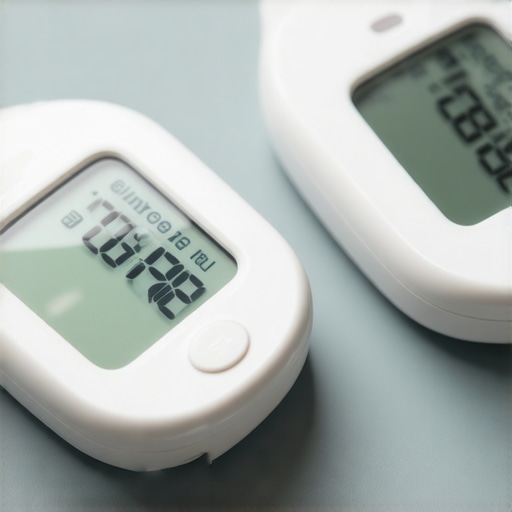
Your Home Glucose Monitor Is Lying to You—Stop Chasing Ghost Numbers
Stop treating your glucose monitor like a divine oracle. It is a mass-produced consumer electronic, not a precision instrument. Every morning, millions of people perform the finger-prick ritual, staring at a small screen with the intensity of a gambler watching a roulette wheel. You think that number is the absolute truth. You are wrong. I argue that the industry has sold us a false sense of security, trading clinical accuracy for the convenience of a plastic box that fits in your pocket. This isn’t empowerment; it is a profitable illusion that keeps you in a state of constant, unnecessary panic. We have been taught to trust the machine, but the machine was never built to be your doctor.
If your monitor says 110 mg/dL, your actual blood sugar could be anywhere from 94 to 126 and still be considered ‘accurate’ by international standards. Think about that. You are making life-altering decisions—changing your diet, adjusting medication, or skipping meals—based on a 15 percent margin of error. It is a dangerous game. Much like how your home blood pressure cuff might be lying to you, these devices provide a snapshot through a dirty lens. We have replaced medical expertise with a digital mirage, and it is costing us our sanity. You might feel in control, but you are actually just reacting to statistical noise.
The Industry Standards Are a Total Sham
Why do we accept this level of inaccuracy? Because the alternative—relying on advanced lab test technologies—requires patience and a trip to a clinic. We want the data now, even if the data is junk. Using a cheap glucometer to manage a serious metabolic condition is like trying to determine the weight of a car by looking at its tire pressure. It gives you a vague hint of the reality, but it is nowhere near the truth. The regulatory bodies know it, the manufacturers know it, and yet the marketing continues to push these devices as the ultimate tool for ‘taking charge’ of your health. I believe we have sacrificed quality for the sake of a fast result.
I see people obsessing over morning routines to fix fasting glucose spikes based on readings that are statistically insignificant. They panic over a five-point jump that could easily be caused by the temperature of the room, the moisture on their skin, or the age of the test strip. This isn’t healthcare; it is data-induced anxiety. You need to understand that your home device is a screening tool at best, not a final judge. If you want the truth, you need to understand the routine screening that catches pre-diabetes while it is actually reversible. A single finger prick cannot tell you the whole story of your metabolic health, no matter how shiny the app looks on your phone.
Your Data Is Just Statistical Noise
We are obsessed with tracking, yet we are sicker than ever. Maybe it is because we are looking at the wrong things. We chase the ‘high-normal’ readings without realizing that high-normal blood glucose is actually an early warning sign that no home monitor can properly contextualize. These devices are designed for broad trends, not surgical precision. When you treat them as the latter, you end up over-treating or under-treating based on a whim of the sensor’s chemistry. Stop being a slave to the beep. Start demanding data that actually correlates with your long-term outcomes, rather than the momentary flicker of a liquid crystal display. You deserve a healthcare strategy built on facts, not electronic guesses.
The Chemistry of a Calculated Lie
The problem isn’t your inability to follow instructions; the problem is the fundamental chemistry of the test strips themselves. These tiny slivers of plastic rely on enzymes like glucose oxidase or glucose dehydrogenase to trigger an electrical current. It sounds sophisticated. It isn’t. This reaction is hyper-sensitive to everything from the humidity in your kitchen to the oxygen levels in your blood. If you are slightly dehydrated, the reading is wrong. If the room is too warm, the reading is wrong. We are told these devices empower us to manage chronic care at home, but they actually provide nothing more than a chemical estimate. The industry shifts the blame to ‘user error’ whenever a reading is off, but the reality is that the technology is inherently unstable. They sold us a lie. A tiny, plastic, twenty-dollar lie wrapped in medical-grade marketing and sold as a lifeline.
${PostImagePlaceholdersEnum.ImagePlaceholderB}
ISO 15197: The Low Bar of Mediocrity
Let’s look at the actual rules of the game. The international standard for these devices, ISO 15197, is a joke. It requires that 95 percent of results fall within plus-or-minus 15 percent of a laboratory reference. This 15 percent margin isn’t a safety net; it’s a canyon. Think about that interpretation. If your actual blood sugar is 100 mg/dL, a ‘perfectly accurate’ meter can tell you it is 85 or 115. That is a 30-point spread. If you are at 200, the meter could scream 230 or whisper 170. This isn’t a minor discrepancy. It is the difference between a routine afternoon and an urgent care visit. We have accepted a level of failure in our home health technology that we would never tolerate in a car’s speedometer or a child’s thermometer. This data isn’t just loose; it is dangerously imprecise. You are navigating your health through a thick fog with a compass that only points north ‘most of the time.’
The Profit in Your Panic
Who benefits from this cycle of constant testing and reactionary behavior? Not the patient. The manufacturers of these devices make their real money on the strips, not the meters. They want you to prick your finger six, eight, ten times a day. Every ‘ghost number’ that causes a spike of anxiety leads to another test, another strip used, and another dollar in their pocket. This is why the push for telehealth integration often focuses on more data points rather than better data quality. More data equals more consumption. They have turned a metabolic condition into a subscription model. We are being farmed for our bio-data, and the low quality of that data ensures we stay in a state of perpetual concern. The machine isn’t broken; it is working exactly as intended to keep you clicking, pricking, and paying.
Where the Math Fails the Patient
We’ve been conditioned to believe that a digital readout is synonymous with truth. It isn’t. When you compare these home readings to professional lab tests, the facade collapses. A lab uses high-precision centrifugation and gold-standard hexokinase methods to find the truth. Your home meter uses a cheap sensor and an algorithm designed to guess what that lab result might look like. When your meter gives you a number, it isn’t measuring your blood; it is performing a mathematical projection based on a weak electrical signal. Using this to micro-manage your life is a fool’s errand. You are reacting to the math, not the biology. Until we demand clinical-grade transparency in consumer hardware, we are just participants in a massive, profitable experiment in health-tracking theater.
The most compelling argument in favor of home glucose monitors is the ‘better than nothing’ defense. Proponents, including many well-meaning clinicians, argue that even if these devices lack the surgical precision of professional lab tests, they provide a necessary roadmap of trends. They claim that knowing your blood sugar is ‘roughly’ high is more valuable than flying blind between annual checkups. This perspective suggests that these tools democratize health, moving the power from the ivory tower of the clinic into the palm of the patient’s hand. It is a seductive idea. It is the same logic used to justify the explosion of telehealth and remote monitoring: that more data, however flawed, eventually resolves into a clearer picture of metabolic health. People believe that by aggregating thousands of data points, the ‘noise’ will eventually cancel itself out, leaving behind a pure signal of biological truth.
I used to believe this too, until I realized that a map with a fifteen percent margin of error isn’t just inaccurate; it is a recipe for driving off a cliff. The ‘trend’ argument only works if the error is linear—meaning, the meter is always ten points high. But it isn’t. The chemistry inside those strips is chaotic and non-linear. A reading might be ten points high at noon and fifteen points low at dinner based on nothing more than the humidity of your breath or the residual soap on your skin. When you try to find a ‘trend’ in random noise, you aren’t practicing medicine; you are reading tea leaves. You are making permanent changes to your chronic care plan based on the equivalent of a digital hallucination. You think you are seeing a pattern, but you are really just staring at a Rorschach test made of enzymes and cheap circuitry.
The False Safety of the Trend Line
Critics argue that these devices prevent an emergency trip to urgent care by catching spikes before they become crises. While that might be true for a brittle Type 1 diabetic where the stakes are immediate, for the vast majority of the population, these devices create a false sense of urgency that is medically counterproductive. We are teaching people to react to a ‘flicker’ on a screen rather than the underlying biology. This leads to what I call metabolic whiplash. You see a high number—which might just be a sensor error—and you over-correct with exercise or extreme fasting. Then, you see a low number and you over-consume. You are chasing a ghost, and in the process, you are stressing your system more than the original glucose spike ever would have. You become a slave to a feedback loop that is fundamentally broken at its source.
${PostImagePlaceholdersEnum.ImagePlaceholderC}
The industry loves to talk about ’empowerment,’ but real empowerment requires truth, not a guess. When we accept these low standards, we stop demanding the kind of high-level innovation that would actually bridge the gap between home devices and clinical lab tests. We have become comfortable with mediocrity because it is convenient and fits nicely into a smartphone app. We have traded the hard work of understanding metabolic pathways for the dopamine hit of a ‘good’ number on a cheap screen. This isn’t health literacy; it’s health theater. We are performers in a play where the script is written by manufacturers who profit every time we doubt ourselves and reach for another strip. If we want to fix the system, we have to stop pretending that a guess is a fact just because it is displayed in high-contrast LCD. We are sacrificing our psychological well-being for a data stream that is more about marketing than it is about medicine.
The Erosion of Medical Truth
If we continue down this path of digital sycophancy, we are doing more than just wasting money on plastic strips. We are fundamentally altering the human relationship with health. We are moving toward a future where the subjective feeling of wellness—the actual signals your body sends you—is completely ignored in favor of a flickering LCD screen. This is the death of intuition. When you trust a flawed machine over your own biology, you enter a state of metabolic dissociation. You stop eating when you are hungry and start eating when a sensor tells you to. You stop resting when you are tired and start exercising because a number spiked. This isn’t health; it is an algorithmic prison. The stakes are nothing less than our autonomy. If we don’t reclaim the right to clinical-grade accuracy, we will soon find ourselves in a world where we are ‘treated’ for diseases we don’t have, based on errors the industry refuses to fix.
What are we waiting for?
Why do we allow a multi-billion-dollar industry to operate with a 15 percent margin of error while we demand 100 percent compliance from our own bodies? It is a staggering double standard. We are essentially flying a plane with an altimeter that has a mind of its own. Imagine a pilot trying to land in a storm, looking at a dial that says he is at 1,000 feet when he is actually at 850. By the time he realizes the ground is rising to meet him, the error has become a catastrophe. That is exactly what we are doing with our metabolic health. We are navigating the complex landscape of chronic care using instruments that would be laughed out of a professional laboratory. We are waiting for a permission slip from the manufacturers to demand better, but that permission will never come. The profit is in the status quo.
${PostImagePlaceholdersEnum.ImagePlaceholderD}
The High Price of Digital Blindness
Five years from now, if this trend persists, we will see a massive spike in ‘worried well’ patients—people whose physiological stress markers are through the roof not because of their diet, but because of the anxiety induced by their monitors. This constant state of cortisol-driven panic, triggered by ghost numbers, will ironically cause the very insulin resistance we are trying to avoid. We are creating a self-fulfilling prophecy of illness. The healthcare system, already strained, will be flooded with people seeking urgent care for statistical anomalies that don’t exist in their actual blood. We will have a generation of patients who are data-rich but health-poor, obsessing over every decimal point while their actual well-being collapses under the weight of a thousand false alarms. This is the consequence of choosing convenience over clinical truth.
The Point of No Return
The window for demanding accountability is closing. As these devices become more integrated into telehealth platforms and insurance requirements, the flawed data they produce will become the ‘gold standard’ by default. Once the insurance companies start using this junk data to determine your premiums or your access to care, the game is over. You will be judged not by your health, but by a mathematical projection from a twenty-dollar sensor. We must stop pretending that ‘more data’ is the same thing as ‘better care.’ It isn’t. Without accuracy, data is just a distraction. We are at a crossroads where we must decide if we want to be masters of our own health or merely data points in a corporate spreadsheet. The illusion of control provided by these monitors is the greatest threat to our actual survival.
The Bottom Line
The home glucose monitor is not a doctor; it is a retail accessory with a PR problem. If you want to escape this cycle of ghost numbers and chemical estimates, you have to stop playing the game by the manufacturers’ rules. It is time to shift your focus from the flickering screen to professional, evidence-based chronic care management that values precision over convenience. You deserve better than a 15 percent margin of error. You deserve a healthcare strategy that does not rely on twenty-dollar plastic lies. Stop reacting to every beep and start demanding same-day lab tests that provide the ground truth, rather than a mathematical guess. Much like how your home pulse ox is giving you false anxiety, the glucometer is a tool that has outpaced its own utility, becoming a source of stress rather than a source of health. We must embrace the future of telehealth where data is used to inform clinical decisions, not to drive a subscription model of panic and test-strip sales. The twist is that the machine does not just measure your biology; it rewrites it through the stress of its own inaccuracy. Your health is not a number on a screen. It is your life. Reclaim it from the algorithm and put it back into the hands of experts who know the difference between a trend and a truth. Your move.