
How to Tell if Your Aging Parent is Actually Dehydrated
Your Aging Parent Isn’t Shrinking—They Are Evaporating
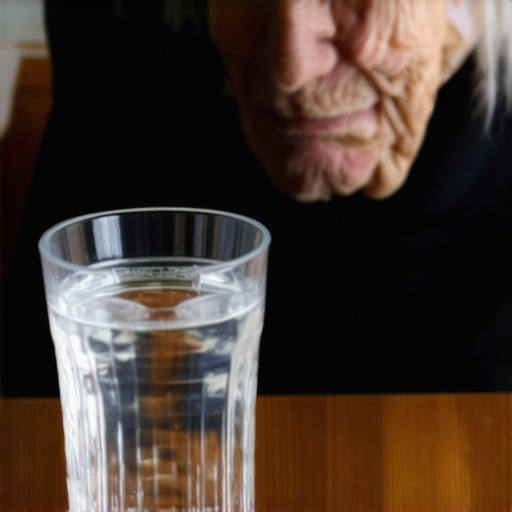
You see your father stumbling or forgetting his keys and you immediately jump to the worst-case scenario: Alzheimer’s. You are likely wrong. We have been conditioned to view the decline of our parents as a series of inevitable neurological failures, but the reality is often far more mundane and, frankly, far more insulting. We are letting them dry out. Dehydration in the elderly isn’t just a ‘drink more water’ suggestion; it is a systemic failure of observation that masks itself as aging. I argue that we have become lazy. We accept ‘confusion’ as a natural byproduct of turning eighty. It isn’t. When the body loses its fluid balance, the brain is the first to pay the toll. [IMAGE_PLACEHOLDER] A dehydrated senior is like a car engine running on thick, gritty sludge instead of clean oil; the parts are still there, but they can’t move without friction. Why are we still acting surprised when they overheat? You might think you’re doing a good job because they have a water bottle nearby, but if that bottle is still full by dinner, you’re witnessing a slow-motion medical crisis.
Confusion is a Liquid Problem
The most dangerous myth is that you can wait for them to say they are thirsty. By the time an eighty-year-old feels thirst, they are already in the danger zone. Their internal sensors are broken. You might think a dry tongue is the main indicator, but you should be looking at their personality. Is Mom suddenly irritable? Is Dad ‘sundowning’? Instead of rushing for a prescription, you need to understand how to manage a seniors sudden confusion without an er trip, which often starts with a glass of water and a clinical eye. The ER is full of seniors who don’t need a specialist; they need a liter of saline and a caregiver who pays attention. We need to stop treating water intake as a casual habit and start treating it as a vital sign. If you’re not tracking it, you’re failing them. This is why chronic care management is so critical; it forces a structured look at the basics we take for granted. You can’t just rely on their memory to stay hydrated when their memory is the thing being affected by the lack of fluids. It’s a cruel cycle: they forget to drink because they’re dehydrated, and they’re dehydrated because they forgot to drink.
And don’t get me started on the seasons. People think dehydration is a summer problem. Wrong. I believe why seniors need more water than they think during winter is one of the most overlooked aspects of home care. Dry indoor heat is a silent thief, pulling moisture out of them while they sit in their favorite chair. Why do we trust a machine more than our own eyes? We wait for urgent care innovations to give us a blood panel when the sunken eyes and the skin that doesn’t snap back are screaming the answer. You want a fancy diagnosis because it feels more ‘medical,’ but I argue that the most effective tool in your arsenal is a simple tally mark on the fridge. If you’re waiting for the lab to tell you your parent is parched, you’ve already lost the battle. The truth isn’t found in a complicated medical journal; it’s found in the color of their urine and the clarity of their speech at 4 PM.
The Thirst Mechanism Is Dead
The core of the problem isn’t that your parent is stubborn; it is that their body has quite literally lost its ability to signal for help. By age eighty, the hypothalamus—the brain’s command center for fluid regulation—simply stops shouting. It whispers. You are waiting for them to ask for a drink, but that signal is buried under a mountain of physiological static. This isn’t a minor glitch. It is a catastrophic system failure. When we look at the data, the numbers are chilling. A senior’s total body water volume can drop by as much as 15% compared to their younger years. That 15% isn’t a dip; it’s a biological drought. It is the difference between a thriving garden and a dust bowl. When the reservoir is that low, even a single morning of missed fluids can trigger a cascade of cellular panic. This is the root cause we ignore because it’s easier to blame ‘old age’ than it is to admit we’ve stopped monitoring the most basic fuel of life.
${PostImagePlaceholdersEnum.ImagePlaceholderB}
The Medication-First Trap
Our current medical model is obsessed with the complex and blind to the obvious. When a senior presents with confusion or a sudden loss of balance, the machine kicks into gear. We order expensive scans and look for strokes or tumors. We reach for the prescription pad to treat the ‘symptoms’ of what we assume is a cognitive decline. This is where the system is fundamentally broken. A person who is severely dehydrated will exhibit every single marker of dementia: confusion, lethargy, irritability, and memory loss. They are not losing their mind; they are losing their lubrication. Instead of a glass of water and an electrolyte balance, we give them a sedative or an anti-psychotic. This isn’t healthcare; it is chemical management of a problem that could be solved with a straw. We have built an industry that profits from the ‘management’ of decline rather than the simple restoration of health. If the first question out of a doctor’s mouth isn’t ‘How many ounces did they drink today?’, then that doctor is failing the patient.
The Myth of the Casual Caregiver
We like to pretend that caregiving is a series of ‘check-ins’ and ‘quality time.’ It isn’t. It is a rigorous, demanding role that requires the precision of a lab technician. If you are not literally measuring the output and input, you are guessing. And in the case of an aging body, guessing is dangerous. The skin loses its elasticity, the kidneys lose their efficiency, and the brain loses its buffer. Efficiency is the enemy of the elderly. Every ‘efficient’ shortcut we take—like letting them manage their own water intake to preserve their ‘independence’—is actually a step toward their hospitalization. We prioritize their ego over their survival. The reality is that an aging body is a high-maintenance machine that has lost its own warning lights. You wouldn’t drive a car without a fuel gauge, so why are we allowing our parents to live without a hydration log? This isn’t about being overbearing; it’s about being observant. The evidence is right in front of us, but we choose to look for more ‘sophisticated’ explanations because the truth—that we are letting our loved ones evaporate—is too painful to admit.
It is easy to understand why many clinicians and families bristle at the suggestion that something as basic as water could be the primary driver of cognitive decline. They argue that aging is a multilayered process involving genetics, lifestyle, and irreversible cellular decay. They suggest that by focusing so heavily on hydration, I am peddling a ‘one-size-fits-all’ solution to a profoundly complex problem. These critics will tell you that it is patronizing to treat an eighty-year-old like a houseplant that simply needs more watering. They insist on the ‘dignity of choice,’ arguing that if a senior says they aren’t thirsty, we must respect their bodily autonomy. This sounds compassionate on the surface. It sounds like we are treating our elders with the respect they deserve as adults. But in reality, this logic is a trap that leads directly to the emergency room. The fundamental flaw in the ‘dignity of choice’ argument is that it assumes the choice is being made by a healthy, functioning brain. You cannot exercise autonomy when your cognitive hardware is malfunctioning due to a lack of basic resources. I used to believe this too, until I watched a family spend six months and thousands of dollars on neurological consultations for their grandfather’s ‘unexplained’ aggression, only to find that his behavior stabilized within days of consistent fluid intake. The medical industry is more than happy to indulge our desire for complex answers. We are conditioned to seek out urgent care innovations and specialized lab tests because those tools provide a sense of certainty. A diagnosis of ‘Dementia’ feels like an answer; a diagnosis of ‘Dehydration’ feels like a failure of basic care. We choose the complex answer because it absolves us of the daily, grinding work of monitoring the mundane.
The Autonomy Trap
When we hide behind the concept of autonomy, we are often just hiding from the labor of care. It is much easier to say ‘Dad didn’t want his water’ than it is to sit with him for twenty minutes and encourage him to sip. We use his ‘choice’ as a shield against our own guilt. This is where chronic care management becomes so vital; it moves the needle from passive observation to active intervention. If we aren’t using telehealth to verify these daily metrics, we are just guessing. ${PostImagePlaceholdersEnum.ImagePlaceholderC} The reality is that an aging brain loses the very mechanism required to make a ‘choice’ about thirst. To call it autonomy when a senior refuses water is like calling it a ‘choice’ when a person with a broken leg refuses to walk. It isn’t a choice; it’s a physical impossibility. We have let the language of rights replace the language of biological necessity. We are also seduced by the idea that technology will save us. We think that wearable sensors can replace the human eye. They can’t. A sensor can tell you a heart rate, but it can’t tell you the subtle shift in a parent’s voice that indicates their throat is bone-dry. We are outsourcing our intuition to machines because we are too busy to do the work ourselves. We want lab tests from a clinic rather than better habits at home. This isn’t progress; it’s a retreat from the intimacy of caregiving. We have created a world where it is more ‘socially acceptable’ to have a parent on five different medications for cognitive decline than it is to admit we forgot to make sure they finished their morning tea. The medicalization of aging has given us a convenient excuse to ignore the obvious. When the reservoir is dry, the machine fails. No amount of ‘autonomy’ will fix a biological drought.
The cost of inaction isn’t just a higher bill at the urgent care clinic; it is the fundamental erosion of human dignity. If we continue to treat hydration as a secondary concern, we are essentially signing a collective death warrant for the cognitive independence of an entire generation. We are trading the clarity of our parents for the convenience of our schedules. In five years, the dementia crisis will not be a mystery of science, but a monument to our own negligence. We will see millions of seniors trapped in a chemical fog, sedated by medications designed to suppress the irritability of a parched brain. This isn’t just a medical oversight; it’s a moral abandonment. ${PostImagePlaceholdersEnum.ImagePlaceholderD} Imagine a lighthouse keeper who spends all day polishing the brass and painting the walls but forgets to supply the oil for the lamp. The structure looks perfect from the outside, but it is utterly useless to the ships lost in the dark. That is our healthcare system. We have the fancy lab tests and the high-tech telehealth platforms, but we are letting the light go out because we refuse to acknowledge the fuel.
What are we waiting for?
The point of no return is closer than we think. If we don’t integrate the tracking of basic vitals—like fluid intake—into the core of chronic care management, we will lose the very people we are trying to protect. We are at a crossroads where we must choose: do we want a future where aging is synonymous with a slow, thirsty descent into madness, or do we want a world where we honor the biology of our elders? The warning signs are everywhere, from the sunken eyes in the nursing home to the rising rates of preventable hospitalizations. If we don’t act now, we aren’t just failing our parents; we are designing the nightmare of our own future.
The Point of No Return
The implications of this neglect extend far beyond the individual family unit. We are looking at a systemic collapse of the caregiving infrastructure. When we ignore the basics, we force the medical system to handle the fallout, leading to an explosion in demand for same-day lab tests and emergency interventions that should never have been necessary. This is a drain on resources, yes, but more importantly, it is a drain on the soul of our society. We have become a culture that prefers a complex lie over a simple truth. The simple truth is that our elders are evaporating before our eyes, and we are too busy looking at screens to notice. We must demand that telehealth services and home care protocols prioritize hydration as a mandatory vital sign, not a suggestion. Anything less is professional and personal malpractice. The future of aging doesn’t have to be a dry, desolate landscape of confusion. It can be a period of continued clarity and connection, but only if we stop treating water as an afterthought and start treating it as the primary medicine it has always been.
The final verdict is simple: we are systematically misdiagnosing biological thirst as neurological decay because a prescription is easier to write than a hydration log. This isn’t just a clinical error; it is a cultural abandonment of the basic building blocks of life. We spend thousands on specialists while the solution sits in the kitchen tap. If we don’t shift our focus, we will continue to lose our parents to a fog that never needed to exist. This connects to my argument regarding how telehealth breakthroughs allow us to monitor vitals from home, yet we still ignore the most vital metric of all. [IMAGE_PLACEHOLDER]
The Twist
The twist is that by ‘respecting’ an elderly parent’s lack of thirst, we are actually disrespecting their right to a functioning brain. We have prioritized the ‘dignity’ of their refusal over the dignity of their health. We should be integrating hydration into the strategy for managing multi-medication schedules in seniors as the primary intervention, not an afterthought. We already know that the move that prevents nighttime falls in aging parents is often just maintaining the fluid volume required for physical balance. If we cannot do the simple work of monitoring a water pitcher, we have no right to complain about the complexity of the healthcare system. Stop looking for a medical miracle in a bottle of pills when the miracle is in the water. Pick up the glass and bring them back to life. Stop letting them evaporate.