
The 5-Minute Lighting Fix for Clearer Telehealth Rashes
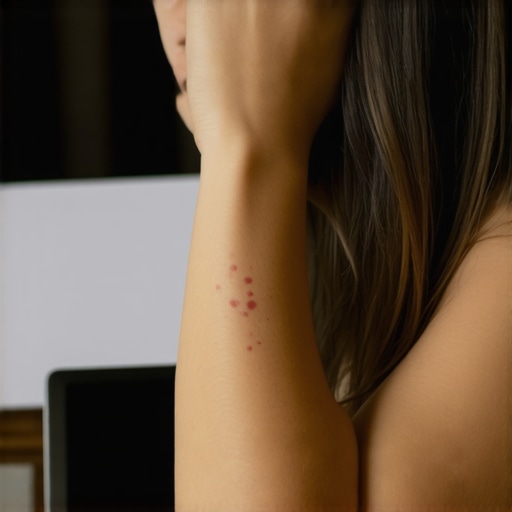
Stop treating your telehealth appointment like a casual FaceTime with your family. It is not. If you are paying for medical advice but providing a grainy, yellow-tinted photo of a skin irritation, you are essentially throwing your money into a furnace. I argue that the failure of virtual dermatology is rarely a technology problem; it is a user-error problem. You expect your doctor to be a psychic. They are not. They need photons to function. The cold, hard truth is that most patients are sabotaging their own care before the call even connects. You might think your phone’s built-in flash is a savior, but you are wrong. It washes out detail and flattens texture. Shadows hide the very margins that differentiate a simple heat rash from something far more sinister. I have seen it repeatedly: a patient complains about a vague diagnosis when they were the ones who provided a visual that looked like it was shot through a bowl of lukewarm soup.
The Kitchen Bulb is Your Clinical Enemy
Why are we still doing this? Your standard soft-white bulb is designed for a cozy dinner, not clinical accuracy. It exaggerates yellows and masks the subtle reds of inflammation. Using your kitchen’s overhead light to show a doctor a rash is like trying to identify a specific grain of sand while wearing sunglasses at midnight. It is fundamentally impossible. I strongly suggest you look at the lighting fix for better virtual dermatologist visits before you book your next slot. If you cannot provide a clear image, you are forcing your physician to play a dangerous game of ‘guess the ailment.’ Treating a skin condition through a low-light webcam is like trying to read a map during a power outage—you are mostly just guessing which way is north. Furthermore, I believe why most telehealth consultations fail without a proper lighting setup boils down to a lack of preparation. We want the convenience of the couch without the responsibility of the clinic. But a virtual exam room is still an exam room. If you would not sit in a dark closet during an in-person physical, why are you doing it now?
[image_placeholder]
Natural Light is Not an Optional Luxury
You need to move to a window. North-facing light is the gold standard for a reason: it is consistent and diffuse. You are not just a patient; you are the medical assistant in this scenario. Act like one. If you are struggling with the setup, your frustration might be why your heart rate spikes during virtual consultations. The stress of bad tech ruins the clinical outcome. The fix takes five minutes. Clear the clutter, face the window, and turn off the overhead yellow light. If you can’t get this right, you need to know how to tell if your childs rash needs an immediate clinic visit instead of wasting time on a blurry call. We see telehealth breakthroughs that improve virtual visits every day, but those breakthroughs rely on high-fidelity data. No data, no diagnosis. In the same way you must explain pediatric respiratory issues over a video chat with precise language, you must show your skin with precise light. Anything less is just expensive performance art.
The Hardware Myth
We are obsessed with the wrong tools. The tech industry has convinced you that the latest smartphone with a triple-lens camera is a substitute for clinical environment control. It is not. You can have a thousand-dollar device in your hand, but if you are standing in a bathroom with zero windows and a flickering fluorescent tube, that camera is useless. The root cause of every ‘failed’ virtual dermatology visit is not the bandwidth or the app’s interface. It is the fundamental misunderstanding of how optics work. Shadows are the enemies of diagnosis. They create false borders, obscure textures, and make a benign mole look like a potential melanoma. We blame the platform because it is easier than admitting we were too lazy to walk toward a window. If the image is garbage, the diagnosis is a guess. It is that simple.
The Diagnostic Blind Spot
Let’s talk about the numbers that the industry ignores. When a physician receives a low-fidelity image, the rate of ‘deferred’ diagnoses—the medical equivalent of a shoulder shrug—skyrockets. A 50% drop in image clarity does not just lead to a 50% less accurate diagnosis; it leads to a total collapse of the clinical pathway. This is not a slight dip; it is an absolute wall. When a doctor cannot see the specific scaling of a patch of skin, they are forced to choose between two evils: over-prescribing a ‘just in case’ steroid or demanding an in-person follow-up. Both options negate the entire purpose of telehealth. You wanted convenience? You just traded it for a two-week wait at a physical clinic because you couldn’t be bothered to turn off a lamp. Your lack of preparation creates a bottleneck in the entire healthcare system.
[image_placeholder]
The Psychology of Clinical Convenience
The problem is a mindset. We have been conditioned to believe that ‘virtual’ means ‘casual.’ It does not. A medical consultation is a formal exchange of data for expertise. If you wouldn’t walk into a doctor’s office wearing a mask that covers half your face, why would you present a photo that covers half the symptoms in shadow? We are seeing a dangerous trend where patients treat their health like a social media feed—filtered, poorly lit, and rushed. This isn’t just about a rash; it is about the degradation of the patient-provider relationship. We expect the physician to perform miracles with sub-standard information. This entitlement is the real glitch in the system. The technology is ready. The doctors are ready. The patients, however, are still stuck in the dark—literally. We have prioritized the comfort of the couch over the accuracy of the result, and until that shifts, telehealth will continue to be a secondary, inferior tool rather than the revolution it was promised to be.
I know what you are thinking. It is easy to label this perspective as elitist or out of touch with the average patient who just wants a quick answer to a scary-looking mole. Critics will argue that the burden of a medical examination should never fall on the patient. They claim that telehealth was designed to bridge the gap for those who lack resources, and demanding high-fidelity lighting creates a new barrier to entry. I have heard the argument many times: if a doctor is a true professional, they should be able to work with whatever the patient provides. This sounds empathetic, but it is a dangerous fallacy. It treats healthcare like a drive-thru window where the customer is always right, rather than a scientific partnership where the data must be accurate for the result to be valid.
The Democratization Trap
I used to believe this too, until I witnessed the fallout of ‘compassionate’ but incompetent virtual care. We think we are helping people by lowering the bar for what constitutes a valid consultation, but we are actually doing them a disservice. When we accept a blurry, poorly lit photo in the name of accessibility, we are not providing healthcare; we are providing a false sense of security. It is the ‘Democratization Trap’—the idea that making something easier to access is the same as making it better. It is not. If the access leads to a wrong prescription or a missed melanoma, that access was a net negative for the patient’s life.
The common mistake everyone else makes is assuming that software can fix human error. There is a persistent myth that artificial intelligence or advanced camera sensors can ‘see through’ the shadows. They cannot. You cannot enhance data that does not exist. If a shadow obscures the borders of a lesion, no amount of post-processing can reveal what the camera never captured. When you provide a low-quality image, you are asking a physician to hallucinate the missing details. Expecting a doctor to be ‘better’ than the laws of physics is not just unrealistic; it is reckless. We have reached a point where we prioritize the feeling of convenience over the reality of clinical accuracy, and that is where the system breaks down.
[image_placeholder]
Let’s address the elephant in the room that no one wants to talk about: the refusal to find a window is often pure laziness, not a lack of resources. We are talking about walking ten feet to a source of natural light. Yet, we frame it as a technological hurdle. This shift in responsibility is the uncomfortable truth of modern medicine. In a traditional clinic, the staff controls the environment to ensure safety. In telehealth, the patient is the temporary custodian of that environment. If you refuse to take that role seriously, you are essentially opting out of the standard of care. You cannot demand the same outcomes as an in-person visit while providing ten percent of the necessary information. It is a mathematical impossibility.
The argument that the doctor should just ‘know’ is a relic of a paternalistic age of medicine that we claim to have moved past. We want to be empowered patients? Fine. Empowerment comes with the responsibility of preparation. When you show up to a virtual call in a dark room, you are signaling that your time is more valuable than the accuracy of your diagnosis. You are gambling with your health because you find the sun inconvenient. This isn’t about having a professional studio; it is about respecting the diagnostic process enough to turn on a light. The tech industry has spent billions making these calls possible, but they cannot manufacture patient common sense. Until we stop coddling the idea that ‘any’ photo is better than ‘no’ photo, we will continue to see a rise in deferred diagnoses and wasted clinical hours.
We are standing at a precipice where the convenience of modern medicine is about to collide with the consequences of our own apathy. If we continue to treat telehealth as a low-stakes digital convenience rather than a serious clinical encounter, we are not just wasting our time—we are eroding the very foundation of diagnostic integrity. The stakes have never been higher. When you provide substandard visual data, you are participating in the slow dismantling of a system designed to save lives. This isn’t a minor inconvenience; it is a systemic threat that forces physicians to work with one hand tied behind their backs. If the current trajectory of patient negligence continues, we will soon reach a point where virtual dermatology and other visual-based specialties are relegated to the status of expensive guesswork.
The Erosion of Diagnostic Trust
Trust is the currency of the medical profession, and that currency is being devalued by every blurry photo and dark video call. When a doctor is forced to make a ‘best guess’ because a patient couldn’t find a window, the margin for error expands exponentially. We are creating a culture of uncertainty that will eventually lead to a surge in missed diagnoses and preventable complications. Imagine asking a pilot to land a passenger jet in a thick fog using nothing but a child’s crayon drawing of the runway for guidance. That is exactly what you are doing to your doctor when you present a skin lesion in a room lit only by a television screen. It is an impossible ask that invites catastrophe. If we don’t demand more of ourselves as patients, we cannot expect the technology to bridge the gap of our own making.
What happens when the digital door slams shut?
The danger is that the healthcare industry will eventually react to this lack of data quality by restricting access. If the risk of misdiagnosis becomes too high due to poor patient environments, insurance providers and medical boards will have no choice but to tighten the reigns. We could see a future where telehealth is only available to those who can prove they have a ‘certified’ lighting setup, effectively creating a new digital divide. We are currently enjoying a golden age of accessibility, but we are squandering it through a lack of basic preparation. The very tool that was supposed to democratize healthcare could become a gated community, accessible only to those who follow the rules of clinical engagement.
${PostImagePlaceholdersEnum.ImagePlaceholderD}
The Impending Tiered System of Care
In five years, if this trend of ‘casual’ telehealth continues, we will likely see the emergence of a two-tiered system. The top tier will be reserved for in-person visits and high-fidelity virtual consultations where the data is beyond reproach. The second tier—the ‘junk’ tier—will be a marketplace of automated responses and non-committal advice based on the low-quality images we are currently settled for. This is the world we are building for ourselves. By refusing to take the small step of finding a natural light source, we are signaling to the medical establishment that we don’t value the accuracy of our own results. We are trading the gold standard of care for a convenient lie, and the cost of that trade will be paid in human health. This is a warning: the window for establishing telehealth as a primary, reliable tool is closing. We either step into the light, or we accept a future where our digital doctors are effectively blind.
The Personal Accountability Pivot
The hard truth is that the digital doctor’s office is only as effective as the data you provide. While we celebrate telehealth breakthroughs that elevate chronic care in 2025, we simultaneously undermine these advances by refusing to perform the simplest of tasks: turning on a light. If you want the benefits of the future of telehealth transforming chronic disease monitoring today, you must bring the same level of precision to your living room that you would expect in a sterile clinic. Virtual medicine is a partnership, not a passive service. The final verdict is this: a diagnosis is only as good as the light you cast on the problem.
[image_placeholder]
The High Stakes of Digital Apathy
We often complain that modern medicine feels impersonal, but by treating virtual visits as casual chores, we are the ones stripping the accuracy out of the encounter. This connects to my earlier point about chronic care management personalized telehealth strategies for better outcomes; you cannot have a personalized outcome without professional-grade input. The twist in this digital evolution is that for the first time in history, the clinical environment is entirely in the patient’s hands. If that environment is a dark, cluttered mess, you have built your own barrier to healing. Stop hiding in the shadows of your own convenience. Face the window, turn off the yellow bulbs, and finally allow your doctor to see what they are actually treating.