
How to Verify Your Home Blood Pressure Cuff Is Actually Accurate
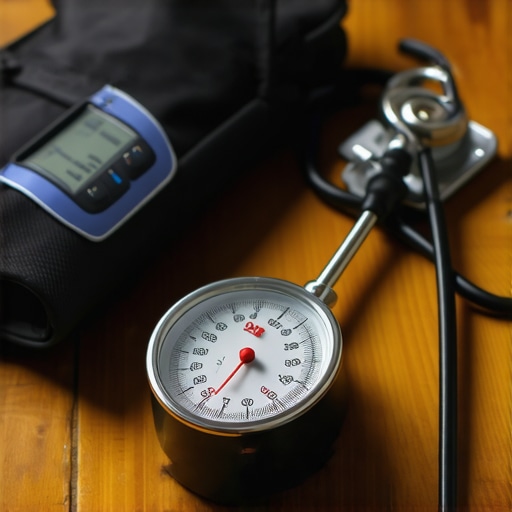
You trust that little digital screen more than you trust your own intuition. You wrap the nylon cuff around your arm, press a button, and wait for the verdict. But here is the cold truth: that number is likely wrong. We are living in an era of medical theater, where we surround ourselves with gadgets that provide the comfort of data without the burden of accuracy. If you haven’t verified your device, you aren’t monitoring your health; you are playing a dangerous game of cardiovascular roulette. I argue that a home blood pressure monitor is useless—and potentially harmful—unless it has been rigorously calibrated against a professional standard. Most of what you see on store shelves is marketing, not medicine.
The Market Sells Convenience Not Health
We have been sold the lie that more data equals better health. It doesn’t. Using an unverified blood pressure cuff is like trying to navigate the Atlantic with a compass that only points toward your kitchen sink. It gives you a direction, sure, but it is the wrong one. You might be ignoring a legitimate crisis because your cheap drugstore monitor says you’re fine, or worse, you’re stressing yourself into a stroke because a faulty sensor is throwing high numbers. This is why I always tell people that understanding the stealth reason your blood pressure spikes at the clinic is only half the battle; the other half is knowing if your home hardware is even capable of telling the truth.
So, why are we still doing this? Why do we bet our lives on unvalidated tech? The reality is that many home monitors aren’t even clinically validated. They are consumer electronics masquerading as medical-grade tools. If you haven’t checked your device against a site like Stride BP or brought it into a physical office to compare it with a manual sphygmomanometer, you are guessing. And in cardiology, guessing is a death wish. You might think you’re being proactive, but you’re actually just being reckless. You are falling for the error in tracking your blood pressure only once a day with a device that shouldn’t have passed quality control.
Stop Trusting the Box
The solution isn’t to stop measuring; it is to stop being naive. You need to verify your cuff by bringing it to your next appointment. If your doctor won’t take two minutes to check your machine against theirs, find a new doctor. This isn’t about being difficult; it’s about survival. You also need to stop making basic lifestyle errors that skew the data. I’ve seen too many people panic over a high reading when they really just need to find the salt alternative that does not spike your blood pressure and learn the best time to take your blood pressure for the truest reading. But none of those tips matter if the machine itself is a liar. Verify the hardware first, or don’t bother measuring at all.
The problem isn’t that people are lazy; the problem is that the medical industry has outsourced its responsibility to the retail shelf. We are told to take charge of our health, yet we are handed tools that are barely more accurate than a mood ring. This is the consumerization of healthcare in its most toxic form. We have prioritized the feeling of being in control over the reality of clinical accuracy. When you buy a cuff because it’s on sale next to the multivitamins, you aren’t making a health decision. You are making a retail decision. And retail decisions are based on profit margins, not pulse waves.
Retail Convenience Is Not Clinical Care
We are told that having these devices in our homes is a victory for patient autonomy. It isn’t. It is a surrender. The market has flooded our medicine cabinets with unvalidated hardware because it is cheaper to manufacture a pretty box than a precise sensor. This shift away from traditional lab tests and professional oversight toward ‘do-it-yourself’ diagnostics has created a massive quality vacuum. The technology isn’t there yet, but the marketing is already decades ahead. The hardware is the problem. Most manufacturers do not subject their devices to the rigorous, independent testing required to ensure they work on every arm. They test for the ‘average’ user, and if you fall outside that narrow band—because of age, weight, or arterial stiffness—the numbers you see on that screen are nothing more than digital fiction.
${PostImagePlaceholdersEnum.ImagePlaceholderB}
The Statistical Void
Let’s look at the actual wreckage this causes. Research has shown that nearly one-third of home blood pressure monitors are off by more than 10 mmHg. That 30% failure rate isn’t a minor margin of error; it’s a systemic betrayal. It is the difference between life and death. If your monitor reads 130 when your actual pressure is 145, you are walking around with stage 2 hypertension while thinking you are perfectly safe. You aren’t just misinformed; you are vulnerable. This is why the rise of telehealth and remote chronic care is a double-edged sword. These services are only as good as the data they receive. If you are uploading junk data to your doctor, they are making clinical decisions based on a lie. A physician can be the most brilliant mind in the world, but if the input is garbage, the output will be dangerous.
The Myth of the ‘Good Enough’ Reading
I hear it all the time: ‘It’s close enough to give me a general idea.’ No. In cardiology, ‘close enough’ is how you end up in urgent care with a preventable crisis. The body doesn’t negotiate with ‘general ideas.’ Your arteries don’t care about your device’s brand recognition or its user-friendly interface. They care about the actual physical pressure being exerted against their walls. When we accept these unverified devices, we are accepting a lower standard of truth. We have been conditioned to believe that digital means accurate. It doesn’t. Digital just means the error is displayed in high-definition. We are living through a period where the convenience of the gadget has eclipsed the necessity of the truth, and until we demand that every device on a shelf passes the same standards as the equipment in a trauma ward, we are just guessing in the dark.
It is easy to see why the medical establishment and the tech industry have locked arms to promote the ‘any data is good data’ mantra. The argument is seductive: even if a home monitor is slightly off, it captures the white-coat-free reality of your daily life. It supposedly identifies trends that a biannual visit to a clinic would miss. The logic suggests that by putting a cuff in every household, we are democratizing health and catching the silent killer before it strikes. It sounds like progress. It sounds like empowerment. But this logic collapses the moment you realize that a trend based on a flawed baseline is just a consistently wrong map. If you are lost in the woods, a compass that is ten degrees off won’t eventually lead you home just because you use it every day; it will only lead you deeper into the thicket with more confidence.
The Empowerment Trap
I used to believe this too, until I sat across from a man who had meticulously logged his healthy 120/80 readings for six months on a popular brand-name device. When we checked it against a clinical standard, his actual pressure was 155/95. He wasn’t healthy; he was a ticking time bomb who had been lulled into a coma of complacency by a faulty sensor. He did everything right, and the machine betrayed him. This is the danger of the ‘trend’ argument. A trend of errors is still a disaster. We have fallen into the trap of valuing the act of measurement over the accuracy of the result. We treat checking our numbers as a ritual of virtue rather than a medical necessity. The industry counts on this. They know that a consumer is more likely to buy a device that looks sleek on a nightstand and syncs with an app than one that has undergone the grueling process of independent clinical validation.
${PostImagePlaceholdersEnum.ImagePlaceholderC}
This is the toxic byproduct of the quantified self movement. We have traded the stethoscope for the smartphone, assuming the transition was an upgrade. It wasn’t. In the rush to make healthcare accessible, we made it unreliable. When we tell patients that close enough is acceptable for home use, we are essentially saying that their lives at home are less valuable than their lives in the hospital. We are telling them that precision is a luxury they don’t need until they are already in the back of an ambulance. This shift toward remote chronic care relies entirely on the integrity of the hardware, yet we allow that hardware to be manufactured to the standards of a child’s toy. If you are relying on an unvalidated device for telehealth consultations, you aren’t participating in modern medicine; you are participating in a digital seance.
And let’s address the argument of cost. Critics claim that clinical-grade validation makes devices too expensive for the average person. This is a false choice. We aren’t talking about a price difference of thousands of dollars; we are talking about the difference between a thirty-dollar toy and a sixty-dollar medical tool. By prioritizing the lowest possible price point, manufacturers are choosing their profit margins over your arterial health. They are flooding the market with wellness gadgets that have no business being used for diagnostic decisions. These devices bypass the rigorous lab tests and scrutiny that professional equipment must endure. If your data isn’t reliable, it isn’t data; it’s noise. And in the world of cardiovascular health, noise is a distraction we cannot afford. Stop pretending that a gadget is your ally just because it has a Bluetooth icon. Demand the truth, or admit you are just playing doctor with a plastic cuff while risking a trip to urgent care.
We are standing at a crossroads that determines the future of human biology. If we continue to ignore the systemic failure of home medical devices, we aren’t just tolerating a few bad readings; we are actively dismantling the integrity of the patient-physician relationship. The stakes are far higher than a single incorrect number on a screen. We are training an entire generation to ignore their bodies and worship an algorithm that hasn’t been vetted for the task. This is the path toward a future where ‘health’ is merely a performance—a series of green checkmarks on a dashboard that bear no relation to the actual state of our internal organs.
The Collapse of Truth
If this trend continues for the next five years, we will see a complete decoupling of data from reality. We will have millions of people managing complex chronic care conditions using tools that are effectively broken by design. Imagine a world where every diagnostic step, from lab tests to home monitoring, is viewed through a lens of skepticism because we allowed the market to be flooded with unvalidated junk. It is like building a skyscraper on a foundation of loose gravel; you can design the most beautiful structure in the world, but if the baseline measurements are off, the entire edifice is destined to crumble.
${PostImagePlaceholdersEnum.ImagePlaceholderD}
What Are We Waiting For?
The medical establishment is currently asleep at the wheel while the tech industry drives us toward a cliff. We are told that telehealth will bridge the gap for rural and underserved populations, but if those patients are being given tools that lie to them, we are only expanding the reach of medical malpractice. We are creating a tier-based system where those who can afford clinical-grade validation survive, and those who rely on ‘best-sellers’ from the local pharmacy are left to navigate a minefield of misinformation. This isn’t just a market failure; it is a moral catastrophe. We are sacrificing the safety of the vulnerable for the convenience of the boardroom.
The Point of No Return
We must stop viewing these devices as harmless gadgets. They are the frontline sensors of our existence. When they fail, people don’t just get annoyed; they die. They end up in urgent care with strokes that could have been prevented and heart attacks that weren’t ‘supposed’ to happen. If we do not demand that every piece of medical hardware sold on a retail shelf meets the same standard as the equipment used in a hospital, we are effectively admitting that we have given up on the truth. We are choosing a comfortable lie over a hard reality, and in the world of medicine, that choice is always fatal. We are approaching a moment where we will no longer be able to distinguish between a healthy person and a person with a good marketing team.
The home blood pressure monitor is not a medical device until a professional validates its worth; everything else is just expensive jewelry for your arm.
A Mandate for Real Accuracy
We are at a tipping point where the ‘quantified self’ movement is crashing into the hard reality of clinical biology. If we want to embrace the future of telehealth, we must stop accepting data that belongs in a toy store. This isn’t just about blood pressure; it is a systemic issue where your home pulse ox might be giving you false anxiety while your unvalidated cuff gives you a false sense of security. True chronic care management requires more than just a Bluetooth connection; it requires a commitment to the truth. You wouldn’t trust a plastic thermometer to time a shuttle launch, so stop trusting a retail-grade sensor to monitor your heart.
Your Move
I challenge you to bring that device to your next appointment. Do not rely on specific moves to lower your blood pressure before a checkup just to satisfy a machine that might be lying to you anyway. If your device fails the comparison test, throw it away. The most ‘advanced’ gadget on the market is worthless if it cannot perform the one task it was built for. We have spent enough time worshipping convenience at the altar of retail healthcare. The very technology marketed to keep us out of the clinic is exactly what might lead us there by hiding the truth until it is too late. It is time to demand that our technology respects the complexity of our bodies. Stop playing doctor with a plastic cuff and start demanding clinical truth. Your life is not a retail decision.