
Why Your Home Pulse Ox Is Giving You False Anxiety
Your Home Pulse Oximeter Is a Teched-Out Anxiety Machine
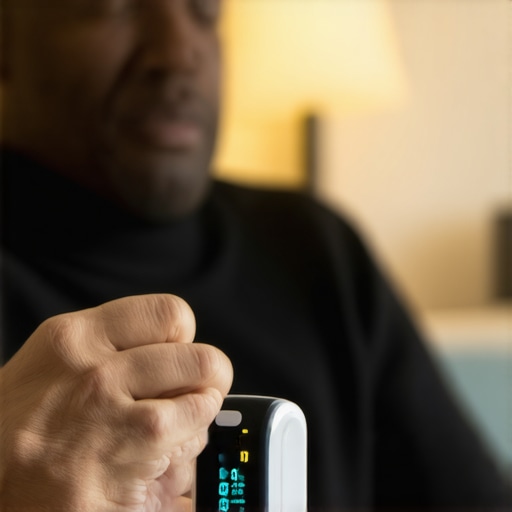
You are staring at a tiny, glowing red number on your fingertip as if it is the voice of a god. It flickers from 98 to 94, and suddenly your heart is racing. You are convinced your lungs are failing. I argue that we have turned our living rooms into low-rent intensive care units, and the result isn’t better health—it is a psychological tailspin. These consumer-grade pulse oximeters are little more than digital pacifiers for the worried well, yet they possess a terrifying power to manufacture panic where none exists. We have become a society obsessed with biological surveillance, but we are using tools that have the precision of a weather vane in a hurricane. I have written before about the error in relying on home pulse oximeters for safety, and the situation has not improved. We are trading our peace of mind for a flickering LED that does not even understand the basics of human physiology.
The Plastic Gadget That Lies to You
Why are we still doing this to ourselves? We treat these forty-dollar plastic clips as if they are gospel, ignoring the inconvenient truth that they were never designed for clinical diagnostic precision. Think of a home pulse ox as a plastic compass in a magnet factory. It is designed to point North, but it is far too easily distracted by everything around it to actually lead you home. Cold fingers, a coat of nail polish, or even just moving your hand can send the readings into a freefall. This isn’t medical data; it is noise. I believe this obsession with real-time tracking is exactly why your heart rate spikes during virtual consultations. You aren’t suffering from a respiratory crisis; you are suffering from a feedback loop of digital dread. We have mistaken the ability to measure something for the ability to understand it. We see telehealth breakthroughs as an invitation to clutter our lives with sensors, but without a medical degree to interpret the data, we are just guessing in the dark.
Stop Mistaking Data for Health
The hard truth is that your body is not a machine that produces a steady, unchanging output. It is a living, breathing, fluctuating system. When you obsess over a single point of data, you lose the big picture. I argue that the primary product of the home pulse oximeter industry isn’t safety—it is anxiety. People spend hours scrolling through charts, convinced that every dip is a sign of impending doom. They ignore the fact that they feel perfectly fine otherwise. We have outsourced our intuition to a sensor that cannot tell the difference between a life-threatening event and a loose battery. If you want to actually improve your wellbeing, you should focus on the simple change for more accurate at-home heart monitoring rather than clutching a toy. The cult of the sensor has failed us because it replaces actual medical wisdom with a screen that won’t stop blinking. We need to stop playing doctor with gadgets that are more akin to mood rings than medical instruments. The next time you feel the urge to clip that device to your finger, ask yourself: am I checking my oxygen, or am I just feeding my fear?
The fundamental failure of the consumer health-tech boom is the delusion that data equals diagnosis. We have been sold a lie that more information is more health. It isn’t. The problem isn’t the infrared light emitting from that forty-dollar clip; the problem is the human brain’s inability to process physiological noise without a filter. We have reached a point where the device is no longer serving the patient; the patient is serving the device, catering to its finicky demands for stillness and warmth just to get a reading that might not even be true.
The Physics of a False Positive
Let’s look at the mechanics. A pulse oximeter works by passing light through your tissue. It is a delicate dance of physics that requires stability. But you are not stable. You are a twitchy, moving, living creature. When the FDA issued its 2022 safety communication, they didn’t just suggest these devices might be off; they confirmed a systemic failure. For individuals with darker skin pigmentation, the error rates climb significantly. That 3% or 4% discrepancy isn’t a minor glitch. It is a chasm. If your actual saturation is 90%—a level requiring medical attention—but your device reads 94% because of your skin tone or a bit of poor circulation, the device is no longer a tool. It is a trap. It gives you a false sense of security while your body is struggling, or worse, it triggers a panic attack when you are perfectly fine. We are using 1980s technology to try and solve 2025’s anxiety, and the math simply does not hold up under scrutiny.
${PostImagePlaceholdersEnum.ImagePlaceholderB}
Profiteering From the Pulse
The problem is actually the business model of the “Worried Well.” Manufacturers don’t sell these devices to people who are sick; they sell them to people who are afraid of being sick. There is a massive difference. Clinical-grade equipment costs thousands of dollars because it accounts for motion artifacts and low perfusion. Your drugstore clip-on does not. It is built to a price point, not a medical standard. I argue that the industry knowingly exploits the gap between “consumer-grade” and “medical-grade” to move units. They slap a disclaimer in microscopic font on the box, then market the device with imagery of peace of mind. It is a predatory cycle. You buy the device to feel safe. The device gives you a weird reading. You get scared. You buy more gadgets to verify the first one. This isn’t healthcare; it is a subscription model for neurosis. The market thrives on the fact that you don’t know how to interpret the data you’re paying for.
Where the Math Fails the Patient
We see this same pattern in how we approach chronic care. We are told that constant monitoring is the future of medicine. But data without interpretation is just clutter. When a patient sees a number drop from 98 to 92, they don’t think about the fact that they just shifted their hand or that the room is a bit chilly. They think about intubation. This isn’t an exaggeration; it is what happens in urgent care waiting rooms every single day. We have created a society of amateur clinicians who are armed with the wrong tools and zero context. The root cause of our current health anxiety isn’t a lack of data. It is a surplus of garbage data. We are drowning in numbers and starving for actual wisdom. The tech companies have convinced us that we cannot trust our own breath unless it is validated by a sensor. They are wrong. This obsession with the digit on the screen is distracting us from the actual signals our bodies are sending every second.
It is easy to see why the medical establishment and tech enthusiasts alike rallied behind these devices. The “silent hypoxia” narrative is a powerful one. Proponents argue that a forty-dollar investment can provide a window into the lungs that symptoms alone cannot. They point to the rare but real cases where a low reading prompted a life-saving trip to the emergency room. In theory, this is the pinnacle of proactive chronic care. If we can monitor heart rates and glucose levels, why wouldn’t we want to keep a constant eye on oxygen? The argument suggests that by putting these tools in the hands of the public, we are democratizing safety and preventing late-stage crises.
But this defense of the consumer pulse oximeter relies on a dangerous assumption: that more data is inherently better than no data. It isn’t. Not when the data is fundamentally flawed and lacks professional context. I used to believe this too, until I spent enough time watching the real-world fallout of these gadgets. I witnessed patients with stable conditions spiraling into panic because of a temporary dip caused by nothing more than a change in room temperature or a low battery. The “early warning” argument falls apart when the alarm goes off every time you move your arm too quickly. We are falling into a common trap where we prioritize the theoretical benefit of the few over the measurable harm to the many.
${PostImagePlaceholdersEnum.ImagePlaceholderC}
The Silent Hypoxia Myth
Yes, a pulse ox might catch a genuine drop in oxygen once in a thousand readings. But what about the other nine hundred and ninety-nine? Those readings are driving people to call telehealth lines and crowd urgent care clinics for issues that are purely mechanical or psychological. We have created a massive, unmanaged screening program for the entire population without any of the safeguards or quality controls that usually accompany professional lab tests. The term “silent hypoxia” has been weaponized by marketing departments to sell peace of mind to the healthy. In a clinical setting, oxygen monitoring is part of a holistic assessment. Nurses look at the respiratory rate, the color of the skin, and the physical effort of breathing. A consumer at home looks at a single, flickering number on a screen.
By focusing on the digit, we are training ourselves to ignore our own bodies. We are being taught that we are “silent” sufferers who cannot feel our own distress unless a sensor validates it. This is a profound shift in how humans interact with their health, and it is a shift designed by companies that profit from our collective insecurity. The technology is simply not there yet for the average user to make informed decisions. While clinical assessments are conducted under controlled conditions, your living room is a chaotic environment of movement and ambient light. We are using tools that are technically “cleared” by regulators but not “approved” for diagnostic use. This is a subtle but vital distinction that most consumers miss. A device can be cleared if it is substantially equivalent to another device, but that doesn’t mean it is accurate enough to base a life-or-death decision on at 3:00 AM in a dark bedroom.
The real breakthroughs in chronic care won’t come from cheaper sensors; they will come from better education on how to interpret the signals our bodies already send us. Until these devices can account for skin tone, movement, and the complexity of human physics, they are nothing more than high-tech distractions. We need to stop pretending that these devices are a substitute for medical wisdom. They are democratizing anxiety, not healthcare, and the cost of that anxiety is far higher than the price of the plastic clip on your finger.
The stakes of this digital obsession go far beyond a wasted forty dollars or a night of lost sleep. We are currently redesigning the human experience to be one of perpetual, unblinking vigilance. This matters right now because the very infrastructure of our healthcare system is being rebuilt around the assumption that more data is always better. If we do not recalibrate our relationship with these sensors immediately, we risk a total decoupling from our physical reality. We are teaching ourselves, and the next generation, that our bodies are unreliable narrators and that only a silicon chip can be trusted to tell the truth. If the foundation of our health awareness is built on the “garbage data” of consumer-grade electronics, the entire skyscraper of modern medicine will eventually lean and buckle under the weight of its own inaccuracies.
We are on a slippery slope toward a future where wellness is no longer defined by the presence of vitality, but by the absence of alerts. Imagine the world in five years: your watch, your ring, your mattress, and even your kitchen appliances are all streaming a constant, jagged feed of biological noise to a central server. You might wake up feeling refreshed and ready to conquer the day, but a notification on your phone informs you that your blood oxygen dipped slightly during the third hour of sleep. Suddenly, your morning is ruined. You didn’t feel sick a minute ago, but the data says you should be worried. This is the world we are rapidly building—a reality where the algorithm is the final, undisputed arbiter of our quality of life.
Will We Ever Trust Our Own Bodies Again?
Using these uncalibrated home monitors to manage your long-term health is like trying to navigate a dense, fog-covered forest by looking at a broken GPS while ignoring the actual cliff edge crumbling beneath your feet. You might feel like you are in command because you have a screen to look at, but you have no actual control over the physics of the situation. You are merely a passenger in a high-tech simulation of safety, distracted by a flickering LED while your actual health needs go unaddressed.
${PostImagePlaceholdersEnum.ImagePlaceholderD}
If this trend continues, we will witness the slow death of the clinical intuition that has served as the backbone of medicine for centuries. Physicians are already being buried under a mountain of false-positive data, forced to spend their limited time debunking readings from cheap sensors instead of diagnosing the actual patients in the room. We are trading the depth of medical wisdom for the shallow, momentary convenience of a digital readout. This creates a dangerous bottleneck in our urgent care centers and telehealth platforms, which are increasingly filled with people whose only real symptom is a low battery or a poor sensor connection.
We are reaching the point of no return where the quantified self movement—once an empowering way to understand our habits—has mutated into a tool of surveillance that primarily benefits the companies selling the hardware. This is a moral imperative: we must reclaim our right to be unmonitored. We must recognize that a healthy body is not one that produces a perfect, flat line of data, but one that is allowed to fluctuate and exist without a constant digital witness. If we do not draw the line now, we aren’t just buying a pulse oximeter; we are buying a permanent, anxiety-ridden seat in a digital waiting room that never ends.
The Human Sensor
Your lungs and your heart have a language of their own that existed long before the first infrared sensor was ever soldered onto a circuit board. By obsessing over a flickering red digit, you are not achieving safety—you are achieving a state of perpetual, low-grade terror that no clinical intervention can fix. I argue that the ultimate medical failure of our era is not a lack of technology, but our total surrender to it. We have become so enamored with the idea of data that we have forgotten how to actually live in our own bodies. This connects to the broader problem of how we approach modern medicine; we often prioritize the noise of a consumer device over the clarity of advanced lab test technologies that actually offer diagnostic weight. If you are truly concerned about your vitals, you should be looking toward transforming chronic disease monitoring through professional channels rather than a drugstore bargain bin. Even the common error in tracking your blood pressure only once a day proves that without context and professional frequency, a single number is just a distraction.
The Final Verdict
We are trading our intuition for a digital pacifier that does not even know who we are. The machine is a crutch that has effectively broken our ability to walk confidently through our own lives. We have outsourced our peace of mind to a forty-dollar piece of plastic that cannot distinguish between a respiratory crisis and a cold thumb.
The Twist
The great irony of the health-tech revolution is that the more we monitor ourselves, the less we actually know. We are drowning in the quantitative but starving for the qualitative. The most accurate sensor you will ever own is not made of silicon—it is the one you were born with, and it does not require a charging cable. The next time you feel the urge to clip that device to your finger, stop and listen. Your body is already telling you exactly how it feels; you just have to be willing to hear it without a digital filter. Put the gadget back in the drawer and start trusting your own breath again.