
The Secret to Managing Chronic Inflammation Through Better Sleep
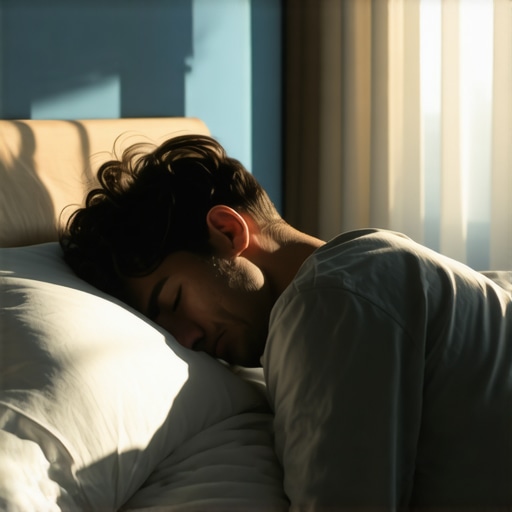
Stop obsessing over your Mediterranean diet and your expensive supplements. You are likely spending hundreds of dollars on organic blueberries while your cellular health is actively disintegrating because you treat sleep like an optional luxury rather than a biological mandate. I argue that the modern obsession with “hustle culture” is not just a productivity trap; it is a direct invitation to systemic, chronic inflammation that no amount of green juice can fix.
You might think you are “getting by” on six hours of restless shut-eye, but you are wrong. In fact, you are essentially asking your body to run a marathon while the trash collectors are on strike. Imagine a city where the waste management crews simply stopped showing up. Within days, the streets are clogged; within weeks, the system collapses. This is exactly what happens in your vascular system and your joints when you deprive yourself of deep, restorative cycles. This isn’t just about feeling groggy. It’s about your body losing its ability to extinguish the smoldering fires of daily oxidative stress.
We often ignore the reality that routine blood work often misses chronic inflammation because we aren’t looking at the right biomarkers at the right times. If you aren’t sleeping, your internal chemistry is skewed toward a permanent “alarm” state.
Your Wellness Routine Is Failing You
Why do we continue to prioritize the visible over the invisible? It is easier to post a photo of a vitamin bottle than it is to strictly enforce a nine-o’clock bedtime. I believe we have been sold a lie that health is something you buy in a bottle. The hard truth is that the most potent anti-inflammatory tool you possess is entirely free, yet you squander it every time you scroll through your phone at midnight. When you skip those critical hours, you aren’t just tired; you are triggering a cascade of cytokines that attack your own tissues.
I have seen people try every hack in the book, yet they refuse to acknowledge that most wellness screenings skip important cortisol timing, which is inextricably linked to your sleep-wake cycle. If your cortisol is spiking at midnight because your sleep is fragmented, your body stays in a pro-inflammatory loop. It is time to stop looking for complex solutions to a problem rooted in basic biological neglect. If you want to manage your long-term health, you need more than just a pill; you need personalized strategies for better outcomes that start with the pillow, not the pharmacy.
The obsession with ‘input’—what we eat, what we swallow, what we inject—is a massive distraction. The real crisis in modern health is ‘output.’ Your brain has a literal sewage system, the glymphatic system, that only operates at full capacity when you are completely unconscious. When you cut those hours to chase a deadline, you aren’t just losing focus; you are letting metabolic sludge accumulate in your neural pathways. This is the root cause of the brain fog you try to cure with more caffeine. It is a biological debt that cannot be refinanced, and the interest rates are paid in the form of accelerated cognitive decline and chronic systemic failure. We have been conditioned to believe that our bodies are machines that can be pushed indefinitely, but biology does not care about your quarterly goals.
The Clearance Crisis
The biohacking community is obsessed with optimization, yet they consistently ignore the most fundamental law of biology: you cannot build in a construction site that hasn’t been cleared of debris. While you are busy tracking your macros and testing your gut microbiome, your brain is drowning in its own waste. The glymphatic system only opens its floodgates during the deepest stages of non-REM sleep. If you are cutting your rest, you are essentially forcing your neurons to function in a landfill. The result is not just fatigue; it is a permanent state of neuro-inflammation that no ‘superfood’ can touch. It is a physical reality that no amount of willpower can overcome. You are either cleaning your system, or you are letting it rot.
${PostImagePlaceholdersEnum.ImagePlaceholderB}
The Math of Biological Collapse
Look at the data, but look at it through the lens of survival, not just statistics. A single night of partial sleep deprivation can trigger a nearly 30% increase in pro-inflammatory cytokines the following morning. That 30% spike is not a minor fluctuation; it is a systemic alarm. It is your body screaming that it is under siege. When you repeat this pattern for months, you aren’t just ‘tired.’ You are sustaining a level of inflammation that parallels chronic disease states. We see this in lab results constantly, but we often ignore it because we’ve normalized being exhausted. We’ve rebranded a biological crisis as ‘the grind,’ but your vascular system doesn’t understand the glory of the hustle. It only understands that its walls are being damaged by a constant flood of stress hormones.
The Wellness Industry’s Grand Distraction
The problem is that there is no money in telling you to sleep. You cannot package an eight-hour block of darkness and sell it for a premium. This is why the wellness industry focuses on ‘the hack.’ They want you to believe that a specific blend of adaptogens or an expensive wearable can compensate for a foundational failure. They are wrong. These products are often just expensive band-aids on a gushing wound. If your cortisol rhythm is shattered because you’re checking emails at 2 AM, no amount of supplements will restore your cellular balance. The industry profits from your search for a shortcut, while the only real solution requires the one thing you refuse to give: absolute, uninterrupted stillness.
We are currently witnessing a mass experiment in sleep deprivation, and the results are catastrophic. We see it in the rising rates of autoimmune disorders and the prevalence of early-onset metabolic syndrome. The link is direct. Without the restorative window of deep sleep, the body never exits its ‘repair’ mode and never enters its ‘maintenance’ mode. You are essentially running a high-performance engine while the oil is thick with grit and the coolant has long since evaporated. The engine will fail. It is not a matter of if, but when. We must stop viewing sleep as a negotiable variable and start seeing it as the primary pillar of any medical strategy. Anything less is just sophisticated neglect.
Critics will say that I am being an alarmist or that I am ignoring the massive leaps in nutraceutical science. They will point to the ‘elite’ performers who claim to thrive on four hours of sleep by using cold plunges, exogenous ketones, and high-dose antioxidants to ‘neutralize’ the inflammation I’ve described. There is a seductive logic to this: if we can identify the damage, we can surely build a chemical shield against it. It is the ultimate promise of the modern age—that we can transcend our evolutionary constraints through sheer ingenuity and a well-curated cabinet of glass bottles.
I used to believe this too, until I spent years reviewing lab results for people who followed these ‘optimization’ protocols to the letter. Their blood work told a different story. While their serum levels of vitamins were often perfect, their markers for chronic stress and vascular resistance were quietly climbing. They were chemically ‘optimized’ on the surface while their underlying architecture was cracking. The problem with the ‘supplemental defense’ argument is that it treats the human body like a simple chemistry set where you can just pour in a base to neutralize an acid. Biology is far more complex. You aren’t just neutralizing toxins; you are disrupting the timing of entire metabolic cascades that no pill can replicate. Sleep is not a passive state of doing nothing; it is an active, choreographed sequence of repairs. Trying to supplement your way out of it is like trying to fix a crumbling skyscraper by painting the windows.
The Biohacking Lie
The common trap is believing that a wearable device can somehow mitigate the damage of a late night just because it gives you a ‘readiness score.’ Tracking the disaster is not the same as preventing it. When people argue that they have the ‘short-sleeper gene,’ they are usually engaging in a form of biological wishful thinking. Statistically, you are more likely to be struck by lightning than to possess the rare genetic mutation that allows the brain to clear metabolic waste in half the time. Most of what we call ‘hustle’ is actually just a state of high-functioning adrenal fatigue. You aren’t thriving; you are just very good at ignoring the signals of your own decline. We see people in clinics every day who are shocked that their ‘clean’ lifestyle didn’t prevent a burnout-induced health crisis. They forget that the most basic requirement of a clean lifestyle is the absence of light and the presence of unconsciousness.
${PostImagePlaceholdersEnum.ImagePlaceholderC}
The most intellectually honest argument for the hustle culture lifestyle is that the economic rewards of overwork outweigh the long-term health risks. It is a calculated gamble. But this calculation is based on a false premise: that you will be able to enjoy that wealth later. You cannot buy back the integrity of your neurological pathways once they have been scarred by years of neuro-inflammation. The ‘rebuttal’ from the wellness industry—that we can simply ‘hack’ our way around the need for darkness and stillness—is not just wrong; it is dangerous. It encourages a form of physiological debt that, unlike financial debt, cannot be cleared through bankruptcy. Your cells keep the receipts, and eventually, the bill comes due in the form of autoimmune dysfunction or cognitive collapse.
If we look at the data coming out of long-term telehealth monitoring and chronic care management, the correlation is undeniable. Patients who prioritize sleep hygiene see improvements in their inflammatory markers that no pharmaceutical intervention can match. Those who rely on ‘the stack’ eventually hit a wall. The argument that we can adapt to a low-sleep environment is a fundamental misunderstanding of human physiology. We are biological organisms, not digital processors. We require the downtime for the same reason a computer requires a restart—to clear the cache and reset the system. Without it, the errors just keep compounding.
We are standing on the edge of a physiological cliff, and the view is terrifying. If we continue to treat sleep as a variable we can optimize away, we are not just risking a bad mood or a low productivity score; we are engineering a future where chronic illness is the default human state. The warning signs are already flashing in every clinic and every lab report that shows rising inflammatory markers in increasingly younger populations. We are witnessing the birth of a generation that is chemically ‘enhanced’ but biologically bankrupt.
Imagine a city that decides to ignore its structural maintenance to save money for shiny new monuments. For a few years, the city looks magnificent—the lights are bright, the monuments are tall, and the economy is booming. But beneath the surface, the support beams are rusting and the foundation is cracking. Eventually, a small tremor—a minor virus, a period of moderate stress—will cause the entire infrastructure to pancake. This is the human body without sleep. You are the city, your supplements are the monuments, and your restorative rest is the structural maintenance you’ve abandoned.
In five years, if this trend doesn’t reverse, we will face a societal ‘break’ point. We will see a surge in early-onset dementia and autoimmune conditions that will overwhelm our medical systems. The ‘hustle’ will no longer be a badge of honor; it will be a diagnostic criterion for systemic failure. We are currently trading our future autonomy for a few extra hours of screen time and a false sense of accomplishment.
What are we waiting for?
The evidence is no longer subtle. We see the direct line between fragmented rest and the degradation of the blood-brain barrier. We see the way the immune system turns on itself when it is denied the chance to recalibrate in the dark. This is not a hypothetical threat; it is a slow-motion collision. We are waiting for a magic pill that can reverse the laws of thermodynamics, but that pill is never coming. The only way out is to stop the madness and return to the biological basics that kept our ancestors resilient for millennia.
The Point of No Return
There is a point where the damage becomes structural rather than functional. Once the neural pathways are scarred by years of ‘metabolic sludge,’ no amount of lifestyle intervention can fully restore them. We are playing a high-stakes game of chicken with our own DNA, betting that our ingenuity can outpace our biology. But biology always wins in the end. The question isn’t whether the system will fail, but how much of yourself will be left when it does. We must recognize that the most radical act of self-care is not a cold plunge or a complex stack of vitamins; it is the simple, quiet act of surrendering to the night.
A Choice to Make
We have a choice to make: either we respect the rhythms that designed us, or we prepare to manage a lifetime of preventable decline. The ‘wellness’ industry will continue to sell you the illusion of control, but real control starts with a dark room and a phone that is turned off. Anything else is just sophisticated neglect. The bill for our collective exhaustion is coming due, and it is a debt that cannot be ignored.
${PostImagePlaceholdersEnum.ImagePlaceholderD}
We are currently sleepwalking into a medical crisis that no laboratory can solve with a chemical compound. While we embrace the future of telehealth transforming chronic disease monitoring today, we must recognize that monitoring a disaster is not the same as preventing one. If we continue to treat our bodies as infinite resources to be mined for productivity, we will eventually reach a state of biological depletion that is entirely irreversible. The warning shot has been fired, and the data is clear: no amount of digital optimization can override the fundamental requirement for physical rest.
The persistent myth that we can bypass sleep through clever supplementation is the most expensive mistake you will ever make. In clinical practice, I have seen even the most robust patients hit a ceiling where their internal architecture simply gives out. If you are looking for the one blood marker that predicts burnout before you feel it, you should look at your cortisol rhythm and its total collapse due to systemic sleep deprivation. We are obsessed with ‘the stack,’ but the only stack that matters is the hours of deep sleep you accumulate before the sun rises.
We are seeing a demographic shift where chronic inflammation is no longer a disease of the elderly, but a standard condition of the modern professional. This is the logical conclusion of a culture that values the screen over the circadian rhythm. Through telehealth breakthroughs how virtual visits elevate chronic care in 2025, we can manage the fallout, but we cannot replace the fundamental biological repair that only occurs in the dark. The choice is no longer about productivity; it is about survival.
The Final Verdict
Your long-term health is not determined by what you buy in a bottle, but by the biological maintenance you permit through consistent, non-negotiable sleep.
The Twist
The irony of our age is that the more we ‘hack’ our way around rest to achieve more, the less of ‘us’ remains to actually enjoy the achievement. We are not just losing sleep; we are optimizing our own obsolescence. The lights are on, but the foundation is crumbling. It is time to go dark or face the collapse.