
How to Explain Nerve Pain to a Telehealth Doctor Effectively
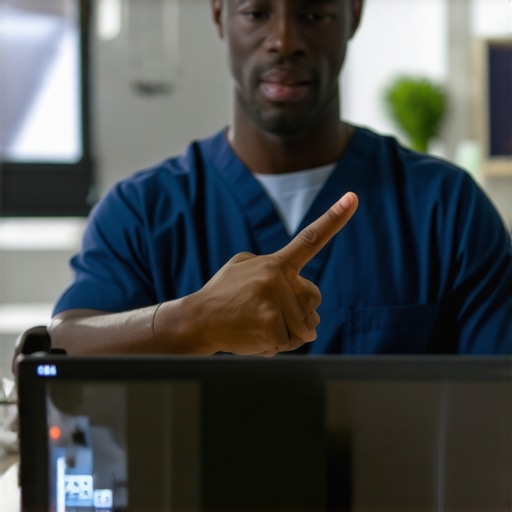
The Digital Screen Is a Wall Not a Window
Stop assuming your doctor can read your mind through a webcam. They can’t. If you’re logging into a virtual visit for nerve pain and using words like ‘uncomfortable’ or ‘weird,’ you are wasting everyone’s time. We have entered an era where telehealth breakthroughs are everywhere, yet the patient’s ability to communicate remains stuck in the dark ages. You might think your doctor is being dismissive when they don’t immediately offer a solution, but you’re wrong. The failure starts with your description.
The hard truth is that nerve pain is an invisible ghost. Describing it to a physician is like trying to explain the taste of copper to someone who has never touched a penny; it is visceral, specific, and entirely internal. If you can’t translate that internal lightning into clinical data, you’re just another data point in a failing system. Do you honestly think ‘it hurts’ is enough to bypass the limitations of a laptop speaker? It isn’t. I argue that the burden of diagnostic success has shifted entirely onto your shoulders, whether you like it or not.
The Medical System Requires Data Not Adjectives
Ditch the poetry. Your doctor doesn’t need to know that your leg feels like ‘a sad cloud.’ They need to know if it feels like a hot needle, a frozen vice, or a swarm of electric bees. When you look at personalized telehealth strategies, the success of the outcome is directly proportional to the precision of your input. If you want results, you have to stop being a passive patient and start being a technical reporter. I’ve seen it time and again: patients fail because they treat chronic condition management like a casual chat rather than a high-stakes deposition.
We are currently witnessing the future of telehealth unfolding in real-time, but that future is useless if you can’t bridge the sensory gap. You are the only one who can feel the fire in your fingertips. If you can’t map it, time it, and categorize it, you’re essentially asking a blindfolded mechanic to fix an engine by listening to it through a brick wall. So, why are we still pretending that a vague ‘tingle’ is a medical description? It’s time to get clinical or get comfortable with being ignored.
The Diagnostic Wall Is Built of Vague Language
The fundamental flaw in our current healthcare pivot isn’t the bandwidth of your Wi-Fi; it’s the poverty of your vocabulary. We’ve spent billions on high-definition cameras and encrypted servers, yet we’ve spent zero dollars teaching patients how to actually speak ‘Doctor.’ This is the root cause. You are using a 19th-century lexicon to describe symptoms to a 21st-century algorithm. When you tell a physician your shoulder feels ‘off,’ you aren’t communicating. You are static. You are noise in a system that demands signal. It is a failure of education, not technology.
Consider the sheer volume of diagnostic errors attributed to ‘patient history’ discrepancies. Data indicates that nearly 70% of a correct diagnosis is buried in the initial history-taking, yet in a virtual setting, that number is under siege. This isn’t a minor glitch. It is a total breakdown. If the history is flawed because you can’t distinguish between radicular pain and localized soreness, the entire medical machinery grinds to a halt. The computer doesn’t care about your feelings; it cares about variables. That 70% isn’t just a statistic; it’s the difference between a recovery and a lifelong disability.
${PostImagePlaceholdersEnum.ImagePlaceholderB}
The Medical Interface Is a Filter Not a Bridge
The software your doctor uses isn’t designed to capture the ‘essence’ of your suffering. It is designed to populate checkboxes. If you can’t provide the words that fit those boxes, your doctor is forced to guess. Guessing is where the danger lives. In a physical office, a doctor might see the way you wince or notice the slight tremor in your hand that you didn’t even realize was there. In the virtual space, those physical cues are stripped away. You are nothing more than a voice and a face in a box. This is why the future of telehealth is terrifying for the unarticulated.
The screen is a brutal filter. It removes the scent of infection, the subtle temperature changes of the skin, and the three-dimensional depth of a swollen joint. What remains is your testimony. If that testimony is weak, the diagnosis will be weaker. You are essentially acting as your own primary investigator. If you show up to the trial with no evidence and a handful of adjectives, you will lose the case. Every single time.
Data Is the Only Currency That Matters
We see this in the management of chronic conditions constantly. Patients who thrive in the era of personalized telehealth strategies are those who have abandoned the role of victim and adopted the role of technician. They don’t just ‘feel’ pain; they log it. They don’t just ‘have’ symptoms; they categorize them by frequency, intensity, and duration. Those who refuse to adapt are the ones left wondering why their prescriptions never seem to work. The math is simple: Vague input equals a vague outcome. It is a direct correlation that no amount of ‘patient-centered care’ rhetoric can fix.
The system is rigged against the imprecise. It is built for the efficiency of the provider, not the comfort of the patient. If you want to survive this shift, you have to stop waiting for the system to understand you and start making yourself impossible to misunderstand. The burden is heavy. It is unfair. It is also the only way forward. We are currently witnessing a massive Darwinian event in healthcare: those who can translate their biological reality into clinical data will receive care, and those who cannot will be left with a bottle of generic ibuprofen and a follow-up appointment that never solves the problem.
It is easy to see why people think the burden of communication should remain entirely on the provider. The popular sentiment is that healthcare is a human service, and the patient is the consumer. In almost any other industry, the burden of understanding the customer’s needs falls squarely on the professional. We expect the architect to translate our vague vision for a house into a blueprint, and we expect the mechanic to interpret our ‘clunking’ sounds into a transmission repair. Why should medicine be any different? Critics argue that requiring a patient to learn clinical vocabulary is a form of medical elitism that punishes the vulnerable. It is a powerful argument because it appeals to our sense of fairness and the ancient ‘healer’ archetype we all still crave.
But that perspective is a dangerous fantasy. It ignores the cold reality of the digital medium. I used to believe this too, until I realized that empathy doesn’t translate through a 1080p resolution. When you are behind a screen, you aren’t a person to the software; you are a series of inputs. The doctor might care about you personally, but the system they are forced to use only cares about the checkboxes. If you refuse to speak the language of the system because ‘it’s not fair,’ you aren’t taking a stand for patient rights; you are just ensuring you get a lower quality of care. The digital interface is indifferent to your moral stance on how healthcare should work.
The Empathy Trap
The hard truth is that the medical system has traded nuance for throughput. We can complain about the loss of the bedside manner, or we can adapt to the reality of the desktop manner. If you wait for a doctor to ‘feel’ your pain through a fiber-optic cable, you will be waiting until your condition becomes irreversible. The system is designed for speed, and speed requires standardized data. Those who cling to the idea that the doctor should ‘just know’ are falling into a trap that leads directly to misdiagnosis and wasted appointments. This isn’t about what should be; it’s about what is. In the world of telehealth breakthroughs, the most empowered patient is the one who accepts that the doctor’s intuition has been replaced by the user interface.
${PostImagePlaceholdersEnum.ImagePlaceholderC}
The ‘it’s the doctor’s job’ defense is a relic of a time when physicians had thirty minutes to sit and talk. Today, they have eight minutes and a digital form to fill. When you look at chronic condition management, the failure is almost always a failure of transmission. If you aren’t providing the signal, the doctor is forced to invent one. That invention is rarely accurate. Stop waiting for the system to change its nature and start changing your approach. The digital wall isn’t going anywhere; your only choice is to learn how to shout through it with clinical precision. If you want results, you must become the primary data source, not just a passenger in the process. Relying on personalized telehealth strategies means realizing that the ‘personal’ part starts with your own ability to report facts over feelings.
The Rising Toll of Miscommunication
If we continue to treat these digital interactions as casual conversations, we are sleepwalking into a diagnostic catastrophe. This isn’t just about a missed prescription; it is about the total erosion of the patient-physician trust. The stakes are no longer just about convenience; they are about survival. When you fail to provide a clinical signal, you aren’t just wasting a time slot; you are contributing to a systemic noise that makes it impossible for doctors to do their jobs. We are currently building a healthcare infrastructure that assumes the user is competent, yet we are seeing a massive decline in medical literacy. This gap is where people die.
Think of it like an air traffic controller trying to land a plane in a blizzard. The pilot doesn’t tell the tower that the landing gear feels ‘a bit shy today.’ They give altitude, airspeed, and coordinates. If the pilot fails to provide that data, the plane crashes. In the world of virtual chronic care management, you are the pilot, and your lack of clinical clarity is the blizzard. Every time you show up to an appointment without prep, you are essentially flying blind and hoping the ground isn’t as close as it looks.
${PostImagePlaceholdersEnum.ImagePlaceholderD}
A Divided Medical Future
In five years, the healthcare landscape will be sharply bifurcated. We will see a elite class of patients who receive precision medicine because they have mastered the art of data reporting. They will use telehealth breakthroughs to their full potential, treating their bodies like high-performance machines. Meanwhile, the rest of the population will remain stuck in a cycle of ‘urgent care’ visits and inconclusive ‘lab tests’ because they never learned how to speak the language of the machine. This isn’t a prediction; it is an observation of a trend already in motion. The digital divide is no longer about who has a laptop; it’s about who has the vocabulary to be heard through it.
What are we waiting for?
We are waiting for a disaster to force our hand. We are waiting for the moment when a misinterpretation of a ‘funny feeling’ leads to a preventable stroke or a missed stage-one cancer. By then, it will be too late to change the culture of the virtual waiting room. The medical industry is already moving toward automated diagnostics. If you cannot provide the hard facts required by an AI-driven triage system, you will simply be filtered out. The algorithm doesn’t have the patience for your metaphors, and soon, neither will your doctor.
The Point of No Return
The consequence of our collective silence and imprecision is a healthcare system that eventually stops listening altogether. If the signal-to-noise ratio becomes too skewed, the system will protect itself by deprioritizing human testimony in favor of wearable sensors and blood work. While those tools are useful, they cannot replace the visceral reality of a patient who knows how to describe their own biology. We are at risk of losing the most powerful diagnostic tool in history: the accurate human report. If we lose that, we lose the ‘person’ in personalized care forever. This is the warning. Either learn the language of your own survival or prepare to be managed by a system that sees you as a glitch rather than a patient.
The Bottom Line
The hard truth is that in the era of telehealth breakthroughs, the stethoscope has been replaced by your own vocabulary. If you cannot provide the clinical signal, you are simply noise in a system that no longer has the time to filter you. This is the new reality of chronic care management: you are either a precise data source or a diagnostic casualty. The system isn’t going to get more intuitive; you have to get more articulate.
The Twist
We often blame the screen for the loss of the human touch, but the real failure is our refusal to adapt to the interface. You might think you’re preserving your humanity by being vague, but you’re actually just sabotaging your own recovery. Whether you are seeking urgent care innovations or a routine follow-up, the quality of your care is now a direct reflection of your ability to speak ‘Doctor.’ The empathy you crave is locked behind a door that only opens with technical precision. To ignore this is one of the 3 habits that make your chronic condition harder to manage in the modern world.
Your Move
Stop being a passenger in your own health journey. Start by learning how to explain chronic fatigue without sounding tired and the best way to describe joint pain during a virtual visit. The digital wall is only as tall as your inability to describe what is happening behind it. You can complain about the coldness of the algorithm, or you can learn to feed it the facts that lead to a cure. The future of medicine is here, and it is reserved for the articulate. Adapt your language, master your data, and finally get the care you deserve. The silence of the screen is not an absence of care—it is a demand for clarity.