
The Error in Using Virtual Visits for Severe Chest Tightness
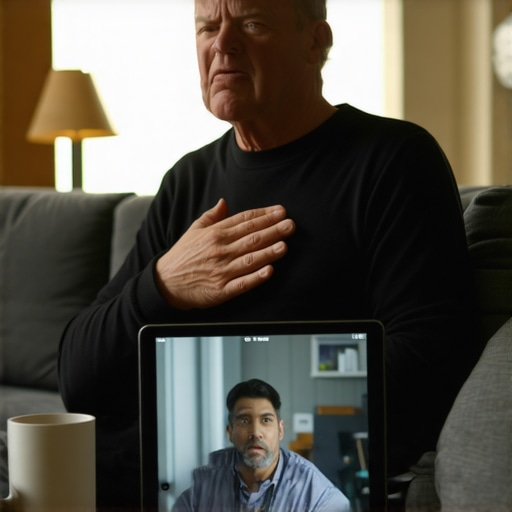
Stop Pretending a Screen Can Save Your Life During a Heart Attack
We have been sold a dangerous lie. The convenience of a virtual doctor visit has been packaged as a universal panacea, a digital band-aid for every human ailment from a mild rash to the onset of a cardiac event. But let me be clear: when your chest feels like an elephant is sitting on it, that laptop screen is not a lifeline; it is a wall. I argue that the push to virtualize emergency symptoms is a catastrophic failure of clinical common sense. You might think you are being efficient by avoiding a crowded lobby, but you are actually gambling with a clock that does not pause for your Wi-Fi connection. In the world of acute medicine, time is muscle. Every second you spend explaining a crushing sensation to a webcam is a second your heart tissue is potentially dying without intervention.
The medical industry loves to talk about innovation, yet we are witnessing a regression in basic triage logic. Virtual visits are fantastic for management, as seen in how virtual visits elevate chronic care, but they are a lethal distraction during an acute crisis. Treating severe chest tightness through a webcam is like trying to put out a house fire by sending a picture of the smoke to the fire department. You are staring at the symptom while the structural reality collapses in real-time. Why are we still pretending that a low-resolution video feed can replace a 12-lead EKG and a physical exam? It cannot, and it never will.
Screens Cannot See a Dying Heart
I believe the obsession with digital accessibility has blinded us to the physical reality of the human body. When a patient presents with severe tightness, a physician needs to hear the lungs, feel the pulse, and see the skin tone in three dimensions. Relying on a digital interface during these moments is a recipe for disaster. As I have argued before regarding the error in relying on home pulse oximeters for safety, consumer-grade technology offers a false sense of security. A pulse ox might look fine while a coronary artery is 99% blocked. You might even find that your heart rate spikes during virtual consultations due to the stress of the interface, further clouding the diagnostic picture.
We need to stop blurring the lines between convenience and critical care. Telehealth is a tool for the routine, not a shield for the catastrophic. If you are experiencing chest pressure, do not open a browser. Do not wait for a link to join a meeting. The digital world has no place in the emergency room’s domain. We must respect the limits of our technology before those limits cost us more lives. Real medicine happens in person when the stakes are this high, and anyone telling you otherwise is putting their bottom line ahead of your survival. You need the vital screening that predicts heart attacks performed by hands, not pixels.
The Profits of Artificial Delay
The problem isn’t that the technology is too new; the problem is that the medical-industrial complex has prioritized *billing efficiency* over *biological reality*. By pushing patients toward a screen for initial screening during acute symptoms, healthcare providers are drastically reducing their overhead costs. They save on physical floor space, they cut back on on-site nursing staff, and they sidestep the logistical burden of an overflowing ER. It is a cost-cutting measure masquerading as a modern convenience. When you are redirected to a virtual portal while your chest is tight, you aren’t being ‘triaged’ in any clinical sense; you are being managed like a customer support ticket. This is the commodification of crisis, where a corporation bets that most patients won’t actually die before they reach a real hospital. It is a reckless gamble with your life, and they are making it with a straight face.
The Lethal Math of Latency
Let’s look at the numbers, but let’s look at them through the lens of human survival rather than corporate growth. The gold standard for treating a major heart attack is ‘door-to-balloon’ time—the interval between arriving at a hospital and having a blocked artery opened. That 90-minute window isn’t a suggestion; it is the hard limit of human biology. Data suggests that every minute of delay correlates to a measurable loss of cardiac muscle. That 20% increase in mortality risk for every half-hour of delay isn’t just a dip in a graph; it is the collapse of a patient’s future. When you spend fifteen minutes navigating a login screen, three minutes waiting for a connection, and ten minutes explaining your symptoms to a doctor who cannot see your skin tone or feel your pulse, you have already surrendered a massive portion of your survival window to a Wi-Fi signal. ${PostImagePlaceholdersEnum.ImagePlaceholderB}
A Failure of Biological Physics
A virtual doctor cannot perform a physical exam. They cannot palpate a chest wall to rule out musculoskeletal pain versus a myocardial infarction. They cannot hear the ‘S4 gallop’ that signals a failing left ventricle through a tinny laptop microphone. The push for telehealth in acute care ignores the fundamental physics of the human body. We are three-dimensional organisms, and our crises manifest in physical signs that a two-dimensional image cannot capture. I argue that the industry knows this perfectly well. They know that a screen is an inadequate diagnostic tool for a crushing chest sensation. Yet, they continue to market it because it’s cheaper to maintain a server than a trauma bay. It is a fundamental betrayal of clinical responsibility in favor of a quarterly earnings report. They are selling you a distraction while you are in the middle of a biological catastrophe.
The Myth of Home-Based Safety
We are told that having gadgets at home makes us safer, but that is a dangerous fabrication. A home blood pressure cuff or a pulse oximeter gives you enough data to be dangerous, but not enough to be safe. During a coronary event, your vitals can fluctuate wildly or stay deceptively normal until the very end. The problem isn’t the device; it’s the *false sense of security* it provides to both the patient and the remote provider. If you feel fine because your watch says your heart rate is 70, you might stay on that video call for another five crucial minutes. Those five minutes are the difference between walking out of the hospital and being wheeled into a morgue. We have traded clinical accuracy for the comfort of our own couches, and the price is far too high for any rational person to pay.
It is easy to understand why proponents of digital medicine cling to the triage argument. They suggest that telehealth acts as a vital sorting hat, separating the ‘worried well’ with minor indigestion from the truly critical cases. The logic seems sound on paper: by providing an immediate, low-barrier point of contact, we can keep the ‘urgent care’ centers and ERs clear of minor complaints, theoretically leaving more resources for the dying. If a doctor can tell a patient via webcam that their chest pain is likely just acid reflux, they’ve saved that patient an expensive ambulance ride and a six-hour wait in a plastic chair. It sounds like a win for the system and the individual. But this logic is built on a foundation of sand. It assumes that a remote physician has the same diagnostic accuracy as one standing three feet away. I used to believe this too, until I saw the data on how often ‘atypical’ cardiac symptoms are missed by even the most seasoned clinicians during in-person exams. To suggest we can do this better through a grainy Zoom call is more than just optimistic; it is clinically arrogant. When we offer a virtual ‘screening’ for acute symptoms, we aren’t filtering the crowd; we are creating a bottleneck of false negatives.
The False Hope of Remote Sorting
The medical establishment argues that telehealth is the ultimate tool for ‘chronic care’ management and routine ‘lab tests’ follow-ups, and in those arenas, they are right. But they have tried to stretch that utility into the realm of the acute crisis. This is where the ‘better than nothing’ argument falls apart. In emergency medicine, ‘nothing’ is often safer than a digital distraction because ‘nothing’ forces a frightened human being to rely on their survival instinct, which usually points toward the nearest hospital. A telehealth link, however, provides a dangerous middle ground—a feeling of being ‘under a doctor’s care’ without any of the actual life-saving interventions that a doctor provides. ${PostImagePlaceholdersEnum.ImagePlaceholderC} When you tell a patient to hop on a call to ‘see if they need to go in,’ you have already introduced a fatal lag. The time it takes to explain your family history to a provider you have never met is time that could have been spent in a catheterization lab. The advocates for this system claim they are ‘democratizing access,’ but they are actually rationing quality. They are telling the public that a secondary, digital tier of care is ‘good enough’ for the initial stages of a heart attack. It isn’t. An ‘urgent care’ center that isn’t equipped with a crash cart and a physician who can touch your skin is just a glorified office building.
The architects of these platforms will tell you they are saving the healthcare system from collapse. They point to the clinics that are overflowing with patients who only have minor coughs. They argue that by diverting these patients to a screen, they free up the doctors on the ground. But this assumes that ‘filtering’ is a low-stakes activity. In reality, triage is the most difficult and dangerous part of medicine. It is the moment where the most significant errors occur. By outsourcing that critical moment to a ‘telehealth’ algorithm or a remote practitioner who cannot see the graying tint of a patient’s ears or the subtle tremor in their hands, we aren’t streamlining care. We are institutionalizing negligence. We are telling patients that their survival is less important than the hospital’s operational efficiency. The uncomfortable truth is that the ‘efficiency’ of digital triage is measured in hospital throughput, not patient survival. It is easier to manage a queue of digital avatars than a lobby full of breathing, bleeding, sweating humans. But medicine isn’t supposed to be easy; it is supposed to be effective. By pretending that a screen can provide a reliable safety check for chest tightness, we are teaching the public to ignore the only rule that matters in a cardiac event: if you think you’re dying, don’t call a help desk. Go to the ER. Every minute we spend trying to ‘optimize’ this process through software is a minute we spend betraying the fundamental oath of our profession. We have turned clinical judgment into a data-entry task, and the casualties are the very people we claim to be protecting with this new ‘accessibility.’
We are standing at the edge of a clinical precipice, and the medical-industrial complex is trying to convince us that the air below is a safety net. If we continue to allow the erosion of physical presence in the name of digital convenience, we are not just changing how we practice medicine; we are changing what it means to be a patient. The warning is clear: we are building a two-tiered system of survival. In this looming reality, those with the means will pay for the luxury of a human hand and a physical stethoscope, while the rest of the population is funneled into a digital basement of low-resolution triage. This isn’t a conspiracy; it is a logical conclusion of a system that prioritizes the balance sheet over the heartbeat.
Is it too late to turn back?
I argue that we are rapidly approaching a point of no return where the infrastructure for immediate, in-person acute care will be dismantled in favor of server farms. Within five years, if this trajectory remains unchecked, the standard ‘urgent care’ experience will involve a tablet in an empty room, connected to a provider three time zones away. We will lose the collective muscle memory of physical diagnosis. Trying to diagnose a major coronary event over a Wi-Fi connection is like attempting to catch a falling piano with a spiderweb; it looks like you are attempting a rescue, but the structural reality of the disaster ensures a devastating impact. The spiderweb of ‘digital accessibility’ cannot hold the weight of a biological crisis.
The Two Tiers of Survival
The stakes of this shift are nothing less than the democratization of death. When we normalize the idea that a screen is an acceptable substitute for a trauma bay, we are essentially telling the public that their survival is a variable in an efficiency algorithm. We are witnessing the birth of a world where ‘lab tests’ are ordered by bots and ‘chronic care’ is managed by automated emails, while the high-stakes moments of life and death are left to the mercy of a signal strength. This is the ultimate betrayal of the patient-physician relationship. If we do not demand a return to physical accountability for acute symptoms, we will find ourselves in a future where the emergency room is a ghost town and the only thing standing between you and a fatal event is a ‘join meeting’ button that won’t load. ${PostImagePlaceholdersEnum.ImagePlaceholderD}
The Inevitable Silence of Automation
The danger is that we will grow comfortable with this neglect. We will forget what it feels like to have a physician actually look at us, rather than at a data feed. This silence of automation is the most terrifying prospect of all. It is the sound of a system that has finally succeeded in removing the ‘human’ from human health. We are trade-marking our own obsolescence. If the medical community continues to ignore the physical reality of the body in favor of the convenience of the cloud, the casualties will not just be the patients who didn’t get to the hospital in time—it will be the very concept of medical ethics itself. We are choosing a path that leads away from the bedside and toward the bottom line, and the warning lights are already flashing red for anyone willing to look up from their screens.
The Final Choice
We have reached a fork in the road of modern medicine. On one path, we accept a world where physical proximity to a healer is a luxury for the few, and on the other, we demand that our emergency systems prioritize human life over server uptime. While I have acknowledged the future of telehealth transforming chronic disease monitoring today, I refuse to accept it as a gatekeeper for the dying. If you find yourself gasping for air, clutching your chest, or feeling the cold sweat of a cardiac event, do not let a corporation convince you that ‘virtual’ is ‘viable.’ It is a stall tactic, a delay that your heart cannot afford.
We must stop looking at our devices for permission to survive. Reclaim the agency to ignore the app and head straight to a facility capable of real intervention. Whether you are seeking urgent care innovations streamlining same-day lab tests for non-emergent issues or managing long-term health, know the difference between a convenience and a necessity. The irony of our age is that we are more connected than ever, yet we risk dying alone in front of a blue light because we were told it was more efficient. Do not be a data point in a mortality study on latency. Demand the touch, the stethoscope, and the physical presence of medicine.
Reclaiming the Human Pulse
The twist in this digital tragedy is that the technology meant to democratize healthcare is actually stripping away the most basic human right: the right to be seen when the stakes are highest. We are being sold the illusion of care while the actual substance of medicine—the physical exam, the immediate 12-lead, the surgical intervention—is kept behind a paywall of digital triage. To truly protect yourself, you must learn the secret to getting an urgent care doctor to listen, which starts with being in the same room as them. Stop letting the medical-industrial complex treat your heart attack like a password reset. ${PostImagePlaceholdersEnum.ImagePlaceholderE} Your life is not a support ticket, and your survival should never depend on a Wi-Fi signal.
You cannot troubleshoot a biological failure with a software update.
If the future of medicine is purely digital, then the future of the human patient is one of preventable silence. Choose the hospital. Choose the ER. Choose the human hand. Before the screen goes black for good.