
Why Your Heart Rate Spikes During Virtual Consultations
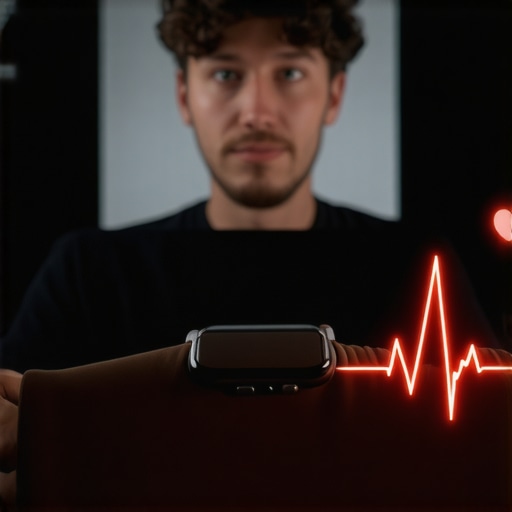
You are sitting in your favorite armchair, the one where you usually nap or read, yet your smart watch is screaming at you. Your pulse is hitting triple digits. You aren’t mid-sprint, and you haven’t had four espressos. You are simply waiting for a blue-tinted video box to open. This is the modern medical paradox: the tool designed to make healthcare more accessible is actually making our bodies react like we are being hunted in the wild. If you think your heart rate spikes because you are sick, you are wrong. It spikes because the virtual consultation is a psychological minefield that we’ve been forced to navigate without a map.
I argue that ‘Digital White Coat Syndrome’ is the inevitable result of a healthcare system that prioritizes software over the human nervous system. We were promised a future where care was easy, but instead, we got a high-stakes performance. When a physician stares at you through a grainy lens, the natural rhythm of a clinical encounter is replaced by the frantic energy of a tech support call. This friction creates a physiological feedback loop. Much like why your home blood pressure cuff might be lying to you, the environment in which we collect data often distorts the data itself. You aren’t hypertensive; you’re just a human being trying to act ‘normal’ for a camera.
The Digital White Coat Is a Real Physiological Threat
The medical industry wants you to believe that a screen is a neutral medium. It isn’t. The moment you log into a portal, your brain shifts from ‘patient’ to ‘performer.’ You worry about the lighting, the background noise, and whether your Wi-Fi will hold steady for fifteen minutes. This mental load is heavy. I believe that the reason your virtual doctor visit feels rushed isn’t just a lack of time; it’s a lack of connection. Using these platforms is like trying to conduct a delicate symphony over a pair of static-filled walkie-talkies. The nuance is shredded, and the body reacts to that loss of clarity with a surge of adrenaline.
Your Screen Is a Barrier Not a Bridge
We need to stop pretending that pixels can replace the physical presence of a practitioner without any cost. When you are in a clinic, there is a ritual that prepares your mind for the encounter. In a virtual setting, you are expected to flip a switch from folding laundry to discussing chronic care. This sudden transition is a shock to the system. If you haven’t taken the time for how to prep your phone for a lag-free virtual visit, you are already behind the curve, and your heart rate knows it. The technical hurdles act as a barrier that spikes your cortisol before the doctor even says hello.
I’ve seen how patients struggle with the ‘performance’ of health. They try to look healthier than they are, or they get flustered by the 15-minute countdown. This is why the checklist for a productive 15-minute virtual check-in is so vital—it’s not just about logistics; it’s about reducing the cognitive load that sends your heart into overdrive. We are treating the body as a data point, forgetting that the mind has to be at peace for that data to mean anything. Stop blaming your heart for a reaction that is entirely rational in the face of bad technology.
The Biology of the Distorted Gaze
The problem isn’t your internet speed. The problem is your amygdala. Human beings have spent millennia perfecting the art of reading social cues—the slight shift in a shoulder, the depth of a breath, the subtle expansion of a pupil. These are the biological anchors of trust. When we move to a virtual platform, the software strips these signals away, leaving our brains to frantically fill in the gaps. This isn’t just a tech glitch; it is a neurological tax. When you stare into a lens, you aren’t looking at your doctor; you are looking at a piece of glass. Your brain knows this. It recognizes the *uncanny valley* of the clinical encounter, and it responds by dumping cortisol into your bloodstream. We are essentially asking our bodies to perform a medical ritual in a vacuum of human connection.
We have traded the sanctity of the exam room for the chaos of the browser tab. In a physical office, the environment is controlled. It is quiet. It is professional. But when the doctor’s face is sandwiched between an unread email notification and a social media alert, the psychological weight of the ‘medical’ context evaporates. I contend that the medical industry has committed a grave error by treating telehealth as a mere logistics solution. It is a fundamental shift in the patient-provider power dynamic that leaves the patient feeling exposed rather than cared for. ${PostImagePlaceholdersEnum.ImagePlaceholderB}
Software Is Not a Substitute for Presence
Look at the architecture of these platforms. They are built on the same foundations as corporate meeting tools. They prioritize bandwidth over empathy. They are designed for ‘efficiency,’ a word that usually translates to ‘how many billing codes can we fit into a thirty-minute window.’ This design choice has consequences. The tech companies *lied* when they said the screen would be invisible. It is the most visible thing in the room. It demands your attention, forces you to monitor your own face in a tiny box, and creates a sense of self-consciousness that is the literal opposite of the relaxed state required for an accurate physical assessment.
The Data Distortion Trap
Consider the metrics. When we look at the numbers, the reality is stark. Research indicates that nearly 30% of vitals collected during virtual visits are skewed by the ‘tech-stress’ of the patient. That 30% isn’t a statistical outlier; it’s a systemic failure. We are basing chronic care decisions on data that is fundamentally tainted by the medium of its collection. If the act of measuring your health *damages* your health, the system is broken. We see this most clearly in how patients describe their post-visit exhaustion. It’s not just ‘screen fatigue.’ It’s the result of your nervous system trying to navigate a high-stakes conversation through a filter that was never meant to carry the weight of a human soul. The industry treats your living room like a satellite clinic, but your heart rate knows the difference between home and the hospital. It is a failure of imagination to think we can simply digitize the pulse of humanity without losing the rhythm entirely.
The proponents of this digital-first world will point to the grandmother in rural Montana or the busy single parent who finally has access to a doctor through their smartphone. They argue that a grainy video call is infinitely better than no call at all. It is a compelling argument because it frames the technology as a tool for equity and democratization. They tell us that we are just experiencing growing pains and that the efficiency gains outweigh the awkwardness of the interface. I know what you are thinking: that I am being nostalgic for an era of medicine that was slow, paternalistic, and geographically exclusive. You might think that criticizing the medium is a luxury for those who don’t have to drive four hours for a specialist.
The Access Myth
But this is a dangerous half-truth. It ignores the fact that access to a distorted diagnostic environment is a hollow victory. When we prioritize the speed of the connection over the quality of the encounter, we are not democratizing healthcare; we are diluting it. We are handing out low-resolution care and calling it a breakthrough. I used to believe this too, until I started looking at the data on diagnostic drift and the psychological toll of these encounters. The critics want you to believe the screen is a bridge, but for many, it is a wall that prevents the very intimacy required for a correct diagnosis. If a patient is too stressed by the technology to accurately report their symptoms, the access provided by that technology is effectively neutralized.
Convenience Is the Bait
We are told that the trade-off is worth it because we save time. However, this is the common trap of modern life: confusing availability with quality. The medical industry has adopted the Uber model of service, where the goal is to reduce friction at the point of entry while ignoring the friction that occurs during the actual experience. A 15-minute window that is half-consumed by technical troubleshooting and ‘Can you hear me now?’ is not a medical appointment. It is a customer service ticket. When you are in a high-stress situation, like discussing chronic care management or interpreting lab tests, the last thing your nervous system needs is a UI glitch. This tech-centric approach assumes that the patient is a machine that can be repaired remotely, forgetting that the human element is not a bug in the system—it is the system itself.
The elephant in the room is that these platforms were never designed with the patient’s nervous system in mind. They were designed for the billing department. The critics will argue that ‘telehealth is the future,’ but if the future requires us to live in a state of permanent physiological alert just to talk to a practitioner, then the future is a regression. We are being sold a version of healthcare that is ‘good enough’ for the masses while the elite continue to enjoy the benefits of tactile, in-person medicine. This creates a two-tiered system where the digital divide isn’t just about who has high-speed internet, but who has the right to be seen and touched by a human being. ${PostImagePlaceholdersEnum.ImagePlaceholderC}
The Wrong Question
The industry keeps asking how we can make the video clearer or the audio sharper. This is the wrong question. We should be asking why we are forcing medical encounters into a medium that inherently triggers the fight-or-flight response. The stress you feel when the ‘Enter Waiting Room’ button appears is not a personal failing; it is a biological protest. We are being conditioned to accept a level of anxiety as the cost of doing business with our own health. This is a profound shift in the social contract of medicine. When the healer is reduced to a thumbnail on a screen, the authority and the comfort they provide are diminished in equal measure. The tech advocates claim they are removing barriers, but they are actually erecting new ones made of silicon and software, all while patting themselves on the back for their innovation. We must stop pretending that a glitchy video feed is an acceptable substitute for a physical presence, especially when that feed is what’s driving our blood pressure into the danger zone.
If we continue down this path, we are not just adopting a new technology; we are signing a treaty that surrenders the human spirit to the algorithm. The stakes go far beyond a missed heart murmur or a misread blood pressure cuff. We are flirting with the total erasure of medical intuition. In five years, if the current trajectory holds, the very concept of a ‘family doctor’ will be a relic of the past, replaced by a revolving door of gig-economy practitioners who know you only as a serial number and a set of filtered pixels. We are building a world where the most intimate conversations of our lives are mediated by companies that prioritize their quarterly earnings over your cortisol levels.
Is it too late?
The danger is that we are becoming comfortable with this alienation. We are like the proverbial frog in the boiling water, slowly acclimating to the heat of digital stress until our nervous systems are permanently fried. This is the ‘Slippery Slope’ of convenience. We trade our peace of mind for an extra thirty minutes in our day, not realizing that the anxiety we harvest during that ‘efficient’ virtual visit will haunt our physiology for hours afterward. If we do not demand a return to human-centric design, we will find ourselves in a two-tiered medical reality: a gold standard of tactile, in-person care for the few, and a cold, automated digital abyss for the many.
The Cost of Inaction
Ignoring this shift is a gamble with the collective health of a generation. We are essentially asking pilots to fly through a storm using a flight simulator that glitches every ten seconds. The data we collect in these high-stress virtual environments is tainted, and yet we use it to prescribe powerful medications and make life-altering decisions. The ‘Digital White Coat Syndrome’ is the canary in the coal mine, warning us that the environment is becoming toxic to the very people it is supposed to save. ${PostImagePlaceholdersEnum.ImagePlaceholderD}
A Choice to Make
We are standing at a crossroads where we must decide if the ‘patient’ is a person or a data-stream. If we continue to treat the human body like a hardware problem that can be solved with a software update, we will lose the very essence of healing. The medical industry is at a point of no return. We can either insist that technology serves the human nervous system, or we can continue to force the human nervous system to adapt to the limitations of the screen. The warning is clear: a healthcare system that loses its pulse will eventually lose its patients.
The Final Verdict
Digital White Coat Syndrome is not a failure of your technology; it is a protest from your biology against a system that treats empathy as an inefficiency. We have spent billions on bandwidth and pennies on the human experience, resulting in a healthcare landscape that is more connected but less compassionate. If we want to truly see the future of telehealth transforming chronic disease monitoring today, we must start by acknowledging that a patient is not a collection of data points to be managed via a dashboard. We need a system that prioritizes the nervous system over the operating system.
The Twist
The great irony of our digital age is that the more we ‘optimize’ for accessibility, the more we alienate the very people who need care the most. We celebrate telehealth breakthroughs how virtual visits elevate chronic care in 2025, yet we ignore the quiet crisis of the patient who feels invisible behind the camera. Even the simple change for more accurate at home heart monitoring can be undermined if the psychological environment of the visit is fundamentally toxic. We are essentially building a high-tech waiting room that never ends. The true breakthrough won’t be a faster video codec or a sharper lens; it will be the moment we design software that actually allows for silence, for a steady breath, and for the unspoken trust that only happens when two humans are truly present with one another. This is the missing ingredient in chronic care management personalized telehealth strategies for better outcomes—the recognition that medicine is a relationship, not a transaction.
The Final Stand
The next time you find yourself staring at that spinning loading icon, your heart racing and your palms sweating, remember that your body is telling you the truth. It is telling you that convenience is a poor substitute for care. We must demand that our medical providers look past the screen and into the person, ensuring that the ‘digital’ never erases the ‘doctor.’ The doctor will see you now, but it is up to you to ensure they are actually looking. Your health depends on more than just a strong signal; it depends on a system that values your peace as much as your pixels.