
The Move That Keeps Your Insulin Costs Lower Every Month
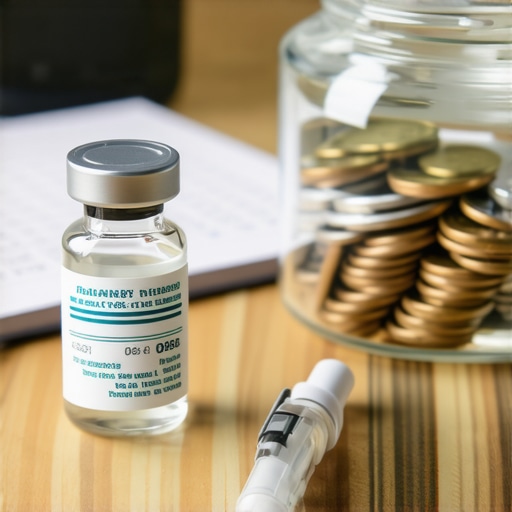
Your Insulin Bill Is a Calculated Penalty for Your Lack of Strategy
We have been told a dangerous lie about chronic disease. The lie is that your health is a series of isolated, unpredictable emergencies—a sudden blood sugar spike, a frantic call to a clinic, a desperate search for a pharmacy coupon at 2 AM. This is exactly how the pharmaceutical industrial complex wants you to live. Why? Because a patient in crisis is a patient who doesn’t ask questions about the price tag. I argue that the monthly scramble for affordable medication is not a tragedy; it is a business model designed to profit from your lack of a strategy. I believe the only way to truly slash your monthly burden is to stop playing their game of medical whack-a-mole. [image_placeholder] The move that keeps your insulin costs down isn’t some secret discount code found on a shady internet forum. It is the radical decision to embrace personalized chronic care management before the disaster strikes.
Think about your health like a leaking ship in the middle of a storm. Most of us spend our lives bailing out water with a tiny, cracked bucket. We are exhausted, terrified, and constantly wondering if the next wave will be the one that finally sinks us. We complain about the weight of the water. We cry about the cost of the bucket. But we never actually stop to plug the hole. The hole in this metaphor is the lack of consistent, data-driven oversight. When you utilize the future of telehealth, you aren’t just ‘seeing a doctor’ on a screen. You are engaging in a sophisticated defensive maneuver against a system that is rigged to win when you lose.
The Market Profits From Your Chaos
Why are we still pretending that an annual physical is enough to manage a chronic condition? It isn’t. If you only check your vitals once every twelve months, you are essentially flying a plane with a blindfold on and hoping for a smooth landing. I have seen this cycle repeat until it destroys families: patients who rely on the error of infrequent monitoring find themselves standing in an urgent care lobby, facing a bill for complications that could have been avoided with a simple medication adjustment three weeks ago. The pharmaceutical giants love this. They love the ’emergency’ refill. They love the ‘urgent’ intervention that requires higher-tier, non-generic drugs.
But you can choose a different path. By shifting to a model that prioritizes virtual visits for chronic care, you gain the upper hand. This isn’t just about the convenience of staying on your couch; it’s about leverage. When your care is continuous, your dosages are constantly optimized. When your data is tracked in real-time, your complications are caught before they require expensive, high-tier medications. You are no longer bailing water. You are finally repairing the hull of your ship.
So, why are we still doing this? Why are we waiting for the ‘check engine’ light to blink before we even think about the engine? You might think that high costs are an inevitability of aging or illness, but you’re wrong. They are the cost of being reactive. I argue that the strategy for lower costs is to stop being a passive consumer and start being a proactive manager. Your bank account, and quite frankly your life, depends on this shift. If you want to stop being a victim of the pharmacy counter, you have to change how you show up to the clinic. You have to demand more than a fifteen-minute slot once a year. You need a partner in this fight, not just a prescription writer.
The system isn’t failing; it is working perfectly for the people who own the system. If you believe the sky-high cost of your insulin is a result of supply chain issues or complex research, you are falling for the oldest trick in the corporate playbook. The price is a reflection of your vulnerability. The pharmaceutical industry doesn’t want you healthy; they want you stable enough to pay. This is the fundamental root cause of the current crisis. It is a profit-driven incentive to keep you on the edge of disaster, just one missed dose away from an expensive emergency room visit.
Follow the money. Look at the quarterly reports of the largest insurance conglomerates. They don’t celebrate cures; they celebrate patient retention. In any other industry, keeping a customer hooked on an expensive, life-saving product while making it increasingly difficult to obtain would be called racketeering. In healthcare, we call it the status quo. The math is simple: a patient who uses remote patient monitoring for diabetes is a patient who doesn’t need the $5,000 emergency intervention. That $5,000 is a hole in their balance sheet. ${PostImagePlaceholdersEnum.ImagePlaceholderB}
The Revenue of Reactive Medicine
We have the data, and the data is damning. A study focusing on chronic care management interventions showed a drastic reduction in hospital admissions—sometimes as high as 40% for high-risk patients. But here is the catch: that 40% reduction is viewed as a loss of revenue by the hospital systems that rely on ‘heads in beds’ to satisfy their boards. They don’t want you to have a streamlined, efficient way to manage your health from home. They want you to wait until the pressure in your chest or the blur in your vision becomes too loud to ignore. They want you scared. Because when you are terrified, clutching a prescription pad with trembling hands while staring at a three-digit price tag for a vial of liquid that costs pennies to manufacture, you have become the ideal consumer.
Where the Math Fails the Patient
The argument that innovation costs money is a shield for greed. Most insulin formulations have been around for decades. The price hikes aren’t funding a miracle cure; they are funding marketing budgets and executive bonuses. By the time you are standing at the pharmacy counter, the system has already won. They know you’ll pay. They know you have to pay. This is why the only logical response is to refuse the premise of the transaction. You must shift the battlefield. When you engage with chronic care management to avoid urgent care, you are essentially engaging in a tax strike against a corrupt system. You are taking your data—the most valuable asset you own—and using it to stay out of their clutches.
Data Is the Only Real Leverage
We have been conditioned to think of our medical records as a collection of dusty folders in a basement. They are not. They are a weapon. In the hands of a reactive system, they are a trail of breadcrumbs leading to your next crisis. But in the hands of a proactive provider, they are a map to your independence. The reason the industry fights against the widespread adoption of continuous, personalized monitoring is that it removes the surprise element of illness. And in this market, surprise is expensive. If you know your blood sugar is trending toward a danger zone three days before it hits, you can fix it with a phone call and a minor adjustment. If you don’t know, you fix it with an ambulance and a bankruptcy filing. It is that simple. The choice is yours: be a data point in their profit margin, or use your data to bankrupt their expectations.
The Trap of Convenient Ignorance
It is easy to see why some people recoil at the idea of continuous monitoring. The critics will tell you that the last thing a person struggling with a chronic illness needs is more homework. They argue that tracking every glucose level, logging every blood pressure reading, and engaging in frequent virtual check-ins adds a layer of ‘medical fatigue’ to an already exhausted life. They say it is too much to ask of a patient who is just trying to survive. This argument sounds compassionate, but it is actually a form of sophisticated gaslighting. By framing proactive management as a ‘burden,’ the status quo ensures you remain a passive, high-value target for the next billing cycle. I used to believe that the complexity of healthcare was just an unavoidable byproduct of modern medicine, until I realized that complexity is a feature, not a bug, designed to make you throw up your hands in surrender.
When you buy into the idea that managing your data is ‘too hard,’ you are essentially signing a blank check for the pharmaceutical industry. The reality is that the effort required to check an app or talk to a telehealth provider is a rounding error compared to the effort required to recover from a stroke or navigate a ketoacidosis emergency. We have been sold the lie that ‘simple’ care—waiting for a crisis and then treating it—is easier. It isn’t easier; it is just more expensive. The ‘simplicity’ of the current model is a lure that leads straight to the pharmacy counter where the prices are non-negotiable. If you aren’t managing your data, the system is managing your decline.
${PostImagePlaceholdersEnum.ImagePlaceholderC}
The False Promise of Doing Less
The most dangerous counter-argument I hear is that the technology itself—the remote sensors, the telehealth platforms, the digital logs—is just another way for ‘Big Tech’ to extract value from your life. While skepticism of data privacy is healthy, using it as an excuse to remain in a reactive medical loop is a tactical error. The people telling you to ‘just relax and trust the traditional system’ are often the same ones who benefit when you arrive at the ER without a clear medical history. They profit from your lack of information. When you refuse to engage with the move that keeps your insulin costs down, you aren’t being a rebel; you are being the perfect customer.
We have to stop pretending that ignorance is a form of peace. In the medical market, ignorance is an asset that is traded between insurance companies and providers. Every piece of data you don’t track is a piece of leverage you’ve handed over to someone else. The argument that proactive care is ‘too expensive’ upfront is equally hollow. It’s like saying you can’t afford a $50 fire extinguisher, so you’ll just wait and pay the $500,000 to rebuild your house after it burns down. The math doesn’t work, and the industry knows it. They rely on your inability to calculate the long-term cost of your own neglect. By shifting your focus to personalized chronic care management, you aren’t adding a chore to your list; you are installing a security system for your bank account. The system wants you to think that being ‘monitored’ is a loss of freedom, but in reality, being healthy is the only true freedom you have left in this market. The choice isn’t between ‘more work’ and ‘less work.’ The choice is between the minor work of prevention and the catastrophic work of survival.
The timeline we are currently on is not sustainable, yet the system is banking on the fact that you won’t notice until it’s too late. We are approaching a threshold where the cost of being ‘unmanaged’ will transcend mere financial burden and become a permanent state of medical indentured servitude. If you think the current price of insulin or the cost of a last-minute clinic visit is high, you are missing the larger trajectory. We are moving toward a future where healthcare is no longer a service you buy, but a toll you pay just to keep breathing. If the current trends of reactive medicine continue for another five years, the middle class will be entirely priced out of their own survival.
The Escalating Price of Silence
Staying silent and reactive is like signing up for a subscription to your own slow-motion disaster. You are essentially telling the pharmaceutical giants and the hospital conglomerates that you are willing to pay any price as long as the crisis is loud enough. This isn’t just about money; it’s about the erosion of your agency. Every time you skip a monitoring session or ignore the data because it feels like ‘too much work,’ you are handing the steering wheel of your life to a corporation that views your survival as a line item. The cost of this silence is compounding. In the very near future, the technology to manage your health will be even more advanced, but the price of entry for those who haven’t already integrated into a proactive model will be astronomical.
${PostImagePlaceholdersEnum.ImagePlaceholderD}
What Are We Waiting For?
The warning signs are not just in your blood sugar levels; they are in the economic shifts of the entire medical industry. We are witnessing the birth of a two-tiered society: those who use data to stay ahead of the curve and those who are harvested by the system for their late-stage complications. If we continue down this path, the idea of ‘affordable’ healthcare will become a relic of the past, replaced entirely by a predatory model that charges a premium for the ’emergency’ solutions it helped create. The gap between a manageable condition and a life-ending catastrophe is narrowing, and the only thing standing in the middle is your willingness to change how you interact with your own biology. It is a matter of survival in a market that wants you to fail.
The Point of No Return
We have to recognize that the ‘wait and see’ approach is a death sentence for your independence. The industry doesn’t fear your anger; it fears your efficiency. It fears a patient who knows exactly what their body needs before a symptoms-driven crisis forces them into a high-cost intervention. If we don’t seize the tools of proactive chronic care now, we are effectively consenting to a future where our health is a commodity traded on a market we can’t see. This is the ultimate warning: the system will not save you from itself. It is designed to consume you, and the only way to win is to become a consumer they can no longer predict or exploit. The window to take control is closing, and those who remain passive will find themselves trapped in a billing cycle they can never escape.
The final verdict is simple: The medical system is not designed to heal you, it is designed to manage your decline for a fee. If you continue to play by their rules—waiting for the disaster and then begging for a discount—you have already lost. The only way to win is to stop being a passive recipient of care and start being the architect of your own stability. When you embrace the routine screening that catches pre-diabetes while it is reversible, you aren’t just following medical advice; you are conducting a preemptive strike against the pharmaceutical giants who are counting on your late-stage complications.
Your Next Move
This is the twist that the industry hopes you never realize: Proactive management is the most effective form of financial rebellion. Every time you utilize the simple change for more accurate at home heart monitoring or optimize your doses through telehealth, you are essentially diverting funds away from the hospital lobby and back into your own pocket. You are choosing to be a difficult customer—one who is too healthy to be profitable. This connects directly back to the move that keeps your insulin costs down each month. It is not a coupon; it is a lifestyle of constant, data-driven vigilance. [image_placeholder_e]
The era of the ‘ignorant patient’ is over, or at least it should be if you value your future. You can continue to walk into the pharmacy with a sense of dread, or you can contact us to start building a defensive strategy that actually works. The system is betting that you will stay tired, overwhelmed, and reactive. Prove them wrong. Stop waiting for the crisis to demand better care. Start managing the data today, or the industry will manage your bankruptcy tomorrow.