
Why You Should Avoid the Waiting Room for Minor Stitches
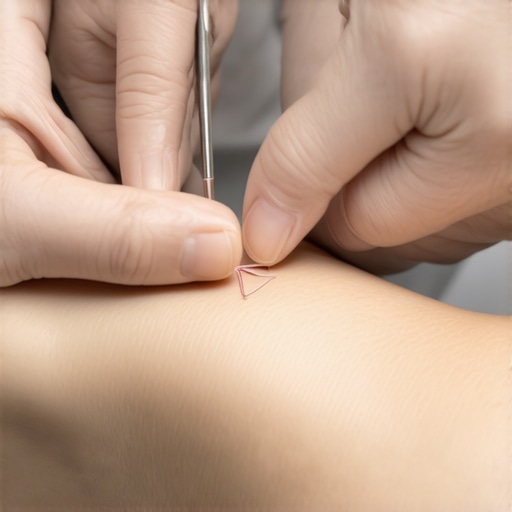
Stop Treating the ER Like Your Primary Care Provider
You have a deep cut on your palm from a kitchen mishap. Your first instinct is likely to drive to the massive hospital with the neon ‘Emergency’ sign. You are wrong. You are making a tactical error that will cost you five hours of your life and a bill that looks like a down payment on a luxury sedan. Why are we still doing this? I argue that the traditional hospital waiting room is the single worst place for a minor injury, yet we flock to it like moths to a flame that eventually burns our bank accounts. We have been conditioned to believe that the largest building offers the best care, but when it comes to a few simple sutures, you are bringing a sledgehammer to a mosquito fight.
The reality is that the ER is a battlefield designed for heart attacks and multi-car pileups. When you walk in with a laceration that just needs a few loops of nylon, you are at the bottom of the food chain. As I have discussed regarding the triage move that skips the line for minor stitches, the system is literally designed to ignore you in favor of more life-threatening drama. You aren’t being patient; you are being a victim of a system that wasn’t built for your specific needs.
The Hospital Industrial Complex Wins When You Wait
Why do you think the chairs in those waiting rooms are so uniquely uncomfortable? It is a physical manifestation of a broken process. I believe the obsession with hospital-grade care for minor trauma is a psychological trap. You think you’re getting the ‘best,’ but you’re actually getting the most distracted staff and the highest overhead. If you want efficiency, you have to look elsewhere. You need to understand why your local urgent care is better than the ER for stitches. It isn’t just about the shorter line; it is about the specialized focus on the ‘walking wounded’ rather than the ‘nearly dead.’
So, what is the fix? It starts with a simple question at the front desk. I’ve found that using the one question that speeds up your urgent care triage can revolutionize your experience. Stop acting like the ER is your only option. You might even find that you don’t need the needle at all if you explore the urgent care fix for a deep cut without stitches. The modern medical landscape—a term I use loosely to describe the chaos we navigate—demands that you become a smarter consumer. You are not a patient; you are a client. Start acting like one.
The Financial Guillotine of Facility Fees
Let’s talk about the money, because that is where the truth hides. When you walk into an ER, you aren’t just paying for a doctor’s time. You are paying for the existence of the building. This is the ‘facility fee’—a literal cover charge for the privilege of sitting in a plastic chair next to a guy with a hacking cough. It is a financial guillotine. In most cases, this fee alone exceeds the entire cost of a visit to an urgent care clinic. You are paying for a multi-million dollar infrastructure to solve a hundred-dollar problem. It is irrational, yet we do it because we have been conditioned to equate size with quality. This isn’t just a bill; it’s a tax on your lack of preparation.
${PostImagePlaceholdersEnum.ImagePlaceholderB}
The Hidden Tax on Medical Panic
Consider the math. A 2021 study showed that the average cost for treating a common non-emergency condition in the ER was twelve times higher than at an urgent care center. That 1,200% markup isn’t for better thread or sharper needles; it is a premium on your fear. The system relies on your inability to distinguish between an ‘urgent’ situation and a ‘life-threatening’ one. If you can walk, talk, and hold a napkin over the wound, you are not an emergency. You are a profit center. The insurance companies know this, too. They are aggressively denying claims for ER visits they deem ‘avoidable.’ So, not only do you get a massive bill, but you will also find yourself footing the entire thing because you chose the wrong door. This isn’t a possibility; it is a growing reality.
Triage is Not Your Friend
Beyond the bill, there is the hierarchy of human suffering. Triage is a cold, mathematical necessity. The staff doesn’t hate you, but they do prioritize the guy whose heart stopped over your finger. While you wait, the hospital is still burning through resources. Your presence in that room increases the administrative load, slows down the flow of the entire floor, and ultimately leads to the ‘boarding’ crisis we see in modern hospitals. You are a gear in a machine that is already grinding its teeth. Every hour you spend in that waiting room is an hour where the hospital’s overhead is being subsidized by your patience—and your wallet. It is a cycle of inefficiency that only serves the bottom line of the hospital’s board of directors.
The Root of the Resource Drain
The problem isn’t the doctors; the problem is the misaligned incentives of the American healthcare architecture. Hospitals are incentivized to keep their ERs full of ‘low-acuity’ patients because they are high-margin. A trauma case is expensive to treat and results in a loss. A guy with a deep cut? He’s a gold mine. He requires minimal supplies, no specialized surgery, and can be billed at a premium rate. When you show up at the ER for stitches, you are essentially providing the hospital with its highest profit margin of the night. They want you there, but they don’t need you there. Understanding this distinction is the first step toward reclaiming your agency as a healthcare consumer.
The Math of the Waiting Room
We have been sold a lie that ‘more expensive’ equals ‘safer.’ It is a fallacy. For minor trauma, the physician assistant at a specialized clinic who does thirty sets of stitches a day is more proficient than the exhausted ER resident who just finished a 36-hour shift and is currently preoccupied with a massive internal hemorrhage in Room 4. The math doesn’t lie. When you choose the ER for a minor cut, you aren’t buying safety. You are buying a very expensive, very slow, and very unnecessary headache. It is time to stop being a passive participant in this fiscal insanity. Look at the numbers. Look at the clock. The evidence is overwhelming: the ER is for the dying, not for the bleeding-but-otherwise-fine. If you continue to ignore this distinction, you aren’t just a patient—you are a volunteer for a financial fleecing.
It is easy to see why people cling to the emergency room like a security blanket. The logic seems sound: if something goes catastrophic, you are already where the machines live. Critics of my stance will argue that urgent care clinics are ‘medical lite,’ lacking the heavy artillery needed if a simple cut turns out to be a severed tendon or a systemic infection. They believe that by choosing the smaller clinic, they are gambling with their safety for the sake of a shorter wait. I understand that fear. It is rooted in a primal desire to have the best possible resources within arm’s reach when the body breaks. We have been taught that the hospital is the fortress, and everything else is just a temporary outpost.
The Security Blanket Trap
I used to believe this too, until I spent enough time watching the gears of the medical machine grind the life out of patient efficiency. The ‘just in case’ argument is the most expensive psychological fallacy in modern medicine. You are paying thousands of dollars for the theoretical availability of a trauma team that you will never see. It is the equivalent of renting a stadium to host a private dinner party because you’re worried more guests might show up uninvited. This mindset doesn’t just drain your bank account; it actually degrades the quality of the care you receive for that specific, minor injury. When you are a low-priority patient in a high-intensity environment, the ‘safety net’ becomes a cage of neglect.
The uncomfortable truth is that the proximity of a specialized surgeon doesn’t matter if that surgeon is currently occupied with a six-car pileup in the next room. In a hospital, your minor emergency is a distraction. In an urgent care, your minor emergency is the entire reason for the facility’s existence. The focus is singular. The staff is not looking over your shoulder for the next incoming ambulance. By choosing the ‘safer’ option of the ER, you are actually entering a more chaotic, less sterile, and significantly more distracted environment. You aren’t buying safety; you are buying a front-row seat to other people’s catastrophes while your own needs sit on the back burner.
${PostImagePlaceholdersEnum.ImagePlaceholderC}
The Danger of the Safety Net
Let’s dismantle the idea that the ER is ‘safer’ for a simple laceration. Hospitals are breeding grounds for antibiotic-resistant bacteria. Every hour you sit in a communal waiting room surrounded by truly ill people, you are increasing your exposure to pathogens that have evolved to survive the strongest cleaners on earth. Your ‘safe’ hospital visit for three stitches could easily turn into a secondary infection that a local clinic would never have exposed you to. The risk-to-reward ratio of the ER for minor trauma is completely skewed. You are trading a 20-minute wait in a clean clinic for a five-hour exposure to a petri dish of urban illness.
The argument that urgent care providers are less qualified is equally flawed. Most urgent care centers are staffed by board-certified physicians and experienced practitioners who specialize specifically in ‘acute minor’ care. They are the experts in the very thing you need. The ER resident might be brilliant, but they are also exhausted, overextended, and likely haven’t seen a simple finger laceration in twelve hours of managing heart failures and gunshot wounds. Who do you want holding the needle: the specialist who treats twenty of these a day, or the person who treats one between life-and-death crises? The choice is clear once you strip away the institutional prestige of the hospital name. Stop letting the size of the building dictate your common sense.
We are standing at a precipice, and the view is terrifying. If we continue to treat the hospital emergency department as a catch-all for every minor ailment, we are effectively participating in the dismantling of our own safety net. This isn’t just about your individual bill; it is about the systemic rot caused by the misallocation of high-level resources. Every time you occupy an ER bed for a scratch that could have been handled in a strip-mall clinic, you are tightening the noose around the neck of a system that is already gasping for air. We are approaching a breaking point where the term ’emergency’ will lose all meaning, and the consequences will be measured in more than just dollars.
The Fire Engine for the Houseplant
Consider the absurdity of our current behavior. Using the ER for a minor laceration is like calling a five-alarm fire crew to water a dying houseplant. Yes, they have the water, and yes, they have the expertise to use it, but the cost of mobilizing that entire apparatus is a slap in the face of logic. When we normalize this level of inefficiency, we invite the hospital industrial complex to continue their predatory pricing models. We are training them to expect—and rely on—our lack of discernment. If we don’t stop, we will soon reach a stage where the only people who can afford any form of care are the ultra-wealthy, leaving the rest of us to bleed out in the parking lots of buildings we helped build with our tax dollars and insurance premiums.
${PostImagePlaceholdersEnum.ImagePlaceholderD}
Is it too late?
The question we must face is whether we have already crossed the point of no return. In five years, if our habits do not change, the emergency room will no longer be a place of healing; it will be a fortress of exclusion. We are looking at a future where ‘wait times’ are measured in days rather than hours, and where the financial barrier to entry is so high that even the insured will hesitate to seek help for life-threatening symptoms. This is the ‘Great Abandonment’ of the medical middle class. We are trading our future security for the temporary comfort of a big-name hospital sign, and it is a bargain that will leave us bankrupt and broken.
The Final Warning of the Resource War
This is a resource war, and the individual consumer is currently the casualty. By refusing to adapt, by refusing to embrace the specialized efficiency of urgent care, telehealth, or local lab centers, we are fueling the very fire that is consuming our bank accounts. The moral imperative here is clear: we must protect the emergency room for those who truly need it, or we will lose it for everyone. The ‘security blanket’ of the big hospital is actually a shroud if it isn’t used correctly. We are choosing a path of collective failure, fueled by individual convenience. The warning lights are flashing, the bills are mounting, and the chairs in that waiting room are only getting harder. If you think the current price of a few stitches is high, just wait until you see the cost of a system that has finally collapsed under the weight of its own mismanagement.
The Survival of the Smartest
The system isn’t going to fix itself while you are still willing to pay the premium for institutional inefficiency. If you want a healthcare experience that respects your time and your intelligence, you must vote with your feet. We are entering an era where telehealth breakthroughs how virtual visits elevate chronic care in 2025 are already proving that the traditional ‘big building’ model is obsolete for the majority of our needs. To stay anchored to the ER for minor injuries is to stay anchored to a sinking ship.
You do not have to be a victim of the waiting room or a line item on a corporate profit-and-loss statement. By mastering the triage hack for faster service at busy urgent care clinics, you reclaim hours of your life and thousands of dollars in unnecessary fees. The alternative is a slow descent into a medical landscape where the emergency room is so clogged with minor lacerations that it can no longer respond to actual emergencies. This isn’t hyperbole; it is our current trajectory. Your decision to skip the ER for a minor injury is an act of systemic preservation.
Your Next Move
We are increasingly seeing how maximizing urgent care efficiency with advanced lab test technologies is outstripping the slow, lumbering pace of hospital diagnostics for the ‘walking wounded.’ If you continue to bring your minor trauma to the trauma center, you are effectively paying for a Ferrari to drive to the mailbox. It is time to stop being a passive participant in your own financial fleecing.
The Final Verdict
Your medical outcome is determined by your choice of door, not the prestige of the logo on the building.
The twist is this: by avoiding the hospital for minor issues, you aren’t just saving yourself money; you are making the hospital safer for the person whose life truly depends on it. Real healthcare reform doesn’t happen in a Senate subcommittee; it happens in your driveway when you decide which direction to turn your steering wheel. Stop subsidizing the hospital’s inefficiency. Choose the specialist, choose the speed, and for heaven’s sake, keep the ER for the actual emergencies. The bill you save will be your own.