
Why You Should Stop Using Dr. Google for Your Child’s High Fever
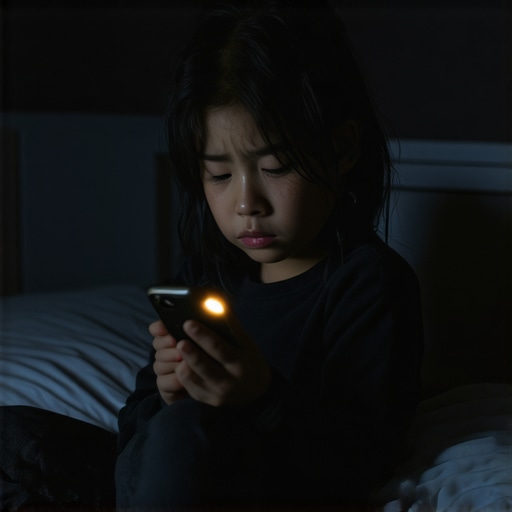
Stop typing. Close the tab. Put the phone face down on the nightstand. You are currently engaged in a digital séance, hoping a search engine can conjure a diagnosis for your child’s rising temperature, but all you are doing is inviting ghosts into your house. We have reached a point where parents trust a faceless algorithm more than a medical degree, and the result is a culture of paralysis and unnecessary panic. I argue that why you should stop using Dr. Google for a child’s fever is not just about medical accuracy; it’s about reclaiming your role as a rational protector instead of a victim of the anxiety economy.
The internet is a slot machine of terror. You pull the lever by hitting search, and while you might occasionally hit the jackpot of it’s just a common cold, the machine is rigged to show you rare complications because those are the pages that get the most clicks. It’s a feedback loop of misery. You think you are being diligent. You think you are being an informed parent. You are wrong. You are simply feeding your own confirmation bias, looking for reasons to stay awake until dawn. Why are we still doing this? We know the information is unvetted, yet we surrender our sanity to a search engine because it’s faster than a phone call. But speed without clinical context is just a fast track to a psychiatric breakdown.
The Algorithm Feeds Your Fear
A search engine is a mirror, not a microscope. It reflects your darkest worries back at you. When you search for symptoms, you aren’t getting medical advice; you are getting a curated list of what other panicked people have looked at. This digital junkyard ignores the nuances of your child’s history, their behavior, and their specific physical state. I’ve seen how the fever myth that keeps parents awake all night is perpetuated by websites that prioritize traffic over triage. A high number on a thermometer is a data point, not a death sentence, but Google won’t tell you that. It will tell you about the one-in-a-million case that justifies its existence. It’s like trying to navigate a minefield using a map drawn by someone who has never actually seen the ground. You are walking blindly into stress that has no medical basis.
Expertise Cannot Be Replaced by Keywords
Context is the only thing that matters in medicine. A doctor looks at a child and sees the color of their skin, the way they breathe, and the look in their eyes. A search bar sees a string of text. There is no replacement for a virtual check-in where a professional can actually observe your child. You might think you can distinguish between viral or bacterial indicators by reading a blog post, but you are playing a dangerous game of find the symptom. The reason your child needs a virtual triage before the ER is simple: professional eyes catch what a search engine misses. We have to stop pretending that our research is equivalent to clinical observation. It isn’t. It’s just noise, and it’s loud enough to drown out the actual medical advice you need to hear. We have become addicts to the instant answer, but health does not work on a fiber-optic schedule. Sometimes, the cold hard truth is that we need to wait, observe, and consult a human being rather than a database. The reality is that your search history is likely a record of every fear you’ve ever had, and Dr. Google is the enabler. It doesn’t care about your child’s health. It cares about keeping you on the page. It’s time to fire the algorithm and trust a clinician. Your child’s well-being depends on your ability to look away from the screen and toward the professional standing right in front of you.
The root cause of this madness isn’t a lack of information; it’s an abundance of the wrong kind of information. We are living through an era where doing your own research has become a euphemism for scrolling through a digital graveyard of worst-case scenarios. The architects of search engines didn’t build them to be your pediatrician. They built them to be an attention economy. When you type symptoms into a search bar, you are not engaging in a medical consultation. You are entering a marketplace. The algorithm doesn’t prioritize the most likely outcome; it prioritizes the most engaging one. And nothing engages a human brain quite like fear.
The Profiteers of Parental Anxiety
Who benefits when you stay awake until 3:00 AM clicking through page after page of medical horror stories? It isn’t you, and it certainly isn’t your child. The benefit goes to the platforms that sell your anxiety to the highest bidder. This isn’t a conspiracy; it’s a business model. High-intensity keywords like ‘meningitis symptoms’ or ‘rare childhood diseases’ carry significant ad value. The system is incentivized to keep you in a state of high-alert because a calm parent closes the tab, while a terrified parent keeps clicking. We have allowed the health of our children to be used as bait for engagement metrics. It is a parasitic relationship where your peace of mind is the host.
${PostImagePlaceholdersEnum.ImagePlaceholderB}
The Failure of Digital Diagnostics
The data doesn’t lie, but it certainly obscures. A prominent study found that online symptom checkers provided the correct diagnosis as the first result only 36% of the time. Think about that. Only 36%. That isn’t a minor discrepancy; it is a statistical failure that would get any physical clinic shut down in a heartbeat. If you walked into an urgent care and the doctor was wrong two-thirds of the time, you would sue for malpractice. Yet, we treat these search results with a reverence they haven’t earned. This 36% accuracy rate is a catastrophe disguised as a convenience. It is a coin flip where the coin is weighted to land on ’emergency’ every single time.
Clinical Context vs. Keyword Matching
A search engine is incapable of nuance. It cannot distinguish between a child who is ‘tired’ because they played outside all day and a child who is ‘lethargic’ due to a serious infection. These distinctions are the bedrock of medicine. When a parent manages chronic care for a child, they need precision, not a list of possibilities curated by an AI that doesn’t know the difference between a sniffle and a seizure. Professional lab tests offer certainty; a Reddit thread offers anecdotes. We are trading the expertise of a human being for a snippet of text designed to maximize time-on-page. The reality is that telehealth has made professional advice more accessible than ever, yet we still choose the digital slot machine. It is a rejection of logic in favor of instant gratification.
The Danger of the Self-Fulfilling Prophecy
The more you search, the more you find. This isn’t because you are uncovering hidden truths, but because the internet is a mirror of your own confirmation bias. If you are convinced your child has a rare condition, the algorithm will provide you with 10,000 pages that agree with you. It bypasses the gatekeeping of clinical evidence. This leads to unnecessary visits to the emergency room, clogging the system for those who are in actual crisis. We have lost the ability to wait and observe because the screen tells us that waiting is dangerous. It is a lie. Observation is a clinical tool; frantic clicking is a psychiatric burden. We are teaching ourselves to be hyper-vigilant in a way that is actually detrimental to our children’s long-term health. We need to stop. We need to look at the child, not the phone.
I know what you are thinking. I know the defense because I used to believe this too, until I saw the wreckage it leaves in its wake. You argue that ‘knowledge is power.’ You tell yourself that by scrolling through medical forums, you are becoming a more ’empowered’ parent, a necessary advocate in a healthcare system that can sometimes feel cold or dismissive. You think that if you don’t do the legwork, something will be missed. It is a seductive argument. It positions you as the hero of the story—the vigilant sentinel guarding your child’s health against the perceived laziness of the medical establishment. It feels proactive to have fifty tabs open while your toddler sleeps fitfully in the next room. It feels like love. It feels like duty. It feels like you are doing your part.
The Fallacy of the Empowered Searcher
But let’s be honest about what that ’empowerment’ actually looks like in practice. It isn’t a calm analysis of peer-reviewed data. It is a frantic, sweat-palmed descent into the worst-case scenarios imaginable. The argument for digital self-diagnosis assumes that you, the parent, possess the clinical detachment required to filter through thousands of conflicting data points while your child has a fever. You don’t. No one does. Even doctors are warned against treating their own families because emotion clouds judgment. When you use the internet as a diagnostic tool, you aren’t empowering yourself; you are subjecting yourself to a psychological assault. You are replacing the structured, evidence-based triage of urgent care with a chaotic shouting match of anecdotal evidence.
${PostImagePlaceholdersEnum.ImagePlaceholderC}
The critics will say that doctors are often wrong and that ‘Dr. Google’ caught things the professionals missed. While rare stories of digital detection exist, they are the exceptions that prove the rule. For every one person who correctly self-diagnosed a rare condition, there are ten thousand parents who drove themselves to the brink of a nervous breakdown over a harmless skin rash. This isn’t advocacy; it’s an obsession with the statistical outlier. When a child requires chronic care, the last thing they need is a parent who is constantly questioning the protocol based on a thread from a 2014 message board. True advocacy is about finding a professional you trust, not trying to become one overnight via a search engine. We have conflated access to information with the ability to interpret it, and that gap is where the anxiety lives.
We must also address the reality that medical systems are more connected than ever. If you are worried about the speed of an answer, telehealth provides a bridge that doesn’t involve the digital landfill of the open web. You can get a professional opinion in minutes without ever touching a search bar. When you choose a search engine over a clinician, you are choosing a tool that has no accountability. If a search result is wrong, it doesn’t care. It doesn’t lose its license. It doesn’t have to look you in the eye. A clinician ordering lab tests is operating within a framework of professional responsibility and ethics. The algorithm is operating on a framework of ad revenue and engagement. To treat these two things as equivalent is a fundamental misunderstanding of what medicine is.
The uncomfortable truth is that our ‘research’ is often just a way to avoid the vulnerability of waiting. We search because we cannot sit with the uncertainty of a sick child. But the internet doesn’t remove uncertainty; it just replaces it with a more terrifying version of the same thing. It trades the simple ‘I don’t know yet’ for a complex ‘It could be this horrific thing you’ve never heard of.’ We are making a bad trade. We are selling our peace of mind for a counterfeit sense of control. We need to stop pretending that our midnight scrolling is a medical necessity and start admitting it’s a compulsive habit that serves no one—least of all our children. The most ‘informed’ thing you can do for your child is to put the phone in another room and trust the people who actually spent a decade learning how to help.
The current trajectory of parental anxiety isn’t just a personal burden; it is a systemic threat to the integrity of medicine. If we do not stop this cycle, we are heading toward a future where clinical expertise is treated as a secondary opinion to the primary authority of a search bar. We are currently witnessing the slow-motion collapse of trust. When we prioritize a keyword over a clinician, we aren’t just checking facts. We are fundamentally altering the way we perceive reality and risk. The stakes are no longer just about a single night of lost sleep; they are about the erosion of a medical system that relies on objective truth to function. Treating a search engine as a medical authority is like using a compass in a magnetic storm; it feels like you have a direction, but you are actually just spinning in circles while the ground disappears beneath your feet. We are losing our ability to distinguish between a possibility and a probability, and in that gap, we are losing our peace of mind.
The Point of No Return
In five years, if this trend continues unchecked, the doctor-patient relationship will be unrecognizable. We will see urgent care centers and emergency rooms perpetually choked by the ‘worried well’—individuals who have been algorithmically convinced they are in a state of crisis. This creates a dangerous bottleneck for those requiring chronic care or life-saving interventions. When the system is flooded with digital noise, the signals of real emergencies get lost. We are building a world where the medical professional is no longer a partner in health but a barrier to the answer a parent has already found on a screen. This isn’t just a waste of resources; it is a moral failure. We are teaching the next generation that the loudest voice in the room—the algorithm—is the one that matters most, regardless of its accuracy or accountability.
${PostImagePlaceholdersEnum.ImagePlaceholderD}
Are we raising a generation of digital hypochondriacs?
The danger is that we are conditioning ourselves to reject the nuance of human biology in favor of the binary of digital search results. We are becoming addicts to the hit of dopamine that comes from finding a ‘label’ for our fears, even if that label is wrong. This addiction doesn’t stay confined to a fever or a rash; it bleeds into every aspect of how we manage our lives and our children’s futures. We are trading the slow, deliberate work of lab tests and clinical observation for the fast-food equivalent of medical advice. If we don’t reclaim the authority of human expertise now, we will find ourselves in a landscape where no amount of telehealth or technological advancement can save us from our own manufactured panic. The warning is clear: the more we look at the screen, the less we see of the child standing right in front of us. We are at the precipice of a reality where the map has replaced the territory, and we are all getting lost in the process.
We are standing at a threshold where the convenience of a search bar is masquerading as a medical necessity. The cost of this convenience isn’t just a few dollars in ad revenue; it is the fundamental peace of mind required to raise a healthy child. If we continue to treat every minor symptom as a metadata search, we aren’t just misdiagnosing illnesses; we are misdiagnosing our own capacity to provide a calm, stable environment for our families. The algorithm is a parasite that feeds on the vulnerability of 3:00 AM panic. It is time to starve it. This begins with acknowledging the error of self-diagnosing your child’s skin rash and realizing that a screen is no substitute for a stethoscope.
The Legacy of the Search Bar
If we do not change course, we are raising a generation that views healthcare as a transaction with an AI rather than a relationship with a human. We are sacrificing the nuance of clinical judgment for the speed of a keyword match. The reality is that modern medicine has already solved the ‘wait time’ problem through telehealth breakthroughs how virtual visits elevate chronic care in 2025. There is no longer an excuse to trade accuracy for velocity. When you bypass the professional and go straight to the search engine, you aren’t being an ‘informed’ parent—you are being a victim of an attention economy that views your child’s fever as a data point for ad placement.
The Final Verdict
The internet is a library of worst-case scenarios, whereas your doctor is a partner in your child’s actual reality. Choosing the algorithm over the clinician is a gamble where your peace of mind is the only thing on the table. We must stop letting a database define our level of fear and start letting urgent care innovations streamlining same day lab tests for faster results provide the concrete answers we actually need. The truth doesn’t live in a search result; it lives in the clinical data and the expert eyes of those trained to see what a camera or a keyword cannot.
The Twist
The greatest danger of Dr. Google isn’t that you will find the wrong answer; it is that you will eventually stop believing there is a right one. By saturating ourselves in conflicting anecdotes and algorithmic noise, we erode our trust in the very expertise that keeps us safe. We become so ’empowered’ by information that we become paralyzed by choice. Your child doesn’t need a parent who is a self-taught medical researcher; they need a parent who is present, calm, and wise enough to know when to put the phone down and call a professional. Reclaim your role. Close the tab. Trust the expert. Your family’s health—and your own sanity—depend on it.