
How to Tell if Your Child’s Fever is Viral or Bacterial
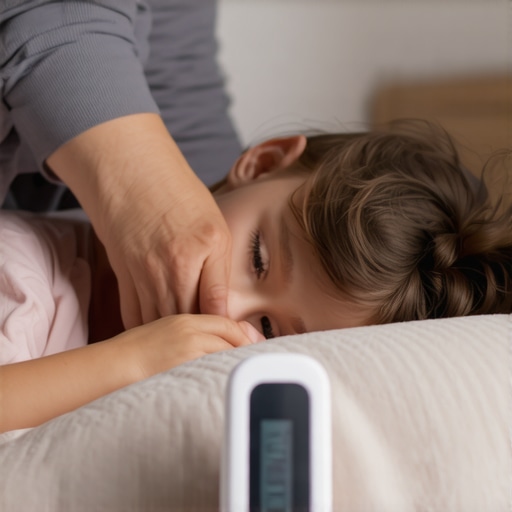
Stop looking at the thermometer as if it is a countdown to a bomb. It is not. You see 102 on that plastic stick and you lose your mind. You think the brain is melting. You think a bacterial monster is devouring your toddler from the inside out. You are wrong. Most of the time, that heat is the sound of the body’s infantry doing its job. We have become a culture of ‘fever phobia,’ a collective neurosis that drives us to clog urgent care clinics at 2:00 AM for what is essentially a common cold. I argue that the frantic quest to distinguish between viral and bacterial infections in the first few hours is a symptom of our inability to sit with discomfort. We want a pill. We want a label. We want the certainty of a lab test before the body has even had a chance to mount a defense. But here is the hard truth: your panic is more contagious than the sniffles, and your rush to ‘fix’ the temperature is often why a why a pediatric fever might not always need Tylenol.
The Thermometer is a Lying Narrator
We treat the thermometer like a divine oracle, but it is more like a broken car alarm. It tells you something is happening, but it does not tell you if someone is actually stealing the car or if a heavy truck just drove by. A viral infection—the most common culprit—is like a seasonal storm. It is loud, it is messy, and it simply has to pass. A bacterial infection is more like a termite infestation; it is persistent and destructive if left alone. But you cannot tell the difference by the heat alone. Why are we so afraid of the heat? We have been conditioned to believe that a normal biological response is a medical emergency. You might think you are being a ‘diligent parent’ by demanding immediate answers, but you are often just a victim of an overtaxed healthcare system that profits from your anxiety. As I have noted when discussing how to manage a child’s barking cough without any panic, the most powerful tool in your kit is not a prescription pad; it is observation. Observation is free. Observation is accurate. Observation requires you to actually look at your child instead of the LED screen.
The Waiting Room is a Breeding Ground for Regret
We have moved into an era where we trust a swab more than we trust our eyes. While urgent care innovations streamlining same-day lab tests for faster results have altered the course of genuine emergencies, they have also created a demand for instant gratification in diagnostics. If the kid is playing with blocks and drinking juice but has a 103 fever, why are you crying in the waiting room? If the child is lethargic, gray, and refusing water, why are you still checking the number on the thermometer? The error of self-diagnosing your child’s skin rash or fever based on a Google search is that it ignores the clinical picture. A virus typically comes with a ‘friend group’—the runny nose, the cough, the sore throat. Bacteria tend to be loners; they strike one spot, like the ears or the lungs, and they stay there, intensifying. But rushing to the clinic at the first spike often leads to negative tests because the viral load is not high enough yet. You are wasting time, money, and sanity. I believe we are over-medicalizing childhood. We treat every sniffle like a crisis. When did we become so fragile? The viral-versus-bacterial debate is not just about medicine; it is about our desperate need for control. We think that if we can name the beast, we can slay it. But viruses do not care about names, and they certainly do not care about the antibiotics you are begging for. Is it viral? Probably. Is it bacterial? Maybe, but let the evidence mount before you start the chemical warfare. The real danger is not the fever; it is the intervention that was not needed. Every time we jump the gun, we chip away at the very resilience we are supposed to be building. So, why are we still doing this? Why are we still running to the clinic for a ‘peace of mind’ that usually just results in a higher insurance premium and a frustrated doctor? We need to stop. We need to watch. We need to breathe. Trust the infantry. Let the fever work until it actually proves it is the enemy.
The Myth of the Quick Fix
The problem is not the pathogen. The problem is the culture of Just in Case. We have reached a point where the absence of a prescription is viewed as a failure of the consultation. This is the root cause of our current medical crisis: we have commodified the biological process. When you walk into an urgent care clinic, you are not acting as a patient; you are acting as a consumer. You want a product for your co-pay. If that product isn’t a Z-Pak, you feel cheated. But biology does not operate on a customer-service model. The body requires time to identify, engage, and neutralize an invader. By rushing the process, we aren’t just wasting resources; we are actively sabotaging the immune system’s education. We are raising a generation of children who believe that any physical sensation requiring a deep breath is a medical crisis. It is a dangerous precedent. It is a psychological frailty that will cost us far more than the price of a clinic visit.
Where the Math Fails
Consider the data. The CDC has repeatedly pointed out that at least 30 percent of antibiotics prescribed in outpatient settings are completely unnecessary. That 30 percent figure isn’t a medical margin of error; it is a confession. It is a monument to our impatience. It represents millions of instances where a provider was worn down by a parent’s relentless ‘what if’ or where a system prioritized throughput over clinical integrity. This is where the math of convenience fails. We trade long-term bacterial resistance for ten minutes of perceived peace of mind. We are burning the house down to stay warm for an hour. Every unnecessary swab and every premature blood draw is a vote against the body’s natural resilience. If the child is alert and hydrated, the ‘evidence’ is already in front of you. You do not need a machine to tell you what your eyes can already see. The obsession with quantifying the illness through lab values is a mask for our inability to tolerate the unknown.
${PostImagePlaceholdersEnum.ImagePlaceholderB}
The Commodification of Anxiety
The rise of 24/7 healthcare access was sold to us as a victory for the working family. In reality, it has become a trap. It has shortened our fuse. When help is ‘always available,’ we lose the ability to wait through the night. We have replaced the cool compress and the rocking chair with the sterile waiting room and the fluorescent hum of the triage station. The system benefits from your fear. It thrives on the cycle of test, bill, repeat. They know that a panicked parent will pay for the certainty of a negative flu swab, even if the result changes absolutely nothing about the treatment plan. It is a brilliant business model, but it is terrible medicine. We are stripping away the parent’s confidence, replacing instinct with an algorithm. Stop treating the clinic like a drive-thru. The fever is not a malfunction of the machine; it is the machine working at peak capacity. Your job is to support the machine, not to shut it down because the noise is making you nervous. The real evidence of health isn’t found in a laboratory. It is found in the child who, despite the heat, still wants to hold your hand and hear a story. That is the only data point that truly matters.
Critics will undoubtedly argue that advocating for restraint in the face of a 104-degree fever is a form of medical negligence. They will cite the nightmare scenarios—the invasive bacterial infections that move like wildfire—and suggest that any delay in testing is a gamble with a child’s life. It is a powerful, emotional argument. It leverages the primal fear of every parent to justify a system that treats every sniffle like a potential catastrophe. But this ‘better safe than sorry’ mantra is a logical fallacy that ignores the collateral damage of our own anxiety. When we rush to a clinic within hours of a fever’s onset, we aren’t practicing superior medicine; we are practicing defensive medicine, which prioritizes the soothing of the parent’s ego over the actual biological needs of the child.
The Safety Net is Actually a Trap
I used to believe this too, until I saw the toll that the search for absolute certainty takes on families. I once thought that a quick swab was a harmless way to ‘rule things out.’ I was wrong. The reality is that lab tests in the earliest stages of an illness are often misleading. A negative flu test doesn’t mean your child doesn’t have the flu; it often just means the viral load hasn’t peaked. A slightly elevated white blood cell count doesn’t always signal a bacterial war; it can simply be the body’s natural response to a vigorous viral defense. By demanding these tests too early, you aren’t getting clarity—you are getting a data point that is stripped of its context. You are buying a map that hasn’t been drawn yet. This is the elephant in the room that the urgent care industry won’t tell you: your ‘peace of mind’ is often built on a foundation of false negatives and clinical noise.
${PostImagePlaceholdersEnum.ImagePlaceholderC}
The argument for immediate intervention also ignores the very real risks of the clinical environment itself. We act as if the waiting room is a neutral zone, but it is a concentrated soup of every pathogen currently circulating in your zip code. You take a child with a simple viral fever into a facility packed with people suffering from true bacterial pneumonia or the latest stomach bug, and you have significantly increased their risk profile just to satisfy your own need for a label. This is where the math of Just in Case falls apart. We are so afraid of the one-in-a-thousand bacterial infection that we ignore the much higher probability of secondary infection, unnecessary radiation from ‘precautionary’ X-rays, and the disruption of the child’s microbiome through the over-prescription of antibiotics. The ‘safety’ we think we are buying is an illusion.
The Myth of the Risk Free Test
We need to talk about the long-term impact on chronic care. When we train parents to outsource their intuition to a rapid test, we create a cycle of dependency that lasts a lifetime. We are teaching children that health is something that happens in a laboratory, not something that their own bodies are capable of managing. If every fever results in a frantic trip to the clinic, we are effectively telling the next generation that their immune systems are incompetent. This psychological frailty is its own kind of chronic condition. It creates a population that is perpetually anxious, constantly seeking medical validation for normal physiological processes. This isn’t just about one fever; it’s about the entire philosophy of how we approach human resilience. The true ‘safe’ path isn’t the one that involves the most equipment; it’s the one that involves the most patience. We have to stop viewing the absence of a doctor as a lack of care. Sometimes, the most sophisticated medical intervention is simply allowing the body to do what it has evolved to do for millennia without the interference of a panicked bystander.
Telehealth has only exacerbated this issue by making a ‘consultation’ as easy as ordering a pizza. While it has its place in managing chronic care or remote triage, it often serves as a digital gateway for the ‘Just in Case’ prescription. A provider on a screen cannot feel the warmth of a child’s skin or see the subtle way they move. They are forced to rely on the parent’s narrated anxiety. In that high-pressure, low-information environment, the default is almost always more testing or ‘precautionary’ meds. We are replacing the steady hand of clinical experience with the frantic click of a mouse, and we are calling it progress. It isn’t. It is the commodification of fear, and it is time we recognized the difference between being a diligent guardian and being a customer of an over-medicalized culture.
We are currently drafting a promissory note that our children’s bodies will not be able to cash. This obsession with the instant diagnostic and the ‘Just in Case’ prescription is not a harmless quirk of modern parenting; it is a biological credit card with a predatory interest rate. We are spending the fundamental resilience of the human species to buy twenty minutes of psychological comfort. If we do not change course, we are heading toward a total atrophy of the human spirit’s ability to coexist with nature. We have treated the immune system like a nuisance to be silenced rather than a sophisticated defense force to be trained. The stakes could not be higher. We are not just talking about a few unnecessary co-pays; we are talking about the permanent loss of our ability to discern health from hazard.
The Point of No Return
Imagine the immune system as a world-class athlete. To stay in peak condition, that athlete needs to train, to sweat, and to occasionally fail. By intervening at every minor spike in temperature, we are putting that athlete in a motorized wheelchair and wondering why they can no longer walk. In five years, if this trajectory continues, the very concept of ‘home care’ will be extinct. We will see a society where every bathroom is equipped with a diagnostic kiosk, and no parent will dare to touch a child’s forehead without a digital readout to validate the sensation. We are witnessing the death of the human touch in medicine, replaced by a retail transaction that prizes throughput over the long-term survival of the patient. This isn’t progress; it is a surrender to the machines and the corporations that profit from our inability to trust ourselves.
${PostImagePlaceholdersEnum.ImagePlaceholderD}
Is it too late?
The warning is flashing red, yet we continue to floor the accelerator. Our current path leads to a world where ‘common’ infections become death sentences because we have exhausted our antibiotic arsenal on viral ghosts. We are creating a generation of medical dependents who view their own bodies as foreign, hostile territories that require constant professional surveillance. This psychological frailty will manifest in every aspect of life, far beyond the clinic walls. When you cannot trust your body to handle a fever, you lose the foundational confidence required to handle any of life’s inevitable heat. We are building a house of cards on a foundation of sterile wipes and rapid swabs, and the wind is starting to pick up. The collapse will not be a sudden explosion, but a quiet, hollow realization that we no longer know how to be human without a prescription.
The Cost of Inaction
The tragedy of our current era is that we have all the data, yet we choose the delusion. We know that over-testing leads to over-treatment, and we know that over-treatment leads to resistance and secondary harm. Yet, we allow the ‘convenience’ of telehealth and the ubiquity of urgent care to bypass our common sense. This is a moral failure. It is an abandonment of our duty to protect the future for the sake of an easy afternoon today. We are trading the very concept of medical integrity for a customer satisfaction score. If we continue to treat medicine as a commodity, we will eventually find that we have no medicine left—only expensive rituals that offer no real protection against the monsters we have helped create through our own impatience and fear.
The End of Intuition
We are at a crossroads. We can continue to treat every physiological hiccup as a reason to engage the machinery of modern medicine, or we can reclaim the dignity of the human body. The choice is yours, but know that every time you rush to the clinic for a minor viral surge, you are voting for a future where personal resilience is a forgotten relic. The expansion of medical access has been a double-edged sword. While we see how the future of telehealth transforming chronic disease monitoring today can offer genuine support for the vulnerable, it is too often used as a digital pacifier for the panicked. This isn’t just about a fever; it’s about our relationship with reality itself. We have traded the quiet wisdom of the bedside for the frantic noise of the diagnostic suite.
Your Move
I’ve spent years observing how the secret to getting an urgent care doctor to listen often starts with knowing when to stay home in the first place. When you walk in with a level head and a timeline of observation, you are a partner in care. When you walk in demanding a swab for a two-hour-old sniffle, you are a customer demanding a refund for a biology you do not like. You might find that 3 signs your childs earache can wait until morning are actually indicators of a body that is winning its battle, not losing it. The final verdict is this: Stop outsourcing your instinct to a retail medical system that thrives on your anxiety. The most advanced medical equipment you own is your own perception, and we are letting it rust. The real danger is not the virus under the skin, but the fear that has settled in the mind. ${PostImagePlaceholdersEnum.ImagePlaceholderE} Put down the thermometer. Turn off the screen. Trust the infantry. Let the child sleep, and wait for the sun to rise.