
Why Your Heart Rate Spikes During Virtual Consultations
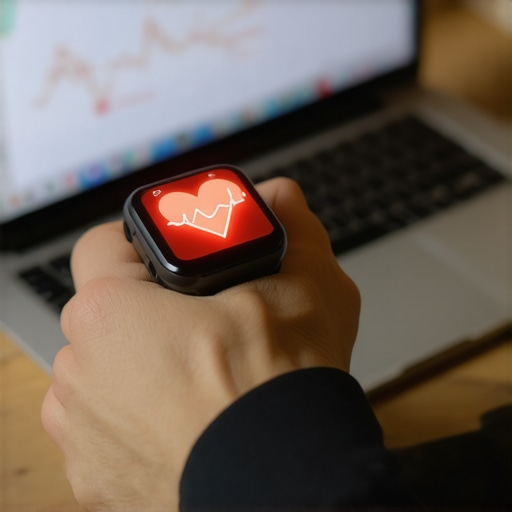
Your Screen is a Stress Machine and It is Wrecking Your Health Data
The tech industry promised us that telehealth would be the ultimate stress-reducer. No more traffic. No more waiting rooms filled with coughing strangers. Just you, your couch, and a friendly face on a screen. But for many, the reality is a jagged spike in heart rate and a surge of cortisol that rivals a high-speed car chase. We have traded the cold steel of the exam table for the cold glare of the webcam, and I argue that the latter is far more invasive than we care to admit.
You might think sitting in your living room would keep you calm, but you’re wrong. When you are on a screen, you aren’t just a patient; you are a technician, a lighting director, and a performer. If your Wi-Fi drops, your care stops. That pressure creates a digital version of what we’ve long called white coat hypertension. While we know the hidden reason your blood pressure spikes at the clinic only, we are now seeing a new, more insidious version at home. I believe this tech-induced performance anxiety is skewing our vitals and leading to misdiagnosis.
Stop Pretending the Couch is a Clinic
The transition from ‘home’ to ‘hospital’ used to be a physical journey that allowed the brain to compartmentalize. Now, that boundary is gone. Your sanctuary has been invaded by a medical professional peering into your private space. Navigating a virtual consultation is like trying to perform a solo at Carnegie Hall through a tin-can telephone; if you miss a beat or the connection lags, the whole performance falls apart. This is why I always tell people to check the checklist for a productive 15-minute virtual check-in before they even log on. Preparation is the only way to combat the physiological noise of a bad connection.
The Latency is the Enemy
We are biologically wired to read micro-expressions and body language. In a physical room, that communication is instant. On a screen, there is latency. There is lag. There is the soul-crushing silence of a frozen frame. These micro-delays trigger a deep-seated ‘fight or flight’ response because our brains perceive the lack of social synchronicity as a threat. We are fighting against the medium itself. If you want a better outcome, you have to know how to get a clearer telehealth diagnosis by optimizing your environment, not just your internet speed. We must stop blaming the patient’s heart for a problem created by the pixel.
The Anatomy of a Digital Lie
The problem isn’t your internet; it’s your amygdala. We have spent millennia refining our ability to detect sincerity and safety through the presence of others. A screen is a barrier, and our brains treat barriers as threats. When you stare at a two-dimensional version of a doctor, your brain is working ten times harder to fill in the gaps. This is cognitive load, and it is a silent killer of accurate data. It is exhausting. It is stressful. And it is fundamentally changing the way your body responds to medical inquiry. The tech industry wants you to believe that a video call is a perfect proxy for a physical meeting, but your nervous system knows better. It is not an ‘efficient’ alternative; it is a biological mismatch that we are trying to patch with software updates.
Garbage In, Diagnosis Out
Look at the data from a different angle. A study on physiological responses during video conferencing showed that participants experienced a significant decrease in heart rate variability—a key indicator of stress—within just minutes of a call. That 15% drop in HRV isn’t a minor dip; it’s a physiological collapse. If your doctor is basing a prescription on vitals captured during this state, they are diagnosing a ghost. They are treating a version of you that only exists when you are trapped in a digital box. We are building a mountain of medical records based on the physiology of panic, and we are doing it under the guise of progress. We are medicating the lag, not the patient.${PostImagePlaceholdersEnum.ImagePlaceholderB}
The Industrialization of the Exam Room
We have seen this before. In the early 20th century, the ‘efficiency movement’ promised that by measuring every second of a worker’s movement, we could achieve a industrial utopia. It didn’t work. It led to burnout, injury, and a dehumanized workforce. Telehealth is the ‘scientific management’ of the 21st-century clinic. It prioritizes the clock over the person. By forcing the medical encounter into a digital pipeline, we are stripping away the essential human variables that make medicine an art rather than a transaction. Context matters. A high blood pressure reading in a quiet room with a trusted physician is data; a high reading while struggling with a flickering webcam is noise. We are sacrificing accuracy on the altar of throughput.
The Profit of Panic
Who actually benefits from this digital rush? It isn’t the patient, and it certainly isn’t the physician staring at their fourteenth screen of the day. It is the platforms. These companies are built on volume. They have successfully convinced us that ‘access’ is synonymous with ‘quality,’ but that is a lie. True access requires a connection that goes beyond a fiber-optic cable. When we trade physical proximity for digital convenience, we aren’t just losing a handshake; we are losing the biological baseline of human health. We must stop pretending that a pixelated face is the same as a human presence. It is not. The system is designed to be fast, but health is inherently slow. When you rush a diagnosis through a screen, you aren’t saving time; you are accumulating a biological debt that your body will eventually have to pay.
It is easy to see why the proponents of digital-first medicine are so defensive. They point to the single mother in a rural ‘medical desert’ who can now see a specialist without a four-hour drive, or the elderly patient with mobility issues who no longer has to navigate a subway system just to get a prescription refill. This is the ‘access’ argument, and it is the most formidable weapon in the tech lobby’s arsenal. I used to believe this too, until I realized that we are conflating ‘reaching a doctor’ with ‘receiving a diagnosis.’ We have mistaken the pipe for the water. If the pipe is contaminated with the noise of tech-induced stress, it doesn’t matter how far it reaches; the result is still toxic to the clinical process.
The argument for access assumes that a virtual visit is a 1:1 replacement for a physical one, just with a little more lag. This is the central fallacy. When we look at chronic care management through a screen, we aren’t seeing the whole patient. We are seeing a curated, high-stress slice. Critics will argue that some data is better than no data. I disagree. In medicine, bad data is often more dangerous than no data because it creates a false sense of certainty. If a doctor sees a spike in vitals and attributes it to a condition rather than the medium of the call, the resulting treatment plan is built on a foundation of sand.
The Quantity Over Quality Trap
We are building a system that prioritizes throughput over therapeutic alliance. The rush toward urgent care via app-based platforms has turned the patient into a ticket number in a queue. This isn’t healthcare; it’s a retail transaction. We’ve optimized for the ‘check-in’ but forgotten the ‘check-up.’ The physical proximity of a doctor isn’t just a nostalgic luxury; it is a diagnostic tool. The way a patient walks, the scent of their breath, the subtle tremor in a hand—these are lost in the compression of a Zoom call. We are effectively trying to perform surgery with oven mitts on, and the industry is telling us to be grateful that we have the mitts at all.${PostImagePlaceholdersEnum.ImagePlaceholderC}
The industrialization of the clinic through screens is sold as progress, but it feels like an eviction from our own health narratives. When you are in a physical office, you are an equal participant in the space. In a telehealth call, you are a guest in the software’s interface. The power dynamic shifts toward the platform, not the physician or the patient. This is the uncomfortable truth the industry avoids: the medium itself is a barrier to empathy. When we prioritize the screen, we deprioritize the nuances of human suffering that cannot be captured in 1080p. The ‘access’ we are buying is a hollowed-out version of medicine that trades biological accuracy for convenience.
Think about the last time you used a service for urgent care or a quick lab tests follow-up. Was it efficient? Perhaps. But was it accurate? Did the physician see the way your hands shook as you adjusted the camera? Did they notice the shallow breathing that only started when the connection bar dropped to two? These are clinical signs. In a physical room, they are diagnostic gold. On a screen, they are invisible. We are training a generation of doctors to ignore the context of the patient and focus only on the digital readout. This is not progress; it is a regression into a new kind of medical blindness that we have branded as ‘innovation.’
Supporters will claim that technology is the only way to scale healthcare for a growing population. They argue that the ‘human touch’ is a luxury we can no longer afford in a world of eight billion people. But this is the ultimate surrender. By accepting that quality must be sacrificed for scale, we are agreeing to a two-tier system where the wealthy pay for the luxury of a physical presence and everyone else is relegated to a flickering screen. This is the real trap of the digital health revolution. It isn’t solving the crisis of access; it is merely masking it with a layer of software that keeps the most vulnerable patients at arm’s length. We are replacing the clinic with a call center and calling it a breakthrough.
The Erosion of Clinical Intuition
We are standing at a threshold where the convenience of the algorithm is about to swallow the complexity of the human spirit. If we continue to ignore the physiological static of the screen, we aren’t just making a minor technical error; we are fundamentally rewiring what it means to be a patient. We are moving toward a future where urgent care is just an automated script and chronic care is managed by an interface that cannot feel the heat of a fever or hear the hesitation in a voice. This isn’t progress; it is a systematic dismantling of the diagnostic safeguards that have protected us for centuries.
It’s like trying to navigate a dense, dangerous forest using only a low-resolution satellite photo from ten years ago. You see the green, you see the paths, but you cannot feel the soft ground or smell the smoke from a nearby fire. You are making life-or-death decisions based on a representation, not the reality. When we treat the screen as the primary source of truth, we are choosing to ignore the physical reality of the body. This neglect is creating a vacuum where empathy used to reside, replaced by the sterile hum of a data center. ${PostImagePlaceholdersEnum.ImagePlaceholderD}
Can we survive the pixel?
The stakes go far beyond a missed heart murmur or a misread skin rash. We are talking about the permanent loss of clinical intuition. In five years, if this trend holds, the physical clinic will be a relic reserved for the elite. The rest of us will be diagnosed by sentiment analysis software that measures our ‘compliance’ through eye-tracking technology and heart rate sensors embedded in our webcams. We will have lab tests sent to our doors, interpreted by a bot, and results delivered via a push notification. The medical encounter will be fully sterilized, stripped of the messy, vital, and non-linear interactions that actually save lives.
The Desensitized Generation
We are building a world where the ‘patient experience’ is measured in uptime and latency rather than recovery and trust. This is the slippery slope of the digital-first mandate: once you reduce a human being to a data point on a dashboard, it becomes very easy to ignore the parts of them that don’t fit into a spreadsheet. The warning signs are already here. We see it in the rising rates of diagnostic error and the growing chasm of distrust between patients and a system that feels increasingly like a black box. We are trading our biological sovereignty for a 15-minute slot on a calendar that doesn’t care if we live or die.
The Point of No Return
This is the moment where we must decide if the human element in medicine is an essential requirement or a legacy feature to be phased out. If we continue to prioritize the efficiency of telehealth platforms over the accuracy of the human touch, we are not just failing the current generation; we are condemning the next to a healthcare system that views them as obstacles to be processed rather than people to be healed. The biological debt is mounting, and when it finally comes due, no software update in the world will be able to save us. We are playing a dangerous game with our collective health, and the house—the tech giants and the venture capitalists—is the only one winning.
The Final Verdict
The digital revolution was supposed to set us free, but instead, it has caged our health data within the limitations of a low-bandwidth connection. We must accept that while tech can facilitate a transaction, it cannot replicate the physiological baseline of safety required for a true diagnosis. The convenience of a screen is a seductive trap that masks a mounting biological debt. We are trading the nuanced reality of our bodies for a pixelated approximation, and the cost is the very accuracy we rely on to stay alive.
The Innovation Paradox
The irony is that we have more tools than ever—we have urgent care innovations that could actually streamline care—but we are using them to bypass the human intuition they were meant to support. We are treating the interface as the patient, and in doing so, we are losing the person entirely. This isn’t just about a bad connection; it’s about a fundamental shift in how we value health. When we prioritize the ‘click’ over the clinic, we signal that efficiency is more important than empathy. We are increasingly seeing telehealth breakthroughs that offer convenience for chronic care, but they must be balanced against the loss of physical diagnostic gold. If you must use these platforms, you need to know the checklist for a productive 15-minute virtual check-in to minimize the noise, and never assume your screen-side vitals are your true ones. We already know why your home blood pressure cuff might be lying to you, and the webcam is just another layer of that same deception.
The Bottom Line
The challenge before us is to reclaim the clinic from the algorithm. We must demand a hybrid reality where technology serves as a bridge, not a barrier. Medicine is an act of presence, not just a transfer of data. It is time we stop sacrificing our biological truth for the sake of a smoother login. If we don’t, the future of healthcare won’t be a doctor in your pocket; it will be a ghost in the machine, prescribing treatments for a version of you that doesn’t even exist. Stop letting the pixel dictate your pulse.