
How to Handle a Minor Kitchen Burn Without Leaving the House
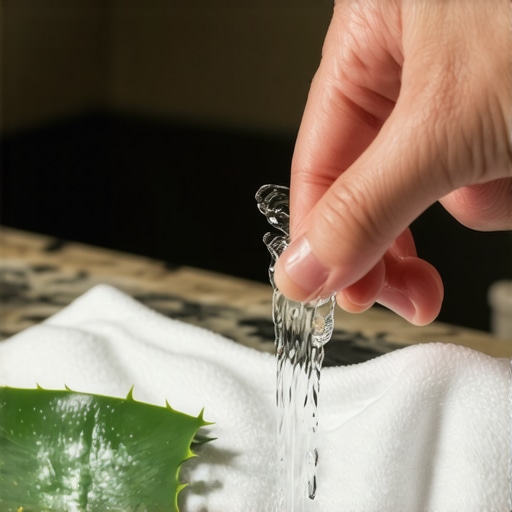
Stop running to the hospital every time the toaster oven bites back. I have watched as our society has traded self-reliance for the hollow comfort of a hospital waiting room. We have been conditioned to believe that every red mark on our skin requires a specialist, a co-pay, and four hours of our life we will never get back. I argue that the most effective first aid does not happen in a sterile clinic; it happens at your kitchen sink. You might think the ER is the safest place for a blister, but you are wrong. It is a hub for high costs and higher stress for something you can manage with basic logic.
The reality is blunt: a minor kitchen burn is a medical flat tire, not a totaled engine. You do not call a tow truck for a flat; you change it yourself and get back on the road. Yet, people flood emergency departments for injuries that a bottle of cool water and some basic knowledge could handle. Why are we so eager to sit in a room full of flu viruses just to have someone tell us to use a bandage?
Stop Treating First-Degree Burns Like Critical Emergencies
Most kitchen incidents are first-degree burns. They hurt, yes, but they are superficial. If your skin is red but not charred or white, you are looking at a minor inconvenience, not a catastrophe. You must understand the real difference between urgent care and emergency room care before you even think about grabbing your keys. For most, the only thing you will find in a waiting room is a new infection. I believe we should prioritize our own health by staying away from these hubs of contagion whenever possible.
If you are worried about infection, consider how to navigate the urgent care waiting room without picking up a new bug. Or, better yet, do not go at all. Your home is a controlled environment. The hospital is a biological lottery. I argue that the risk of picking up a respiratory virus while waiting for a nurse to look at your thumb is far higher than the risk of treating that thumb in your own kitchen.
Your Kitchen Sink is More Effective Than a Triage Line
The first move is not reaching for butter or ice—both of which are myths that do more harm than good. The move is cool, running water. This is not just a suggestion; it is the only logical response. By cooling the skin immediately, you stop the heat from traveling deeper. You are performing triage in your own home. If you feel the need for a professional opinion, the digital age has given us better tools than a steering wheel.
A virtual visit can confirm your self-assessment. You can use the 20-dollar gadget that makes your telehealth visit 10x better to give a doctor a clear look without leaving your couch. This is where modern medicine actually shines—not in the physical building, but in the accessibility of expertise. I argue that we must embrace this technology to protect our time and our sanity.
The Hidden Cost of Medical Over-Reliance
Every time we outsource our common sense to an ER, we clog the system for people who are actually dying. I argue that our fear-based health culture is bankrupting our time and our resources. If you can still move the limb and the pain is manageable with over-the-counter relief, stay home. Before you decide you are an exception, learn how to tell if your telehealth doctor is actually listening. If you must seek advice, do it through a screen.
If the burn looks off, you can learn how to get a clearer telehealth diagnosis for your skin rash or burn by adjusting your lighting. There is no reason to risk a trip to the clinic unless the injury is deep or covers a major joint. If you do fold and head to the doctor, remember the best way to sanitize your phone after an urgent care visit. You will need it. But I suspect if you take a breath and look at your kitchen cabinet, you will find everything you need to handle this yourself.
The problem is not the burn itself; the problem is the systemic erosion of our own intuition. We have been conditioned to believe that a white coat is the only thing standing between a minor blister and certain death. This is not healthcare. This is a cult of professional validation. We are so terrified of making a mistake that we trade our autonomy for a plastic wristband and a three-figure bill. The root cause is a culture that has successfully commodified common sense, convincing you that a tube of ointment applied by a nurse is somehow more magical than the same tube applied by your own hand. They sold us a lie. They told us that expertise must be physical, that it must be local, and that it must be expensive to be valid, but in reality, it is often just a bureaucratic hoop designed to justify a facility fee.
The Institutionalization of Fear
Look at the way we treat the minor domestic mishap. It is now a trigger for a series of events that benefit everyone except the patient. The hospital benefits from your panic. The insurance companies benefit from the complexity. The only one losing is you, sitting in a plastic chair while the guy next to you coughs a new variant of the flu into the shared air. I argue that the hospital is the least safe place for a healthy person with a minor injury. It is a mathematical certainty that the risk of hospital-acquired infection for a superficial burn patient is higher than the risk of the burn itself turning septic in a clean kitchen. We are choosing a greater risk to soothe a smaller fear. This is not logic; it is a conditioned response.
${PostImagePlaceholdersEnum.ImagePlaceholderB}
The Math of the Triage Penalty
Consider the financial wreckage. The average cost of an ER visit for a non-emergency skin issue now frequently exceeds one thousand dollars. That is not a service fee. It is a tax on panic. When you pay that bill, you are not paying for a cure; you are paying for the overhead of a massive, inefficient engine that was never designed to handle your singed finger. That thousand-dollar invoice represents a 5,000% markup on the cold water and gauze you already have in your cabinet. It is a collapse of personal economy. We see people complaining about the rising cost of living while they simultaneously throw away half a month’s rent because they forgot how to read their own bodies. The math does not add up, yet we continue to feed the machine because we have forgotten how to trust ourselves.
A System Built on Your Insecurity
The healthcare industry does not want you to be self-reliant. A self-reliant patient is a lost customer. Why would they encourage you to use a twenty-dollar telehealth tool when they can bill you for the privilege of sitting in their hallway? I argue that the resistance to home-based care and telehealth is not about safety; it is about protecting the revenue of the physical footprint. They want you in the building. They want you in the system. They want the paperwork. When you choose to handle a minor burn with a virtual consultation and a home first-aid kit, you are committing an act of rebellion against a system that thrives on your insecurity. It is time to stop being a compliant consumer of unnecessary crisis and start being a rational actor in your own survival. If it is red, cool it. If it is minor, stay home. The medical industrial complex will survive without your co-pay, and you will survive much better without their waiting room.
I understand the pushback. The most common argument against self-reliance is the abundance of caution defense. Critics will tell you that a layman cannot possibly distinguish between a superficial burn and a deep partial-thickness injury that requires professional debridement. They argue that by staying home, you are risking permanent nerve damage or systemic infection. It is easy to see why people think a hospital visit is the only responsible choice. We have been raised on a diet of medical dramas where every minor cough is a rare tropical disease and every scratch is a precursor to amputation. But this perspective completely ignores the statistical reality of the modern healthcare facility. The safety of the hospital is an illusion built on sterile white tile and the smell of bleach. In reality, a hospital is a concentrated collection of the sickest people in your community. When you enter a waiting room for a minor kitchen burn, you are essentially walking into a viral swap meet. I used to believe this too, until I looked at the data on healthcare-associated infections. We are conditioned to fear the what-if of our own home care while ignoring the what-is of the clinic. The what-is involves sitting in a chair that has been occupied by twelve people with active pneumonia while you wait for a clinician who is so overworked they can barely give you thirty seconds of their time.
The Professional Expertise Illusion
There is a pervasive myth that a nurse looking at your skin for five seconds provides a level of security that you cannot achieve yourself. This is the common trap of equating a physical building with actual health. If you are genuinely unsure, the answer isn’t a four-hour wait in a plastic chair; it is a digital bridge. A telehealth consultation allows a professional to see the wound without you having to touch a single doorknob in a public building. We have the technology to separate the expertise from the facility, yet we cling to the facility as if the bricks and mortar themselves have healing properties. This isn’t about health; it’s about a psychological need for a parental figure in a white coat to tell us we are going to be okay. In fact, most of what happens in that physical visit is a repeat of what you already know, just delivered with an air of authority that costs you a week’s wages.
${PostImagePlaceholdersEnum.ImagePlaceholderC}
The Trap of Professional Validation
Let’s look at the math of the risk. A first-degree burn treated at home with cool water and clean gauze has an incredibly low infection rate. Conversely, the emergency room is a high-risk environment. By choosing the ER for a minor issue, you are actively increasing your risk of illness to solve a problem that was already under control. It is the height of irrationality. We are so afraid of a small, manageable risk that we run headlong into a large, unmanageable one. We have been fooled into thinking that the more expensive a solution is, the safer it must be. But a thousand-dollar bill doesn’t make the bandage any more effective; it just makes your bank account more vulnerable. The industry thrives on this insecurity. They do not want you to know that most minor injuries are self-limiting. They want you to feel incompetent. They want you to believe that the human body is a fragile glass vase that will shatter without constant professional monitoring.
The Invisible Risk of Compliance
This is the elephant in the room that no one wants to talk about: the healthcare system is designed to maximize throughput, not to empower patients. Every time you walk into a clinic for something you could have handled at your sink, you are validating a business model that treats your panic as a profit center. It is time to stop being a victim of your own caution and start recognizing it for what it really is: a surrender of your own common sense. Beyond the financial cost, there is a mental cost to this dependency. When we outsource every minor decision to an institution, we lose the ability to care for ourselves and our families. We become passengers in our own lives, waiting for permission to heal. This cycle of dependency is far more dangerous than a blister from a toaster oven. It creates a society that is paralyzed by the minor, rendering us completely unprepared for the major.
The Death of Human Instinct
If we continue down this path, we are not just losing money; we are losing the very essence of what it means to be an adaptable, surviving species. We are outsourcing our biological awareness to a billing department. The stakes are much higher than a thousand-dollar co-pay. We are facing the complete atrophy of the human survival instinct. When we treat every minor physical challenge as a systemic failure, we teach our children that they are inherently fragile. We are raising a generation that looks at a red mark on their arm and sees a death sentence rather than a temporary inconvenience. This isn’t just a medical trend; it is a cultural surrender.
${PostImagePlaceholdersEnum.ImagePlaceholderD}
Is it too late to reclaim our agency?
The warning signs are already flashing. In five years, if we do not correct this trajectory, the emergency room will no longer be a place for the dying; it will be a high-priced retail outlet for validation. We will see the complete collapse of community-level resilience. Imagine a world where you cannot buy a bandage without a prescription, or where self-care is viewed as a dangerous, fringe activity. This is the future of managed helplessness. We are trading our freedom for the illusion of safety, and the price is our own competence. The medical system will be a fortress of bureaucracy, and the average person will be a stranger in their own body.
A Future of Managed Helplessness
Using an emergency department for a superficial burn is like calling a SWAT team to deal with a housefly. You might eventually kill the fly, but you will destroy your front door, traumatize your neighbors, and waste thousands of dollars in specialized resources meant for real crises. We are currently blowing the doors off our healthcare system to swat at minor irritations. The infrastructure is buckling under the weight of people who refuse to use their own faucets. If we do not stop this, the system will inevitably prioritize those with the deepest pockets rather than those with the deepest wounds. We are creating a bottleneck that will one day trap us when we actually need help.
The Point of No Return
We are reaching a point of no return where the medical-industrial complex will have fully absorbed our common sense. This matters right now because once an instinct is lost, it is nearly impossible to recover. We are standing at a crossroads. One path leads back to a rational understanding of our own bodies, utilizing technology like telehealth as a scalpel rather than a sledgehammer. The other path leads to a total dependency on institutional approval for every breath we take. I argue that the most radical thing you can do today is stay home, run the water, and trust yourself. Your life, your wallet, and our collective health system depend on your willingness to be more than a passive consumer of panic.
Your kitchen sink is not just a plumbing fixture; it is the front line of a rebellion against a system that wants you to feel helpless. The final verdict is simple: the moment you choose common sense over a plastic waiting room chair, you win. We have been sold a version of safety that requires a credit card and a risk of pneumonia, but the truth is that your body was designed to heal, not to be a line item in a corporate ledger. This connects to my argument that we must stop being passive consumers of panic and start being active managers of our own well-being.
The Final Verdict
The most radical thing you can do for your health is to trust your own eyes before you trust a billing department. If you are struggling to make that distinction between a real crisis and a minor mishap, learning how to spot a minor fracture vs a major sprain at home is a great place to start rebuilding your medical confidence. This isn’t just about burns; it’s about every domestic accident that makes you reach for your car keys out of habit rather than necessity. Even the future of telehealth transforming chronic disease monitoring today proves that the highest level of expertise is moving closer to your living room, not further into the bowels of a hospital. We are living in an era where the tools for self-reliance are in our pockets, yet we still act like we are living in the dark ages of medical mystery.
The Twist
The real injury in a minor kitchen burn isn’t the blister on your thumb; it is the systemic dependency that follows when you outsource the cure. While you thought you were seeking protection from a sterile institution, the institution was actually being sustained by your compliance. Every time you skip the ER for a superficial injury, you are not just saving money; you are preserving the integrity of a system that is currently buckling under the weight of the worried well. If you truly want to support healthcare, stay out of the building unless you are actually dying. For those moments when you do need a professional but want to avoid the chaos, you can look into the triage move that skips the line for minor stitches to stay efficient without surrendering to the hospital machine.
Your Move
It is time to break the cycle of managed helplessness. Stop being a customer of crisis. Reclaim your instinct, run the cool water, and remember that you are the primary stakeholder in your own survival. The medical-industrial complex thrives on your insecurity, but it cannot survive your common sense. Your kitchen sink is the most revolutionary medical tool you own. Use it.