
The Move That Prevents Nighttime Falls in Aging Parents
Stop Decorating for Disaster and Start Fixing the Internal Wiring
I am tired of seeing homes turned into padded cells while the real culprit for senior falls sits neatly organized in a plastic pillbox. We spend billions on “senior-proofing”—installing grab bars, ripping up carpets, and scattering non-slip mats like confetti. Yet, the thuds in the night continue. Why? Because you are treating the scenery, not the actor. I argue that the most critical move to prevent a nighttime fall isn’t a physical exercise or a piece of hardware; it is the ruthless, systemic review of the chemical cocktails we allow our parents to ingest. The floor doesn’t jump up to hit people. People’s bodies fail to keep them upright because their internal sensors are screaming. If you want to keep your father off the floor, you need to look at his blood pressure, not his bathtub.
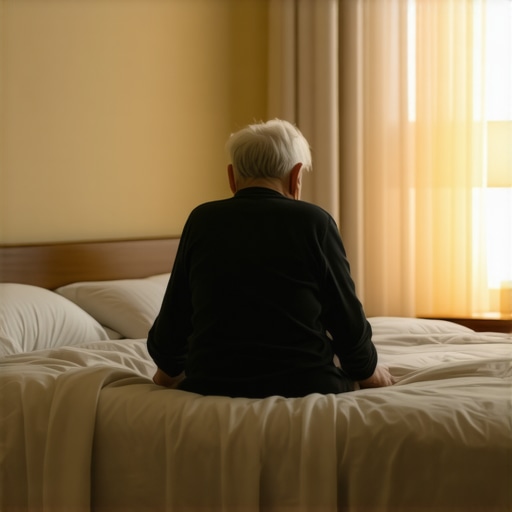
Think of an aging parent getting out of bed like a diver surfacing too quickly from the deep sea. When a senior moves from a lying position to standing, their circulatory system has to fight gravity to get blood to the brain. In a healthy body, this is a quick adjustment. In a body suppressed by multiple hypertension meds and a diuretic, it’s a recipe for a blackout. This is the “bends” of the bedroom. The most effective physical move is the “orthostatic pause”—sitting on the edge of the bed for a full two minutes before standing—but even that is a hollow fix if their prescription list is a mess. This is exactly why seniors should request a medication review after every fall. If you aren’t auditing the meds, you are just waiting for the next incident.
[image]
The Pharmaceutical Industry Is Tripping Your Mother
We have a cultural obsession with adding solutions rather than subtracting problems. When a senior feels dizzy, we give them a walker. When they fall, we give them a hip protector. I believe this is a fundamental failure of modern geriatric care. We ignore the strategy for handling senior mobility changes at home by focusing on external crutches. The reality is that many nighttime falls are caused by “silent” issues like dehydration or simple medication errors. Do you actually know how to tell if your aging parent is secretly dehydrated? Probably not, because you’re too busy checking the batteries in their motion-sensor nightlights.
So, why are we still doing this? Why do we prioritize the physical environment over the physiological one? It’s easier to buy a mat than it is to challenge a doctor’s prescription. But if you want to stop the cycle, you have to be the advocate. You have to understand how to manage a seniors sudden confusion safely at home without immediately reaching for more sedatives. The “move” is a mental shift: stop being a decorator and start being a medical detective. Your parent’s safety depends on your ability to see past the hardware and into the bloodstream. I argue that our current approach is like putting a fresh coat of paint on a crumbling foundation and being surprised when the walls shake.
You might think I am being cynical. I am not. I am being practical. Every time a senior is rushed to the ER after a fall, the first thing the triage nurse does isn’t checking the brand of their non-slip socks. They check the vitals. They check the blood markers. They look for the internal collapse that preceded the external one. If the professionals prioritize the biology, why are you still prioritizing the carpet? We have been sold a lie that safety is something you buy at a hardware store. Real safety is something you manage through constant, vigilant medical oversight. It is time to stop buying gadgets and start asking hard questions at the next clinic visit.
The Polypharmacy Trap
The hardware store has lied to you. It has convinced you that a thirty-dollar grab bar is a shield against the inevitable, while the real danger is sitting on the bedside table. Let’s look at the cold, hard reality of what we call polypharmacy. When a senior is prescribed five or more medications—a standard reality for most Americans over sixty-five—the risk of a fall doesn’t just nudge upward; it skyrockets. We are talking about a nearly 50% increase in fall frequency that has nothing to do with the friction of the floor. That 50% spike isn’t just a statistic; it is a systemic failure. It is the sound of a body losing its ability to navigate space because it is too busy processing a chemical storm. They told you the rug was the problem. They were wrong. The rug is a scapegoat for a medical system that knows how to add, but has forgotten how to subtract.
A Chemical Shove
We treat every new symptom with a new pill, creating a cascading effect of instability. A senior has high blood pressure, so we give them a diuretic. The diuretic causes dehydration and a sudden drop in pressure when they stand up. They feel dizzy, they stumble, and what do we do? We buy them a walker. We are literally chasing the tail of a pharmacological beast. The problem isn’t a lack of equipment; the problem is the internal sabotage of the vestibular system. If your brain cannot tell where your feet are because it is clouded by sedatives or beta-blockers, no amount of rubber matting will save you. It is a chemical shove. You can tape down every rug in the tri-state area, but you cannot tape down a fluctuating blood pressure or a suppressed central nervous system. The industry wants you to keep buying gadgets because gadgets are profitable. De-prescribing is not.
[image]
The Failure of the Hardware Fix
The math of the hardware store fails because it assumes the human body is a static object. It isn’t. A human being is a dynamic, fluid system that requires constant recalibration. When we prioritize the ‘safe’ bathroom over the ‘safe’ bloodstream, we are essentially building a cage and calling it a sanctuary. Statistics show that the majority of catastrophic falls occur during routine, low-intensity movements—getting out of a chair, turning to answer a phone, or walking to the bathroom at 2:00 AM. These aren’t accidents of environment; they are failures of proprioception. They are moments where the brain’s internal GPS goes offline. Why? Because the ‘wiring’ is frayed by a cocktail of pills that were never meant to be taken in unison for decades. We have medicalized aging to the point of physical incompetence, and then we have the audacity to blame the floorboards. It is time to stop the charade. If you want to protect a senior, you must be willing to interrogate the pharmacy as aggressively as you interrogate the furniture.
The Fatal Flaw in Your Home Safety Checklist
I know what the occupational therapists are going to say. They will point to the ‘gold standard’ of geriatric safety: the home assessment. They will argue that millions of dollars are spent on these modifications because they work. And I will give them this: a grab bar in a shower is undeniably better than no grab bar in a shower. If someone is already falling, you want them to have something to grab. It is easy to acknowledge the utility of these tools as a last line of defense. However, that defense is a monument to our failure to address the root cause. This is the common trap of senior care: we mistake the mitigation of a disaster for the prevention of one. I used to believe this too, accepting the ‘safe home’ checklist as the holy grail of caregiving, until I realized that the safest home in the world cannot protect a brain that is starving for oxygen because of an over-prescribed beta-blocker. If we only look at the room, we are ignoring the person in it.
When we prioritize the physical environment, we are playing a game of defensive prevent that we are destined to lose. The floor is static; the human body is a dynamic system. By the time a senior is reaching for that thirty-dollar grab bar, the medical system has already failed them. We should be focusing on the ‘internal infrastructure.’ This means demanding frequent lab tests to monitor electrolyte balance and kidney function, which directly impact stability. It means utilizing telehealth to check in on a parent’s cognitive clarity after every new prescription change. It means recognizing that an urgent care visit for a ‘trip’ is almost always a missed opportunity for a chronic care intervention. This shift in perspective is the only way to move beyond the superficial fixes that dominate the industry today. We are spending thousands on walk-in tubs while ignoring the simple blood panels that could identify the sodium deficiency causing a mother’s vertigo. It is a misalignment of resources driven by a fear of the visible and an ignorance of the biological.
The Safety Illusion
The argument for environmental-first safety is a seductive trap because it offers a sense of completion. You install the bar, you check the box, and you sleep better. But this is the uncomfortable truth that the home improvement industry won’t tell you: an internally stable person rarely trips. When we obsess over the floor, we neglect the physiology. We ignore the fact that many falls are preceded by weeks of ‘minor’ dizzy spells that were dismissed as just getting older. These aren’t environmental glitches; they are medical red flags. By prioritizing the hardware store over the clinic, we are teaching families to ignore the subtle cues of internal decline. ${PostImagePlaceholdersEnum.ImagePlaceholderC} We treat the floor as the hazard instead of treating the body as a system in need of calibration. It is a fundamental misreading of risk. While a grab bar might catch you as you fall, a proper medication audit stops the fall from happening in the first place. We have to stop acting like our parents are fragile porcelain dolls and start treating them like complex biological systems that require more than just a well-placed mat to stay upright. We must pivot from being health advocates who understand that a clean bill of health is worth more than a thousand non-slip mats. The hardware is a distraction; the biology is the mission. If we continue to focus on the carpet while ignoring the chemical storm in the bloodstream, we aren’t protecting seniors—we are just decorating the site of their next accident.
The Path to Permanent Disability
The price of our obsession with physical gadgets at the expense of biological reality is the slow-motion destruction of senior independence. We are currently on a trajectory where the final years of life are not defined by wisdom or legacy, but by a cascading series of medical interventions that could have been avoided with a single pen stroke on a prescription pad. If we continue down this path, the next five years will see an explosion in “preventable” hospitalizations that will overwhelm our already fragile healthcare infrastructure. We are essentially building a society where the elderly are safely tucked into padded rooms, yet their minds and balance are being stripped away by a chemical tide. This is not safety; it is a gilded cage. It is the ultimate wasted opportunity to provide a dignified, autonomous aging process. Every fall that results from a neglected medication review is a sign that we valued the ease of a hardware store purchase over the complexity of genuine chronic care management.
What Are We Waiting For?
Consider the “Broken Altimeter” analogy. Imagine a pilot attempting to land a plane in a thick fog. Instead of fixing the malfunctioning altimeter or the radar, the ground crew spends their time reinforcing the landing gear and padding the cockpit seats. They are preparing for the crash rather than ensuring a safe flight. This is exactly what we do when we install a grab bar without checking the blood pressure medication. We are acknowledging the inevitable impact while ignoring the broken instruments that are causing it. The crash is guaranteed; we are just hoping the padding makes it a little less loud. By the time we start looking at lab tests and kidney function after the fact, the damage to the senior’s confidence and physical autonomy is often irreversible. We are treating the impact, not the navigation.
${PostImagePlaceholdersEnum.ImagePlaceholderD}
A Future of Artificial Fragility
If we refuse to challenge the current pharmaceutical status quo, we are choosing a future of artificial fragility. In five years, if current trends in polypharmacy continue, the average senior will be taking even more medications than today, further complicating the already murky waters of geriatric health. We will see a generation of elders who are “safe” in their homes but unable to leave them—not because of physical obstacles, but because their internal systems are too unstable to navigate the world. This is a moral failure. We have the tools—telehealth, better diagnostic screenings, and the ability to demand urgent care interventions that look at the whole person—but we are too often lured by the simplicity of a non-slip mat. This is the “Slippery Slope” in its most literal sense. One un-audited diuretic leads to one midnight stumble, which leads to one broken hip, which leads to a permanent loss of mobility. This chain reaction is not an accident; it is the logical conclusion of a medical model that ignores physiology in favor of environmental band-aids. We are sacrificing the vitality of our parents for the sake of a checklist. The stakes are no longer just about a bruised knee; they are about whether the final chapter of a person’s life will be spent in a chair or on their own two feet. We must decide if we want to continue decorating the site of the disaster or if we are finally ready to fix the internal wiring of the human beings we claim to protect.
The Bloodstream Is the Real Battlefield
We have to stop being polite with prescribers. It is undeniably easier to buy a forty-dollar mat than it is to tell a specialist that their diuretic is causing your mother’s fainting spells, but we are choosing between our social comfort and her survival. The rug is not the enemy; the chemical fog is. This is why you must move beyond the surface-level fixes. I have spent years watching families focus on the wrong side of the door. If you want to keep your father upright, stop looking at the floorboards and start looking at his blood-glucose levels and kidney function. Every fall is a data point, a signal that the internal balance has shifted. This is why seniors should request a medication review after every fall without exception. If you are not auditing the pillbox, you are just rearranging the furniture on the Titanic.
Demand Data Over Decor
The next time you walk into a clinic, leave the hardware store catalogs at home. Instead, ask for a deep dive into the physiology. We are entering an era of telehealth breakthroughs how virtual visits elevate chronic care in 2025, which means you have zero excuse for medical negligence. You can monitor stability and medication side effects from your living room. You can discover why your current hypertension meds might make you tired or dizzy before that fatigue turns into a fractured hip. We have the tools to manage chronic care management personalized telehealth strategies for better outcomes that prioritize biology over floor tape. We just have to be brave enough to use them.
The final verdict is this: A home is only as safe as the person standing in it. If that person is being chemically compromised by polypharmacy, no amount of construction will save them. The twist? By focusing on the environment, we have actually made seniors less safe by ignoring the medical red flags that precede every disaster. It is time to stop being a decorator and start being a medical advocate. Stop padding the landing and start ensuring the flight is stable. Your parent deserves a pharmacist, not just a contractor. Fix the wiring, or prepare for the lights to go out.