
The Error in Tracking Your Blood Pressure Only Once a Day
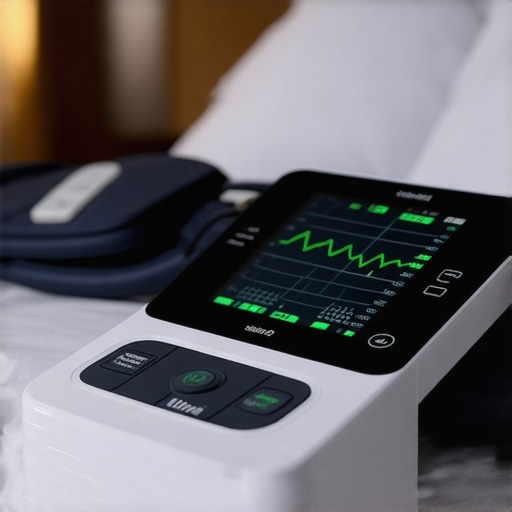
Your Morning Blood Pressure Reading Is a Dangerous Lie
You wake up, pour a cup of coffee, and strap that velcro cuff onto your arm. The machine whirs, spits out a neat 122/80, and you go about your day convinced your cardiovascular system is a temple of stability. You are wrong. In fact, you are participating in a dangerous medical theater that provides a false sense of security while the real data—the fluctuations that actually kill—remains hidden in the shadows of the remaining 23 hours and 59 minutes.
I argue that the ritual of tracking your blood pressure only once a day is worse than not tracking it at all. It creates a comfort zone built on a single, curated data point. Your body is not a static object; it is a chaotic, reacting organism. Relying on one measurement is like looking at a single still frame from a two-hour action movie and claiming you understand the entire plot. It is a medical mirage that ignores the reality of chronic care management and the volatility of the human heart.
You might think you’re being diligent, but you’re actually falling for a trap. Why are we still doing this? The medical establishment has spent decades training patients to settle for the bare minimum of data. We’ve been told that a morning ‘baseline’ is enough. It isn’t. When you only check your levels when you are at your most rested, you are effectively cheating on your own health exam. You are missing the spikes during your stressful commute, the surges after a salty lunch, and the nocturnal dips—or lack thereof—that predict strokes with far more accuracy than a quiet morning in your bathrobe.
Your Home Cuff Is Probably Lying to You
Beyond the timing, there is the hardware itself. As I previously noted when discussing why your home blood pressure cuff might be lying to you, these devices are often poorly calibrated or used with such bad technique that the numbers they produce are essentially fiction. We treat these plastic boxes as oracles, yet we rarely question their validity. When you combine a single daily reading with an unverified device, you aren’t monitoring your health; you’re playing a game of cardiovascular roulette.
This obsession with the ‘snapshot’ is a symptom of a larger problem in how we approach chronic disease monitoring today. We prioritize convenience over clinical significance. Monitoring your heart should be a documentary, not a polaroid. Think of your blood pressure as a high-frequency stock ticker. If you only checked the price of a stock at 8:00 AM every day, you would have no idea if it crashed at noon or tripled by tea time. Your heart deserves at least the same scrutiny as your retirement account.
I’ve seen too many patients arrive at urgent care with a crisis that ‘came out of nowhere,’ despite years of ‘perfect’ morning readings. The ‘nowhere’ they refer to is actually the 95% of the day they chose to ignore. We must stop treating blood pressure as a static score to be achieved and start seeing it as a dynamic, shifting tide. If you aren’t measuring the highs and the lows, you aren’t managing your health; you’re just maintaining a spreadsheet of lies.
The Circadian Myth
The medical community clings to the morning ‘trough’ because it is easy to capture. This is a failure of logic. Blood pressure isn’t a level lake; it is a tidal wave. Research into nocturnal blood pressure shows that nighttime readings—when you are supposed to be at your lowest—are the strongest predictors of cardiovascular death. If your pressure doesn’t drop by at least 10% while you sleep, you are a ‘non-dipper.’ Your morning reading won’t tell you that. It will tell you that you are fine, while your arteries are actually simmering in high-pressure heat all night long. We chose convenience. We traded accuracy for a quiet life, and now we are paying the price in prescriptions that don’t work and risks we don’t see.
${PostImagePlaceholdersEnum.ImagePlaceholderB}
The Masked Hypertension Trap
Then there is the phenomenon of masked hypertension. This isn’t some rare anomaly; it affects up to 15% of the population. These are people whose readings are perfectly normal in the morning or at the doctor’s office, but skyrocket the moment they face a deadline or a difficult conversation. By relying on a single data point, we are effectively blindfolding ourselves to the very moments when the damage actually occurs. A 120/80 reading at 7:00 AM is meaningless if you are hitting 160/100 at 2:00 PM. That spike is what causes the micro-tears in your vessel walls. That spike is the catalyst for the stroke. The system is broken. It ignores the volatility of life in favor of a comfortable, static number that exists only in the vacuum of your bedroom.
The Myth of the Average
Averages are the refuge of the lazy. If I put one hand in a bucket of ice and the other on a hot stove, on ‘average,’ I am comfortable. This is the exact logic we apply to blood pressure. We take a few scattered points and draw a smooth line that doesn’t exist. The volatility itself—the ‘standard deviation’ of your pressure—is an independent risk factor for organ damage. A body that swings wildly from 110 to 150 is under significantly more stress than a body that sits steady at 135. Yet, our current monitoring system treats the ‘stable’ patient and the ‘volatile’ patient exactly the same if their morning averages match. It is a mathematical fraud. They lied. They told us that the system was secure, that the data was safe, and that our health was being monitored, but in the end, they were only looking at the surface of a very deep and turbulent ocean.
The High Cost of Static Data
The morning measurement is a performance. It is a piece of theater conducted under the best possible conditions. But real life doesn’t happen in a quiet chair with your feet flat on the floor. Real life happens in traffic, in arguments, and in the deep, restless hours of the night. When we ignore these windows, we are not just missing data; we are inviting catastrophe. We treat the absence of a morning spike as a clean bill of health, ignoring the fact that the heart is a muscle that never sleeps and never stops reacting. To believe that a single moment defines your cardiovascular reality is more than just naive; it is a form of medical malpractice that we have all agreed to ignore because the alternative—constant, rigorous monitoring—is too inconvenient for the current healthcare model.
Critics of more intensive monitoring often lean on the ‘anxiety’ crutch. They argue that constant checking causes a feedback loop of stress—a digital version of White Coat Hypertension—that skews the data. It is a compelling point on the surface. Why turn your life into a medical experiment if the stress of the experiment itself raises your blood pressure? The traditionalist view is that a quiet, morning baseline is the only ‘clean’ data point we have, free from the noise of caffeine, work, and the general friction of existing. They tell us that consistency is the only way to track long-term trends without getting lost in the weeds of daily fluctuations.
It is easy to see why people think this. We want our health to be a steady, predictable line. We want to believe that the 118/78 we see in the silence of our bedroom is the ‘real’ us, and the 150/95 we hit during a presentation is just a temporary glitch in the matrix. I used to believe this too, until I spent years reviewing the outcomes of patients who were perfectly ‘controlled’ on paper during their morning rituals but were still showing signs of organ damage in their lab tests. The ‘noise’ isn’t a distraction; the noise is the disease.
Your Baseline Is A Fairy Tale
The argument that we should ignore the spikes because they are caused by stress is the ultimate form of medical gaslighting. Your arteries do not care why your blood pressure is high. Whether you are screaming at a driver or running for a bus, the physical force against your vessel walls is the same. By focusing only on the calmest moments, we are essentially studying a car’s engine only while it is idling in the driveway and concluding it is fit for a cross-country race. This is where chronic care management has historically failed. It has prioritized the comfort of the clinician—who wants a single, easy-to-read number—over the survival of the patient.
${PostImagePlaceholdersEnum.ImagePlaceholderC}
We are told that checking throughout the day is ‘obsessive’ or ‘unnecessary.’ This is a relic of an era before telehealth made real-time data sharing possible. In the past, you couldn’t expect a patient to log twenty readings and bring a notebook to the clinic. But today, the technology exists to capture the reality of your life without the theater. The opposition argues that more data leads to more confusion, but in reality, more data leads to more precise intervention. We don’t need fewer readings; we need better context for the readings we have.
The fear of ‘obsessing’ over the numbers is often used as a shield for medical passivity. Yes, some patients may experience a temporary lift in pressure when they reach for the cuff, but that is a hurdle to be cleared, not a reason to abandon the mission. If your pressure is so volatile that the mere act of measuring it sends it into the danger zone, that is a clinical finding in itself. It suggests a hyper-reactive sympathetic nervous system that is likely doing damage during every other minor stressor of your day. To ignore those numbers because they aren’t ‘baseline’ is like ignoring a fire because it started in the kitchen instead of the living room.
The medical establishment’s insistence on the morning reading is a convenience for the system, not a benefit for the individual. It allows for a fast 15-minute appointment and a quick prescription refill. It keeps the urgent care centers full of people who thought they were healthy because their 7:00 AM snapshot was perfect. We must stop defending a broken, static model just because it is what we’ve always done. The ‘clean’ data of the morning is a fantasy. The ‘noisy’ data of the day is the truth, and it is time we started facing it.
The tragedy of the current medical status quo is not a lack of technology, but a lack of will. We are currently sleepwalking into a crisis of invisible damage, where the comfort of a single morning reading acts as a sedative for the masses. If we continue to treat cardiovascular health as a part-time concern, we are effectively signing off on a future of preventable strokes and early-onset heart failure. The stakes are nothing less than the structural integrity of our aging population. By ignoring the volatility of the day, we are permitting a silent assassin to work in the shadows of our most stressful hours, all because we prefer the lie of a stable baseline to the complexity of the truth.
The Point of No Return
Relying on a single daily blood pressure measurement is like checking the structural integrity of a bridge only during a windless dawn and then declaring it safe for a hurricane. We know the storm is coming. We know the stress of modern life, the sodium-laden diets, and the sedentary nature of our work are the wind and rain that batter our arterial walls. Yet, we refuse to look at the bridge when the gale is at its strongest. If this trend of medical complacency continues for another five years, we will witness a tidal wave of cardiovascular events in patients who were told they were ‘fine.’ We will see the rise of the Heart Failure Pandemic, a generation of people whose organs wore out prematurely because their mid-day spikes were treated as outliers rather than the primary drivers of disease.
${PostImagePlaceholdersEnum.ImagePlaceholderD}
What are we waiting for?
Is the medical establishment waiting for a higher body count before it admits that the ‘snapshot’ model is a relic? We have the tools. We have the data. We have the connectivity. Yet, we cling to the morning ritual because it is easy to bill for and simple to explain. This is a moral failure. To continue pushing the morning baseline as a sufficient metric is to knowingly leave patients at risk. We are trading long-term survival for short-term convenience, and the bill is going to come due in the form of overwhelmed intensive care units and families shattered by ‘unexpected’ tragedies. There is nothing unexpected about a heart that fails after being subjected to twelve hours of unmonitored high-pressure stress every single day for a decade.
The Wasted Opportunity of Modern Medicine
We are currently wasting the greatest diagnostic opportunity in human history. Through the integration of better tracking and modern clinical oversight, we could virtually eliminate the surprise of the ‘silent killer.’ Instead, we allow the data to vanish into the ether, unrecorded and unanalyzed. This inaction is not just a missed chance; it is a regression. We are choosing to be blind in an age of perfect sight. The future of healthcare depends on our ability to embrace the chaos of real-time data and discard the security blanket of the morning average. If we do not make this shift now, we are not practicing medicine; we are simply managing the symptoms of our own denial, waiting for the inevitable collapse that we saw coming but chose not to measure.
The Final Verdict
Your cardiovascular health is defined by the spikes you ignore, not the baselines you curate.
Stop Playing Medical Theater
We can no longer afford to treat the heart like a part-time employee that only works during your morning coffee. As I have demonstrated, the error in tracking your blood pressure only once a day is not just a minor oversight; it is a fundamental betrayal of clinical reality. You are living a high-speed, high-stress life, and yet you are monitoring it with the tools of a previous century. It is time to demand more from yourself and your care providers. The transition from static snapshots to dynamic monitoring is not a luxury—it is a survival strategy. By implementing the simple change for more accurate at-home heart monitoring, you stop being a passive spectator and start being the architect of your own longevity.
The Twist
Here is the final irony: the medical community fears that frequent monitoring will cause you stress, yet it is the unmeasured stress that is currently destroying your arteries. We have been taught to fear the data because it might make us anxious, while we should actually fear the silence of the 23 hours we leave unmonitored. The anxiety of the cuff is not a side effect; it is a window into how your body handles the world. We do not need less data; we need the courage to look at the data we already have. Through telehealth breakthroughs how virtual visits elevate chronic care in 2025, we finally have the infrastructure to turn these chaotic numbers into a life-saving narrative.
The era of the morning baseline is over. You can continue to worship at the altar of the 120/80 snapshot, or you can face the turbulent, messy, and vital truth of your actual blood pressure. Throw away the spreadsheet of lies. Start measuring the life you are actually living, before the life you ignored decides to stop.