
The Best Way to Describe Joint Pain During a Virtual Visit
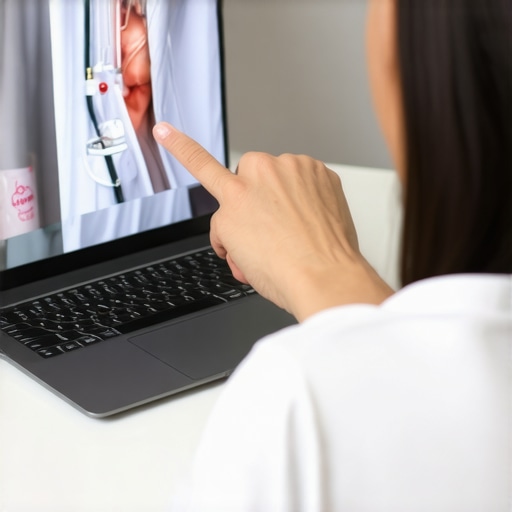
Your Virtual Doctor Can’t Feel Your Pain, and That’s Your Problem
Stop telling your doctor it “just hurts.” It is the most expensive waste of time in modern medicine. When you hop on a video call to discuss that throbbing knee or stiff shoulder, you are basically playing a high-stakes game of charades where the prize is not a trophy, but a prescription that actually works. I believe the current frustration with digital medicine isn’t a software bug; it is a failure of vocabulary. We have been sold a version of telehealth that promises ease, but ease is the enemy of accuracy. If you are not ready to be precise, you are not ready for a virtual visit.
You might think your physician’s job is to simply “know” what is wrong by looking at you through a grainy webcam. You are wrong. In a virtual setting, your doctor is a pilot flying through a thick fog bank, and you are the only radar they have. If you give them fuzzy data, you get a fuzzy diagnosis. If you want to know the secret to getting an urgent care doctor to listen, it starts with realizing that “it hurts a lot” is a useless sentence. Describing joint pain to a remote clinician is like trying to perform a symphony by tapping out Morse code on a radiator—you have to be clinical, precise, and ruthless with your details. I argue that the burden of proof has shifted; you are no longer a passive patient, but the primary investigator of your own anatomy.
[IMAGE_PLACEHOLDER_1]
Vague Descriptions are Killing Your Diagnosis
Why are we still doing this? Why are we pretending that a blurry visual of your kneecap tells the whole story? Perhaps it is because we have become conditioned to let machines do the talking. We expect a blood test or an MRI to speak for us, but those tools are not sitting in your living room. I argue that the most powerful diagnostic tool you own is your own tongue. When you fail to use it correctly, you are sabotaging your own recovery. Do you feel a “sharp” pain? Is it “radiating”? Is it “burning”? These are not just fancy words; they are the exact coordinates on a map that lead your doctor to the source of the fire. When you stay vague, you are just blowing smoke.
Consider the strategy for managing chronic back pain. It does not begin with a pill; it begins with a narrative. You need to be the narrator of your own agony. If you cannot tell the difference between a dull throb and a lightning bolt, do not be surprised when the treatment misses the mark. We need to stop treating virtual visits as a casual chat. It is a tactical exchange. If your heart rate spikes during virtual consultations, it should not be from tech anxiety—it should be from the mental effort of providing the most rigorous physical description possible. Your joints are screaming; you just need to learn how to translate that scream into a language a doctor can actually use to help you.
The hard truth is that telehealth is only as good as the patient’s ability to communicate. If you treat your appointment like a drive-thru order, you will get drive-thru quality care. You must categorize your pain. Is it mechanical, meaning it only hurts when you move? Or is it inflammatory, waking you up in the middle of the night like an unwanted intruder? When you provide these specific details, you are effectively giving the doctor the keys to your medical history. Without them, you are just another face on a screen, complaining about a problem that remains invisible because you refuse to name it properly. The best way to describe pain is to stop being a victim of it and start being an expert on it.
Convenience is a Diagnostic Killer
The industry likes to brag about the 20% surge in telehealth adoption over the last three years, but that statistic isn’t a victory; it is a warning. We have mistaken accessibility for quality. The root cause of our current medical stagnation isn’t that the technology is primitive, but that we have optimized for comfort at the expense of clinical rigor. When you choose a virtual visit because you don’t want to put on pants, you are subconsciously signaling to your brain that this is a low-stakes encounter. It isn’t. You are effectively stripping your physician of their most vital senses—touch and smell—and giving them nothing in return but a low-resolution stream of your face.
The problem is not the pixels. The problem is the culture of the quick fix. We’ve been conditioned to believe that a five-minute chat should result in a solution. In reality, that five-minute chat is often a race to the bottom of the medical barrel. If the doctor can’t touch the swelling or feel the heat coming off a joint, they are guessing. And a guess, no matter how educated, is still a gamble with your longevity. We have traded the stethoscope for the smartphone, yet we haven’t updated our behavior to compensate for the loss of physical proximity. You are the one who has to close that gap. If you won’t, the system certainly won’t do it for you.
${PostImagePlaceholdersEnum.ImagePlaceholderB}
The Statistical Cost of Guesswork
Let’s look at the cold, hard numbers. Studies have shown that virtual urgent care visits result in significantly higher rates of broad-spectrum antibiotic prescriptions compared to in-person visits. That isn’t progress; it’s a white flag of surrender. Because the clinician lacks the physical data to pinpoint a specific bacterial strain or confirm a viral origin through tactile exam, they throw the kitchen sink at the problem. This isn’t precision medicine. This is a desperate attempt to cover all bases because the patient failed to provide a map. Every time you give a vague description of your symptoms, you are forcing your doctor to practice defensive, scattershot medicine.
We are currently witnessing a massive de-skilling of the patient population. We used to know our bodies; now we just know our apps. When a study indicates that nearly 30% of telehealth patients leave their sessions feeling ‘unheard,’ that isn’t a failure of the audio equipment. It is a failure of the narrative. The ‘unheard’ patient is usually the one who showed up to the digital exam room with nothing but a shrug and a complaint. You cannot be heard if you have nothing specific to say. The burden of proof has moved from the clinic to the couch, and most people are failing the test because they expect the screen to do the heavy lifting.
The Machine Cannot Save You
We have been fed a lie that artificial intelligence and remote monitoring will eventually bridge the gap between a physical exam and a video call. They won’t. No algorithm can currently replicate the nuance of a patient who can articulate the difference between a ‘tearing’ sensation and a ‘pinching’ one. The data is clear: the most successful outcomes in remote care occur when the patient acts as a co-investigator. If you remain a passive consumer, you are nothing more than a data point in a failing experiment.
The reality is that we are paying more for less. We pay for the convenience of the digital waiting room with the currency of our own health. To pretend that a webcam is a substitute for a physical hand is a delusion that benefits the insurance providers, not the people in pain. If we want telehealth to actually work, we have to stop treating it like a customer service call and start treating it like a forensic investigation. Your body is the crime scene. You are the lead detective. Stop waiting for the doctor to solve the mystery with their eyes closed.
I know what the critics will say. They will argue that I am being heartless, perhaps even elitist, by demanding that a person in the throes of physical agony behave like a trained medical scribe. They will claim that the entire point of the medical profession is for the expert to guide the amateur, and that if a doctor cannot extract the necessary information from a patient, the failure lies with the professional, not the sufferer. It is a seductive argument because it feels compassionate. It suggests that when we are vulnerable, we should be allowed to be passive. It posits that the ‘system’ should be smart enough to bridge the gap between a patient’s moan and a clinician’s chart.
It is also a dangerous delusion. To believe that your doctor can compensate for your lack of clarity is to gamble with your own biology. I hear this pushback constantly: ‘I am not a doctor, so why should I have to talk like one?’ The answer is simple. Because you are the only person who lives inside your skin. You are the sole witness to the crime occurring within your joints or your lungs. If you refuse to testify with precision, you are essentially asking the judge to reach a verdict based on a shrug. This isn’t about blaming the victim; it is about empowering the individual to survive a system that is increasingly designed to process you like a piece of data rather than a human being.
The Empathy Trap
We have fallen into a trap where we mistake ‘patient-centered care’ for ‘patient-passive care.’ I used to believe this too, until I saw how many misdiagnoses were born from the polite silence of a patient who didn’t want to sound ‘difficult’ or ‘too clinical.’ I once thought that the doctor’s intuition could overcome any lack of detail provided during a digital consultation. I was wrong. Intuition requires a baseline of hard facts. In a physical office, a doctor can use their hands to find those facts. In a telehealth environment, your words are the only instruments the doctor has. When you choose to be vague under the guise of being ‘authentic,’ you are effectively tying the doctor’s hands behind their back.
Consider the logic of urgent care lab tests. We don’t expect a blood draw to be ‘vague.’ We want the results to be precise down to the milligram. Why, then, do we allow our verbal descriptions to be so sloppy? The common trap is believing that the technology will eventually do the heavy lifting for us. We wait for wearable sensors or AI-driven diagnostic tools to tell the story of our pain. But a sensor can only tell a doctor that your heart rate is up; it cannot tell them that the pain feels like a hot needle being driven into your hip every time you step to the left. That distinction is the difference between a physical therapy referral and an unnecessary surgery.
${PostImagePlaceholdersEnum.ImagePlaceholderC}
The uncomfortable truth is that we have become lazy narrators of our own lives. We expect the screen to solve our problems because we have been conditioned by every other digital interaction to believe that ‘convenience’ is the ultimate goal. But health is not a consumer product. You cannot ‘one-click’ your way to a cure for chronic care. If you want the benefits of remote medicine—the speed, the lack of a commute, the safety of your own home—you have to pay for it with the currency of intellectual effort. If you are unwilling to do the work of self-observation, you have no business booking a virtual visit.
Critics argue that this creates a barrier to care for those who aren’t ‘medically literate.’ I argue the opposite. The current system of vague, five-minute video chats is the real barrier. It creates a revolving door of inconclusive appointments and ‘try this and call me back’ prescriptions. To truly democratize healthcare, we must teach patients how to speak the language of their own bodies. We must stop pretending that a webcam is a magic wand and start treating it like a high-stakes interrogation. Your health is too important to be left to the ’empathy’ of a doctor who is looking at a pixelated version of your face. You must be the most articulate version of yourself when it matters most.
If we continue down this path of digital convenience without personal accountability, we are not just failing a few appointments; we are fundamentally altering the evolution of the medical profession. We are creating a generation of ghost patients—individuals who exist only as fragmented data points and low-resolution video feeds. In five years, if this trend remains unchecked, the virtual visit will not be an option; it will be the only affordable choice for the masses, while high-touch, physical medicine becomes a luxury for the elite. We are inadvertently building a two-tiered system where the quality of your diagnosis depends entirely on whether you can afford to be touched or whether you are forced to be streamed.
This is the slippery slope of the convenience trap. When we stop demanding physical proximity, we stop demanding accuracy. The medical industrial complex is more than happy to let you stay home because it lowers their overhead. They save on rent, utilities, and staffing, while you pay the same price for a product that is objectively inferior because it lacks the tactile data of an in-person exam. We are effectively subsidizing the efficiency of insurance companies with our own biological safety. To believe that telehealth is a perfect mirror of a clinical office is to ignore the physical reality of the human body.
What are we waiting for?
The analogy is simple: we are treating our health like a nineteenth-century black box flight recorder that only records the pilot’s voice but ignores the engine temperature and the altitude. If the plane goes down, we have the screams, but we have no idea why the engines failed. By refusing to be precise and by accepting the drive-thru model of urgent care, we are deleting the flight data of our own lives. We are leaving future generations with a medical system that knows how to prescribe, but no longer knows how to investigate. We are trading the depth of a physical exam for the shallow surface of a smartphone screen.
${PostImagePlaceholdersEnum.ImagePlaceholderD}
The Cost of Silence
The broader implication is a total erosion of the patient-physician bond. When you are just a tile on a digital grid, you are replaceable. The empathy that once defined the healing arts is being replaced by a diagnostic checklist. If you do not take the lead in your own chronic care, you will find yourself in a loop of endless referrals and generic lab tests that never quite hit the mark because the original narrative was flawed. The doctor cannot fix what you cannot describe, and they certainly cannot feel what you refuse to name.
The Point of No Return
We are at the precipice of a future where medical intuition is dead. If doctors never learn to touch, and patients never learn to speak, the entire practice of medicine becomes a hollow exercise in data entry. The warning is clear: start being an expert on your own body today, or become a ghost in the machine tomorrow. We are at the point of no return where the screen is either a bridge or a wall. You must decide which one it is before the choice is taken away from you by a system that values your bandwidth more than your heartbeat.
The Final Verdict
The convenience of digital medicine is a dangerous trap unless you become the most articulate and clinical advocate for your own biology.
We have reached a cultural crossroads where the success of telehealth breakthroughs depends entirely on your willingness to act as a co-investigator rather than a passive consumer. If you want to leverage urgent care innovations without sacrificing diagnostic accuracy, you must shed the 3 habits that make your chronic condition harder to manage, beginning with the lazy narrative of ‘it just hurts.’ Data is the only currency that matters in a virtual exam room. If you are not providing precise coordinates for your pain, you are just wasting your physician’s time and your own health.
[IMAGE_PLACEHOLDER_E]
The Bottom Line
The irony is that by demanding you act more like a clinician, I am trying to help you remain a human being in a medical industrial complex that would rather treat you like an automated transaction. The screen is either a portal to healing or a wall of indifference, and you are the one who decides which way the door swings by the precision of your vocabulary. If you refuse to translate your internal struggle into a language the system can use, do not be surprised when the system fails to hear you. Your health is not a drive-thru order. The doctor will see you now—but only if you have something worth seeing.