
How to Explain Dizziness So Your Telehealth Doctor Understands
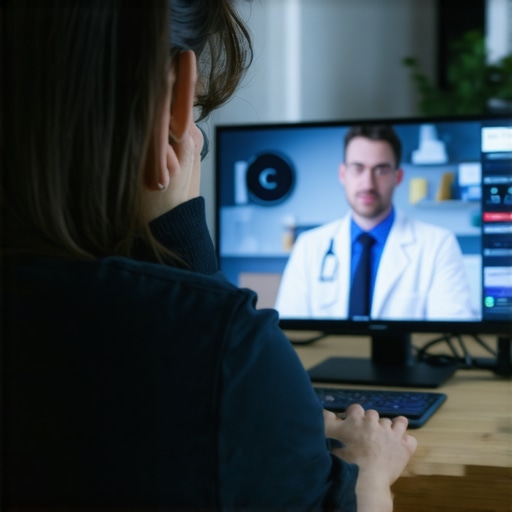
Stop Calling It Dizziness If You Want Your Telehealth Doctor to Listen
The word “dizzy” is a linguistic black hole. It is where medical clarity goes to die and where frustrated patients are born. If you log onto a virtual consultation and tell your doctor “I’m just dizzy,” you have already failed. You are essentially asking a mechanic to fix a car because it “feels weird” while you’re standing three miles away from the garage. I argue that the primary barrier to effective virtual care isn’t the technology or the internet connection; it is your own inability to use precise language. Telehealth is a revolution, but it is a revolution that demands a new kind of patient literacy. You can no longer rely on a physician to poke, prod, and tilt your head to find the source of your vertigo. In the digital clinic, you are the eyes, the ears, and the primary data collector. If you offer a blurred description, you will get a blurred diagnosis. You might think the doctor should be psychic, but you are wrong. They are working with a two-dimensional image and whatever words you choose to throw at the microphone.
Vague Descriptions are the Enemy of Accurate Diagnosis
Navigating a telehealth visit for vestibular issues is like trying to pilot a ship with a broken compass during a midnight storm. You know something is wrong, the world is tilting, but you can’t tell the lighthouse where you are. This is why I always emphasize that the best way to describe chronic pain so doctors take you seriously applies tenfold to the abstract sensation of dizziness. If you can’t distinguish between the room spinning and your own head feeling heavy, the doctor is practically handcuffed. They cannot see your inner ear through a camera. They need you to be a witness to your own physiology. The blunt truth is simple: doctors are wary of dizziness because it is a diagnostic minefield. It could be a stroke, a salt imbalance, an inner ear infection, or just dehydration. When you are vague, the doctor defaults to the safest, most conservative, and often least helpful advice. They tell you to go to the ER because you haven’t given them the data to keep you at home. As I’ve noted when discussing how to explain nerve pain to a telehealth doctor effectively, the goal is to provide a map, not a riddle. You have to categorize your sensation before you ever click the link to join the meeting. Is it vertigo? That’s the sensation of movement when there is none—the world is a merry-go-round you never asked to board. Is it lightheadedness? That’s the feeling that you might faint, the woozy sensation of a quick stand-up. Or is it disequilibrium? That’s the feeling of being unsteady on your feet. If you mix these up, you’re sending the doctor down the wrong path. We see this often in the future of telehealth, where the shift toward chronic care management personalized telehealth strategies requires the patient to be an active participant. You are not a victim of your symptoms; you are the lead investigator. Why your heart rate spikes during virtual consultations might be more about your anxiety over being misunderstood than the dizziness itself. If you want results, stop looking for a savior and start looking for a better vocabulary. Precision is the only currency that matters in the virtual exam room.
The High Cost of Ambiguity
The problem isn’t the digital divide; the problem is the data entry. You are the data entry. When you enter a virtual urgent care lobby and type ‘dizziness’ into the reason for visit, you have already wasted forty dollars. You have triggered a defensive medicine protocol that you cannot win. Doctors are trained to look for the ‘big bads’—the strokes, the cardiac arrhythmias, the life-threatening neurological collapses. Without specific descriptors, the physician is forced to treat you as a liability rather than a patient. They will default to the most expensive and time-consuming route because your vagueness leaves them no choice. They order lab tests you don’t need and refer you to specialists who will only repeat the same questions. It is a cycle of waste fueled by a lack of vocabulary. Consider the findings published in major clinical journals: diagnostic error rates for vestibular complaints are significantly higher than for chest pain. Some studies suggest up to 35% of initial vestibular diagnoses are later revised. That 35% isn’t a statistical hiccup; it is a systemic failure of communication. The physician is trying to solve a puzzle while you are hiding the pieces under the rug. If you can’t tell the difference between ‘the room is spinning’ and ‘I feel like I’m going to pass out,’ you aren’t just a confused patient; you are a diagnostic hazard. You are the reason why urgent care wait times are ballooning. Your lack of precision creates a bottleneck that no amount of high-speed internet can fix.
${PostImagePlaceholdersEnum.ImagePlaceholderB}
The Triage Trap
The reality is harsh: in the absence of physical touch, your words are the only diagnostic tools available. If those tools are blunt, the outcome will be dull. We see this constantly in chronic care environments. Patients assume the doctor will eventually ‘get to the bottom of it’ through some magical combination of lab tests and intuition. They won’t. In a ten-minute telehealth slot, there is no room for a discovery phase. You must arrive with the discovery already completed. The problem is not the technology. The problem is a fundamental misunderstanding of what a virtual consultation actually is. It is not a casual chat; it is a data transfer. If the packets of data you are sending are corrupted by ‘sort ofs’ and ‘kind ofs,’ the output will be a telehealth failure. You have to categorize your misery with the clinical detachment of a scientist. Is the sensation episodic? Does it last seconds, minutes, or hours? Does it happen when you turn your head to the left, or only when you stand up after a long period of sitting? These are not trivial details. They are the coordinates. Without them, you are just a person on a screen complaining about the weather. *Precision is not a luxury*; it is the price of admission for effective virtual medicine. When you fail to provide it, you aren’t just wasting your time; you are actively undermining the credibility of the entire digital health movement. You are proving the critics right—those who say that certain conditions simply cannot be managed remotely. But they can be managed. They just can’t be managed if you refuse to speak the language of the clinic.
A Failure of Medical Literacy
We have been coddled by a medical system that used to do the heavy lifting for us. We walked in, pointed at a vague area of discomfort, and waited for the man in the white coat to figure it out. Those days are over. The shift toward telehealth has moved the burden of proof from the examiner to the examinee. If you want a personalized telehealth strategy that actually works, you have to stop acting like a passive observer of your own biology. You are the primary sensor in this network. If the sensor is malfunctioning or, worse, if the sensor is transmitting garbage data, the entire system crashes. This isn’t about having a medical degree; it’s about having the basic literacy to describe your own existence. The doctor is working in a two-dimensional space. They cannot see the subtle nystagmus in your eyes or feel the slight tremor in your hands through a standard webcam. You have to be their hands. You have to be their eyes. The tragedy of modern medicine is that we have the technology to diagnose thousands of miles away, but we are still using a 19th-century vocabulary to describe 21st-century symptoms. It is a mismatch that costs lives and billions of dollars in redundant lab tests. If you want to be taken seriously, start taking your descriptions seriously. The ‘linguistic black hole’ of dizziness only exists because you allow it to.
It is easy to understand why critics of this approach claim I am being unfair. They argue that a patient seeking help is, by definition, in a state of vulnerability and that the burden of translation should fall entirely on the medical professional. They believe that a doctor’s years of residency and thousands of hours of study are meant to bridge the gap between a layman’s “I feel funny” and a clinical diagnosis. This is a comforting thought. It paints the physician as a Sherlock Holmes of the human body, capable of deducing a complex neurological condition from a shrug and a sigh. I used to believe this too, until I spent enough time watching the clinical clock run out on patients who couldn’t find their words. I once thought that the “human touch” of medicine could compensate for almost any linguistic gap. I was wrong. In the digital arena, that belief is more than just sentimental; it is dangerous.
The Empathy Trap
The idea that a doctor should “just know” or “lead you there” assumes a level of psychic connection that doesn’t exist behind a 1080p webcam. When people argue that we shouldn’t expect patients to be precise, they are effectively advocating for a lower standard of care. They are saying it is better to be coddled and misdiagnosed than to be challenged and cured. This misplaced compassion is exactly why so many virtual visits end in a shrug and a referral to the nearest urgent care for more lab tests. Beyond that, this mindset ignores the logistical reality of modern medicine. A physician in a telehealth environment is juggling a high volume of cases, and their primary goal is triage. If you refuse to provide the data, they will treat you like a black box. They aren’t being cold; they are being scientific. They cannot build a house without bricks, and your descriptions are the bricks.
${PostImagePlaceholdersEnum.ImagePlaceholderC}
The critics claim that by demanding precision, we are excluding those who lack medical literacy. This is a straw man argument. You don’t need to know the Latin names for the cranial nerves to describe whether your world is spinning or your legs feel like lead. You just need to pay attention. The real exclusion happens when we pretend that vague language is acceptable. That is when the system fails the patient. When a doctor has to guess, the patient loses. Every time. Instead of demanding that the doctor work harder to decipher your riddles, we should be demanding that the patient respect the medium. Chronic care requires a partnership, not a paternalistic relationship where one person holds all the information and the other just waits to be “fixed.” What’s more, the “expert interview” model was designed for an era when the doctor could see the sweat on your brow and the way you leaned against the doorframe. Those physical cues are gone. The screen has stripped them away. If you don’t replace those lost signals with better words, you are essentially asking the doctor to fly blind.
The uncomfortable truth is that “dizziness” is often a catch-all for “I am uncomfortable and I don’t want to think about why.” It is a refusal to engage with the reality of the sensation. By allowing ourselves to be vague, we are opting out of the diagnostic process. We are treating the doctor like a vending machine where we press the button for “dizzy” and expect a pill to come out. But medicine doesn’t work that way. It requires an input of high-quality data to produce a high-quality output. The argument that patients shouldn’t have to be precise is actually an argument for medical inefficiency. It is an argument for more wasted time, more unnecessary lab tests, and more frustration on both sides of the screen. We have to move past this idea that being a patient is a passive state. In the world of telehealth, being a patient is a job. It is a job that requires observation, articulation, and a refusal to settle for the linguistic black hole of “I just feel off.” If you want the system to work for you, you have to work for the system. Precision isn’t a burden; it is your greatest tool for self-advocacy. Stop treating your symptoms like a mystery for someone else to solve and start treating them like a report you are required to deliver.
Stop Calling It Dizziness If You Want Your Telehealth Doctor to Listen
The word “dizzy” is a linguistic black hole. It is where medical clarity goes to die and where frustrated patients are born. If you log onto a virtual consultation and tell your doctor “I’m just dizzy,” you have already failed. You are essentially asking a mechanic to fix a car because it “feels weird” while you’re standing three miles away from the garage. I argue that the primary barrier to effective virtual care isn’t the technology or the internet connection; it is your own inability to use precise language. Telehealth is a revolution, but it is a revolution that demands a new kind of patient literacy. You can no longer rely on a physician to poke, prod, and tilt your head to find the source of your vertigo. In the digital clinic, you are the eyes, the ears, and the primary data collector. If you offer a blurred description, you will get a blurred diagnosis. You might think the doctor should be psychic, but you are wrong. They are working with a two-dimensional image and whatever words you choose to throw at the microphone.
Vague Descriptions are the Enemy of Accurate Diagnosis
Navigating a telehealth visit for vestibular issues is like trying to pilot a ship with a broken compass during a midnight storm. You know something is wrong, the world is tilting, but you can’t tell the lighthouse where you are. This is why I always emphasize that the best way to describe chronic pain so doctors take you seriously applies tenfold to the abstract sensation of dizziness. If you can’t distinguish between the room spinning and your own head feeling heavy, the doctor is practically handcuffed. They cannot see your inner ear through a camera. They need you to be a witness to your own physiology. The blunt truth is simple: doctors are wary of dizziness because it is a diagnostic minefield. It could be a stroke, a salt imbalance, an inner ear infection, or just dehydration. When you are vague, the doctor defaults to the safest, most conservative, and often least helpful advice. They tell you to go to the ER because you haven’t given them the data to keep you at home. As I’ve noted when discussing how to explain nerve pain to a telehealth doctor effectively, the goal is to provide a map, not a riddle. You have to categorize your sensation before you ever click the link to join the meeting. Is it vertigo? That’s the sensation of movement when there is none—the world is a merry-go-round you never asked to board. Is it lightheadedness? That’s the feeling that you might faint, the woozy sensation of a quick stand-up. Or is it disequilibrium? That’s the feeling of being unsteady on your feet. If you mix these up, you’re sending the doctor down the wrong path. We see this often in the future of telehealth, where the shift toward chronic care management personalized telehealth strategies requires the patient to be an active participant. You are not a victim of your symptoms; you are the lead investigator. Why your heart rate spikes during virtual consultations might be more about your anxiety over being misunderstood than the dizziness itself. If you want results, stop looking for a savior and start looking for a better vocabulary. Precision is the only currency that matters in the virtual exam room.
The High Cost of Ambiguity
The problem isn’t the digital divide; the problem is the data entry. You are the data entry. When you enter a virtual urgent care lobby and type ‘dizziness’ into the reason for visit, you have already wasted forty dollars. You have triggered a defensive medicine protocol that you cannot win. Doctors are trained to look for the ‘big bads’—the strokes, the cardiac arrhythmias, the life-threatening neurological collapses. Without specific descriptors, the physician is forced to treat you as a liability rather than a patient. They will default to the most expensive and time-consuming route because your vagueness leaves them no choice. They order lab tests you don’t need and refer you to specialists who will only repeat the same questions. It is a cycle of waste fueled by a lack of vocabulary. Consider the findings published in major clinical journals: diagnostic error rates for vestibular complaints are significantly higher than for chest pain. Some studies suggest up to 35% of initial vestibular diagnoses are later revised. That 35% isn’t a statistical hiccup; it is a systemic failure of communication. The physician is trying to solve a puzzle while you are hiding the pieces under the rug. If you can’t tell the difference between ‘the room is spinning’ and ‘I feel like I’m going to pass out,’ you aren’t just a confused patient; you are a diagnostic hazard. You are the reason why urgent care wait times are ballooning. Your lack of precision creates a bottleneck that no amount of high-speed internet can fix.
The Triage Trap
The reality is harsh: in the absence of physical touch, your words are the only diagnostic tools available. If those tools are blunt, the outcome will be dull. We see this constantly in chronic care environments. Patients assume the doctor will eventually ‘get to the bottom of it’ through some magical combination of lab tests and intuition. They won’t. In a ten-minute telehealth slot, there is no room for a discovery phase. You must arrive with the discovery already completed. The problem is not the technology. The problem is a fundamental misunderstanding of what a virtual consultation actually is. It is not a casual chat; it is a data transfer. If the packets of data you are sending are corrupted by ‘sort ofs’ and ‘kind ofs,’ the output will be a telehealth failure. You have to categorize your misery with the clinical detachment of a scientist. Is the sensation episodic? Does it last seconds, minutes, or hours? Does it happen when you turn your head to the left, or only when you stand up after a long period of sitting? These are not trivial details. They are the coordinates. Without them, you are just a person on a screen complaining about the weather. *Precision is not a luxury*; it is the price of admission for effective virtual medicine. When you fail to provide it, you aren’t just wasting your time; you are actively undermining the credibility of the entire digital health movement. You are proving the critics right—those who say that certain conditions simply cannot be managed remotely. But they can be managed. They just can’t be managed if you refuse to speak the language of the clinic.
A Failure of Medical Literacy
We have been coddled by a medical system that used to do the heavy lifting for us. We walked in, pointed at a vague area of discomfort, and waited for the man in the white coat to figure it out. Those days are over. The shift toward telehealth has moved the burden of proof from the examiner to the examinee. If you want a personalized telehealth strategy that actually works, you have to stop acting like a passive observer of your own biology. You are the primary sensor in this network. If the sensor is malfunctioning or, worse, if the sensor is transmitting garbage data, the entire system crashes. This isn’t about having a medical degree; it’s about having the basic literacy to describe your own existence. The doctor is working in a two-dimensional space. They cannot see the subtle nystagmus in your eyes or feel the slight tremor in your hands through a standard webcam. You have to be their hands. You have to be their eyes. The tragedy of modern medicine is that we have the technology to diagnose thousands of miles away, but we are still using a 19th-century vocabulary to describe 21st-century symptoms. It is a mismatch that costs lives and billions of dollars in redundant lab tests. If you want to be taken seriously, start taking your descriptions seriously. The ‘linguistic black hole’ of dizziness only exists because you allow it to.
It is easy to understand why critics of this approach claim I am being unfair. They argue that a patient seeking help is, by definition, in a state of vulnerability and that the burden of translation should fall entirely on the medical professional. They believe that a doctor’s years of residency and thousands of hours of study are meant to bridge the gap between a layman’s “I feel funny” and a clinical diagnosis. This is a comforting thought. It paints the physician as a Sherlock Holmes of the human body, capable of deducing a complex neurological condition from a shrug and a sigh. I used to believe this too, until I spent enough time watching the clinical clock run out on patients who couldn’t find their words. I once thought that the “human touch” of medicine could compensate for almost any linguistic gap. I was wrong. In the digital arena, that belief is more than just sentimental; it is dangerous.
The Empathy Trap
The idea that a doctor should “just know” or “lead you there” assumes a level of psychic connection that doesn’t exist behind a 1080p webcam. When people argue that we shouldn’t expect patients to be precise, they are effectively advocating for a lower standard of care. They are saying it is better to be coddled and misdiagnosed than to be challenged and cured. This misplaced compassion is exactly why so many virtual visits end in a shrug and a referral to the nearest urgent care for more lab tests. Beyond that, this mindset ignores the logistical reality of modern medicine. A physician in a telehealth environment is juggling a high volume of cases, and their primary goal is triage. If you refuse to provide the data, they will treat you like a black box. They aren’t being cold; they are being scientific. They cannot build a house without bricks, and your descriptions are the bricks.
The critics claim that by demanding precision, we are excluding those who lack medical literacy. This is a straw man argument. You don’t need to know the Latin names for the cranial nerves to describe whether your world is spinning or your legs feel like lead. You just need to pay attention. The real exclusion happens when we pretend that vague language is acceptable. That is when the system fails the patient. When a doctor has to guess, the patient loses. Every time. Instead of demanding that the doctor work harder to decipher your riddles, we should be demanding that the patient respect the medium. Chronic care requires a partnership, not a paternalistic relationship where one person holds all the information and the other just waits to be “fixed.” What’s more, the “expert interview” model was designed for an era when the doctor could see the sweat on your brow and the way you leaned against the doorframe. Those physical cues are gone. The screen has stripped them away. If you don’t replace those lost signals with better words, you are essentially asking the doctor to fly blind.
The uncomfortable truth is that “dizziness” is often a catch-all for “I am uncomfortable and I don’t want to think about why.” It is a refusal to engage with the reality of the sensation. By allowing ourselves to be vague, we are opting out of the diagnostic process. We are treating the doctor like a vending machine where we press the button for “dizzy” and expect a pill to come out. But medicine doesn’t work that way. It requires an input of high-quality data to produce a high-quality output. The argument that patients shouldn’t have to be precise is actually an argument for medical inefficiency. It is an argument for more wasted time, more unnecessary lab tests, and more frustration on both sides of the screen. We have to move past this idea that being a patient is a passive state. In the world of telehealth, being a patient is a job. It is a job that requires observation, articulation, and a refusal to settle for the linguistic black hole of “I just feel off.” If you want the system to work for you, you have to work for the system. Precision isn’t a burden; it is your greatest tool for self-advocacy. Stop treating your symptoms like a mystery for someone else to solve and start treating them like a report you are required to deliver.
The Erosion of Medical Access
The consequence of this linguistic laziness isn’t just a frustrating afternoon on a video call; it is the slow, agonizing death of medical accessibility. If patients refuse to evolve their communication, the insurance industry will notice the inefficiency long before the doctors do. We are already seeing the first signs. When telehealth visits result in a significantly higher rate of redundant lab tests because the physician couldn’t narrow down a vague complaint, the cost-saving promise of digital health evaporates. If this trend continues for another five years, virtual medicine will be relegated to the status of a luxury concierge service or a restricted tool for only the simplest refills. The dream of managing complex chronic care from your living room will die, not because the technology failed, but because we were too lazy to describe our own bodies.
The Risk of Permanent Mediocrity
We are creating a two-tiered system where those who can articulate their symptoms receive high-level care, while the “dizzy” and the “tired” are perpetually shuffled into the basement of the medical system. This isn’t just about efficiency; it’s a moral failure. By accepting ambiguity, we are training a new generation of doctors to ignore the nuanced complaints of their patients. We are teaching them that a screen is a barrier to truth rather than a window into it. If we don’t fix this now, the virtual urgent care of the future will be nothing more than an automated chatbot that sends everyone to the emergency room by default. ${PostImagePlaceholdersEnum.ImagePlaceholderD}
What are we waiting for?
We are standing at the edge of a cliff. Using the word ‘dizzy’ in a virtual clinic is like trying to navigate a minefield using a map drawn in disappearing ink. You might make it a few steps, but eventually, the lack of detail will catch up to you. The physician is waiting on the other side of that glass for a reason to help you, but they cannot act on a ghost. If we do not treat our words as medical data, we will lose the right to be treated as individual patients. We will become just another “case” in a system that has run out of patience for the imprecise. The revolution is here, but it is waiting for you to speak up.
The Final Verdict
Effective telehealth is built on the foundation of the articulate patient, not the intuitive physician. If you refuse to move beyond the linguistic black hole of ‘feeling off,’ you are actively choosing to be a patient that the medical system eventually filters out. This connects to the reality that 3 habits that make your chronic condition harder to manage often start with the laziness of vague descriptions. We are at a crossroads where telehealth breakthroughs how virtual visits elevate chronic care in 2025 will only benefit those willing to become literate in their own physiology.
The Twist
We have become so obsessed with the speed of our internet connections that we have completely ignored the speed of our own clarity. We want the convenience of an algorithm but the psychic empathy of a childhood doctor, and in trying to have both, we get neither. While maximizing urgent care efficiency with advanced lab test technologies can help bridge the gap, it cannot replace a patient who knows the difference between a spin and a sway. Even knowing how to get your lab results explained without a long wait starts with asking the right, precise questions at the very beginning of the encounter.
The Challenge
The future of medicine isn’t just in the hands of the engineers; it is in your vocabulary. Stop treating your symptoms like a riddle for a stranger to solve and start treating them like a report you are required to deliver with clinical accuracy. Precision is the only way to turn a two-dimensional screen into a three-dimensional cure. Your health is worth more than a ‘kind of.’ Speak like it.