
Why You Need a Copy of Your Lab Imaging Instead of Just the Report
Your Radiologist’s Report Is Only Half the Story
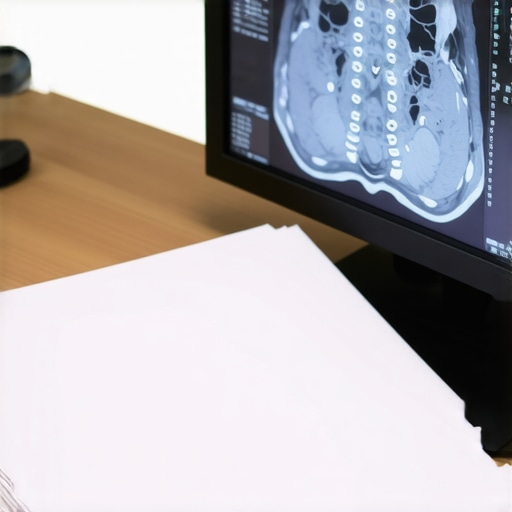
You walk out of the imaging center clutching a summary that says everything is “normal,” and you think you’re in the clear. I’m here to tell you that you are making a massive mistake. A written report is nothing more than one person’s opinion at a specific moment in time. It is a translation of a complex visual reality into a few sterile paragraphs. If you don’t walk away with the actual disc or digital file of the images themselves, you are essentially leaving the keys to your health in the hands of a stranger who might never see you again. Why would you settle for a summary when you can own the evidence? I argue that holding your own data is the only way to survive a medical system that is increasingly focused on speed over accuracy.
The Summary Is a Dangerous Game of Telephone
Think of a medical report like a movie review. You can read a thousand words about a film, but you haven’t actually seen it. You haven’t witnessed the nuances, the lighting, or the specific details that might matter to you. When you rely solely on the text, you are participating in a high-stakes game of telephone where nuances get stripped away to fit a standard template. I believe you must be the curator of your own medical history. I’ve seen too many cases where a second opinion changed everything, simply because a new specialist looked at the raw data and saw what the first one missed. This is especially true when navigating chronic care management, where trends over time matter more than a single snapshot from a stranger in a dark room.
Is it a hassle to ask for the files? Sure. Is it necessary? Absolutely. You need to know how to get your raw lab data before the doctor calls you because speed and accuracy are your only real defenses in a fractured healthcare system. When you have the images, you have the power to walk into any clinic—be it for urgent care or a specialized consultation—and show them exactly what is happening. We often discuss why you need your lab imaging instead of just the report, but we rarely talk about the underlying truth: doctors are human, and humans miss things. A report is a static, dead document; raw imaging is a living record of your biology. Don’t let your health become a footnote in someone else’s filing cabinet. Take the disc, upload the file, and own your story.
The Illusion of Objective Truth
We are conditioned to treat a medical report like a verdict from a high court. It is printed on letterhead, signed by someone with several degrees, and written in a language that sounds like Latin-infused authority. This is a facade. A report is not a verdict; it is an interpretation. It is the result of a human being—one who is likely exhausted, behind schedule, and staring at a screen for the tenth hour in a row—trying to summarize thousands of data points into three paragraphs. When you rely solely on the report, you are choosing to view your health through a keyhole. It is insufficient. It is dangerous. It is a surrender of your right to see the full picture.
The Thirty-One Percent Error
The numbers do not lie, and they are terrifying. Peer-reviewed research, including studies cited in the Journal of the American College of Radiology, has shown that when different radiologists look at the same scan, they disagree on clinically significant findings up to 31 percent of the time. Think about that. That 31 percent isn’t a statistical anomaly; it is a massive failure of the single-report system. If nearly one-third of these reports are contested or clarified by a second set of eyes, then trusting a single piece of paper is a coin flip. You wouldn’t buy a house based on a one-page summary without looking at the foundation yourself. Why would you do it with your spine, your brain, or your lungs? ${PostImagePlaceholdersEnum.ImagePlaceholderB} The evidence is clear: the raw data is the only objective reality, while the report is merely a subjective filter.
The Assembly Line Mentality
The problem isn’t that radiologists are incompetent. The problem is the system. The modern medical facility functions like an assembly line where speed is the only metric that matters to the bottom line. Radiologists are often pressured to read a specific number of cases per hour to maintain profitability. This burn-and-churn model leaves no room for the nuance required to catch early-stage anomalies or subtle shifts in chronic conditions. They are looking for the obvious, the loud, and the clear. If your issue is subtle, it gets buried. By walking away without your digital files, you are accepting a version of the truth that has been edited for speed. You are letting the clock dictate your diagnosis. It is a systemic betrayal of patient care that treats you like a widget on a conveyor belt rather than a human being with a complex history. You must demand the raw files because your life depends on the details that the assembly line is designed to ignore.
The Ghost in the Diagnostic Machine
Insurance companies and hospital administrators love reports because they are easy to file. They are flat, digital footprints that satisfy a billing code. They hate raw imaging data because it is heavy, difficult to transfer, and invites second opinions that might cost more money. Follow the money. The system is designed to keep you moving, not to keep you informed. If you don’t own your data, you are a passenger in your own healthcare. When you hold that disc or access that cloud file, you break the cycle of dependency. You gain the leverage to challenge a lazy reading or a rushed conclusion. You are no longer just a name on a requisition form; you are the owner of the evidence.
The Paternalism Trap
It is easy to see why the medical establishment fights so hard against patients holding their own raw data. The standard argument is rooted in a sort of protective paternalism: doctors worry that the average person, lacking a decade of medical training, will stare at a gray-scale slice of their own anatomy and see ghosts in the static. They fear a surge of anxiety where patients flood their portals with frantic questions about every artifact or harmless anatomical variant. They argue that the report exists specifically to filter out the noise and present only what is clinically relevant. On the surface, this sounds like a plea for efficiency and patient mental health. It is a comforting narrative that suggests the system is looking out for your peace of mind by keeping you in the dark.
But this line of reasoning is a smoke screen for a system that values control over collaboration. I used to believe this too, until I realized that the noise one radiologist ignores is often the signal another specialist needs. The assumption that you are too ignorant to handle your own biology is the same logic that used to keep patients from seeing their own lab tests before a doctor interpreted them. We now live in an era of digital health where urgent care visits and telehealth consultations are the norm. In this fragmented landscape, the patient is often the only constant. Expecting a patient to navigate chronic care management without their raw data is like asking a pilot to fly a plane while only being allowed to read a text-based summary of the weather. It is an impossible standard that sets you up for failure.
The Gatekeeper Myth
The medical industry treats the raw image as a sacred relic that only the high priests of the hospital can touch. This is a massive mistake. When you are told that you don’t need the disc because you won’t understand it anyway, the system is effectively stripping you of your right to a second opinion. You aren’t asking for the images so you can play doctor in your living room; you are asking for them so you can take them to the next expert or the next clinic that might have a more nuanced understanding of your specific condition. ${PostImagePlaceholdersEnum.ImagePlaceholderC} Critics claim that giving patients raw files leads to wasted time. In reality, the greatest source of anxiety isn’t seeing the scan; it is the uncertainty that comes when a report says all clear but your symptoms are screaming otherwise. The real waste of time is the six months a patient spends bouncing between clinics because no one bothered to look at the original imaging. The report is a gatekeeper, not a guide. By holding onto the raw data, you aren’t just looking at pictures; you are ensuring that your next doctor isn’t biased by the previous doctor’s mistakes. The modern healthcare system is far too fractured to rely on a single person’s summary. If you want accuracy, you need the source code. Choosing to remain ignorant of your own data is not a virtue; it is a vulnerability that the system is happy to exploit to keep its assembly line moving. You must reject the idea that your lack of a medical degree makes you a secondary character in your own health story.
Your Radiologist’s Report Is Only Half the Story
You walk out of the imaging center clutching a summary that says everything is “normal,” and you think you’re in the clear. I’m here to tell you that you are making a massive mistake. A written report is nothing more than one person’s opinion at a specific moment in time. It is a translation of a complex visual reality into a few sterile paragraphs. If you don’t walk away with the actual disc or digital file of the images themselves, you are essentially leaving the keys to your health in the hands of a stranger who might never see you again. Why would you settle for a summary when you can own the evidence? I argue that holding your own data is the only way to survive a medical system that is increasingly focused on speed over accuracy.
The Summary Is a Dangerous Game of Telephone
Think of a medical report like a movie review. You can read a thousand words about a film, but you haven’t actually seen it. You haven’t witnessed the nuances, the lighting, or the specific details that might matter to you. When you rely solely on the text, you are participating in a high-stakes game of telephone where nuances get stripped away to fit a standard template. I believe you must be the curator of your own medical history. I’ve seen too many cases where a second opinion changed everything, simply because a new specialist looked at the raw data and saw what the first one missed. This is especially true when navigating chronic care management, where trends over time matter more than a single snapshot from a stranger in a dark room.
Is it a hassle to ask for the files? Sure. Is it necessary? Absolutely. You need to know how to get your raw lab data before the doctor calls you because speed and accuracy are your only real defenses in a fractured healthcare system. When you have the images, you have the power to walk into any clinic—be it for urgent care or a specialized consultation—and show them exactly what is happening. We often discuss why you need your lab imaging instead of just the report, but we rarely talk about the underlying truth: doctors are human, and humans miss things. A report is a static, dead document; raw imaging is a living record of your biology. Don’t let your health become a footnote in someone else’s filing cabinet. Take the disc, upload the file, and own your story.
The Illusion of Objective Truth
We are conditioned to treat a medical report like a verdict from a high court. It is printed on letterhead, signed by someone with several degrees, and written in a language that sounds like Latin-infused authority. This is a facade. A report is not a verdict; it is an interpretation. It is the result of a human being—one who is likely exhausted, behind schedule, and staring at a screen for the tenth hour in a row—trying to summarize thousands of data points into three paragraphs. When you rely solely on the report, you are choosing to view your health through a keyhole. It is insufficient. It is dangerous. It is a surrender of your right to see the full picture.
The Thirty-One Percent Error
The numbers do not lie, and they are terrifying. Peer-reviewed research, including studies cited in the Journal of the American College of Radiology, has shown that when different radiologists look at the same scan, they disagree on clinically significant findings up to 31 percent of the time. Think about that. That 31 percent isn’t a statistical anomaly; it is a massive failure of the single-report system. If nearly one-third of these reports are contested or clarified by a second set of eyes, then trusting a single piece of paper is a coin flip. You wouldn’t buy a house based on a one-page summary without looking at the foundation yourself. Why would you do it with your spine, your brain, or your lungs? The evidence is clear: the raw data is the only objective reality, while the report is merely a subjective filter.
The Assembly Line Mentality
The problem isn’t that radiologists are incompetent. The problem is the system. The modern medical facility functions like an assembly line where speed is the only metric that matters to the bottom line. Radiologists are often pressured to read a specific number of cases per hour to maintain profitability. This burn-and-churn model leaves no room for the nuance required to catch early-stage anomalies or subtle shifts in chronic conditions. They are looking for the obvious, the loud, and the clear. If your issue is subtle, it gets buried. By walking away without your digital files, you are accepting a version of the truth that has been edited for speed. You are letting the clock dictate your diagnosis. It is a systemic betrayal of patient care that treats you like a widget on a conveyor belt rather than a human being with a complex history. You must demand the raw files because your life depends on the details that the assembly line is designed to ignore.
The Ghost in the Diagnostic Machine
Insurance companies and hospital administrators love reports because they are easy to file. They are flat, digital footprints that satisfy a billing code. They hate raw imaging data because it is heavy, difficult to transfer, and invites second opinions that might cost more money. Follow the money. The system is designed to keep you moving, not to keep you informed. If you don’t own your data, you are a passenger in your own healthcare. When you hold that disc or access that cloud file, you break the cycle of dependency. You gain the leverage to challenge a lazy reading or a rushed conclusion. You are no longer just a name on a requisition form; you are the owner of the evidence.
The Paternalism Trap
It is easy to see why the medical establishment fights so hard against patients holding their own raw data. The standard argument is rooted in a sort of protective paternalism: doctors worry that the average person, lacking a decade of medical training, will stare at a gray-scale slice of their own anatomy and see ghosts in the static. They fear a surge of anxiety where patients flood their portals with frantic questions about every artifact or harmless anatomical variant. They argue that the report exists specifically to filter out the noise and present only what is clinically relevant. On the surface, this sounds like a plea for efficiency and patient mental health. It is a comforting narrative that suggests the system is looking out for your peace of mind by keeping you in the dark.
But this line of reasoning is a smoke screen for a system that values control over collaboration. I used to believe this too, until I realized that the noise one radiologist ignores is often the signal another specialist needs. The assumption that you are too ignorant to handle your own biology is the same logic that used to keep patients from seeing their own lab tests before a doctor interpreted them. We now live in an era of digital health where urgent care visits and telehealth consultations are the norm. In this fragmented landscape, the patient is often the only constant. Expecting a patient to navigate chronic care management without their raw data is like asking a pilot to fly a plane while only being allowed to read a text-based summary of the weather. It is an impossible standard that sets you up for failure.
The Gatekeeper Myth
The medical industry treats the raw image as a sacred relic that only the high priests of the hospital can touch. This is a massive mistake. When you are told that you don’t need the disc because you won’t understand it anyway, the system is effectively stripping you of your right to a second opinion. You aren’t asking for the images so you can play doctor in your living room; you are asking for them so you can take them to the next expert or the next clinic that might have a more nuanced understanding of your specific condition. Critics claim that giving patients raw files leads to wasted time. In reality, the greatest source of anxiety isn’t seeing the scan; it is the uncertainty that comes when a report says all clear but your symptoms are screaming otherwise. The real waste of time is the six months a patient spends bouncing between clinics because no one bothered to look at the original imaging. The report is a gatekeeper, not a guide. By holding onto the raw data, you aren’t just looking at pictures; you are ensuring that your next doctor isn’t biased by the previous doctor’s mistakes. The modern healthcare system is far too fractured to rely on a single person’s summary. If you want accuracy, you need the source code. Choosing to remain ignorant of your own data is not a virtue; it is a vulnerability that the system is happy to exploit to keep its assembly line moving. You must reject the idea that your lack of a medical degree makes you a secondary character in your own health story.
The High Price of Compliance
The danger of staying silent is that silence is interpreted as consent. When you walk away without your digital records, you are signaling to the healthcare industrial complex that you are satisfied with the crumbs of information they provide. This passivity fuels a cycle where hospitals invest less in patient portals and more in defensive bureaucracy. We are entering a period where medical identity theft and data siloing are becoming the norm. If you do not own the record of your own physical state, you are effectively a ghost in your own life. You become a patient who is “managed” rather than a human who is healed.
A Future of Automated Apathy
In five years, the landscape will be even more stark. As telehealth becomes the primary mode of interaction and AI begins to perform the initial reads of most scans, the human element will be pushed further into the margins. If you don’t have the raw files to take to a human specialist for a second look, you will be locked into an automated verdict. Your chronic care management will be dictated by a software version that might be outdated or biased. The stakes are nothing less than your autonomy.
Is it too late to reclaim your history?
No, but the window is closing. As facilities consolidate and old records are purged or archived in inaccessible formats, your window to build a complete biological library is shrinking. You must treat every urgent care visit and every routine scan as a data acquisition mission. This is the moral imperative of the modern age: you must be the custodian of your own temple. To do otherwise is to gamble with a currency you can never earn back.
The Black Box of Survival
Think of your raw data as the black box in an airplane. When a crisis occurs, no one cares about the pilot’s handwritten notes or a vague summary of the flight. Investigators demand the raw data—the hard numbers, the exact trajectories, the unvarnished truth. Your body is the aircraft, and your imaging is that black box. If you allow the system to keep that data, you are flying blind without a recorder. When things go wrong, you’ll be left with a summary that explains nothing, while the evidence you needed to save your life remains locked in a server you can’t access. ${PostImagePlaceholdersEnum.ImagePlaceholderD}
The Point of No Return
This isn’t just about one scan or one broken bone. It is about the fundamental right to know what is happening inside your own skin. The system will not change itself. It is too profitable, too fast, and too entrenched in its own paternalism. The only thing that changes the dynamic is a patient who refuses to leave the room without their data. This is the line in the sand. If we don’t start demanding our raw files now, we will eventually find ourselves in a world where we don’t own our health—we only rent it from the people who hold the files.
The Responsibility of Ownership
Owning your raw imaging data is the difference between being a passive recipient of healthcare and being an active survivor within it. If you believe that a three-paragraph summary can encapsulate the complexity of your biology, you are not just mistaken; you are vulnerable. We have already seen how telehealth breakthroughs are shifting the power balance, but that power is useless if you do not possess the data to fuel it. You should never feel guilty for demanding a disc or a digital cloud link. You are not a burden to the system; you are the reason the system exists in the first place.
The Digital Survival Kit
The next time you schedule a scan, make the request for the raw files part of your intake process. Do not wait until the results are in to start the negotiation. This proactive stance is just as vital as knowing the secret to getting your lab results without calling the clinic. By the time the doctor calls you, the interpretation is already set in stone in their mind. You need the images before that conversation happens so you can ask informed, pointed questions rather than just nodding at a screen. In the future of telehealth, the most successful patients will be those who curate their own digital biological libraries, ensuring their data moves with them, not against them.
Your Move
Stop treating your medical history as a secret kept from you by gatekeepers. The report is a subjective opinion; the raw data is the objective evidence. If there is a thirty-one percent chance that the first opinion you receive is incomplete or fundamentally wrong, then holding the images is the only logical insurance policy you have. Do not leave the imaging center empty-handed. Take the disc, upload the files, and recognize that in the fractured landscape of modern medicine, you are the only one with a permanent, vested interest in the absolute truth of your own body. Demand the data. Own the record. Survive the system.